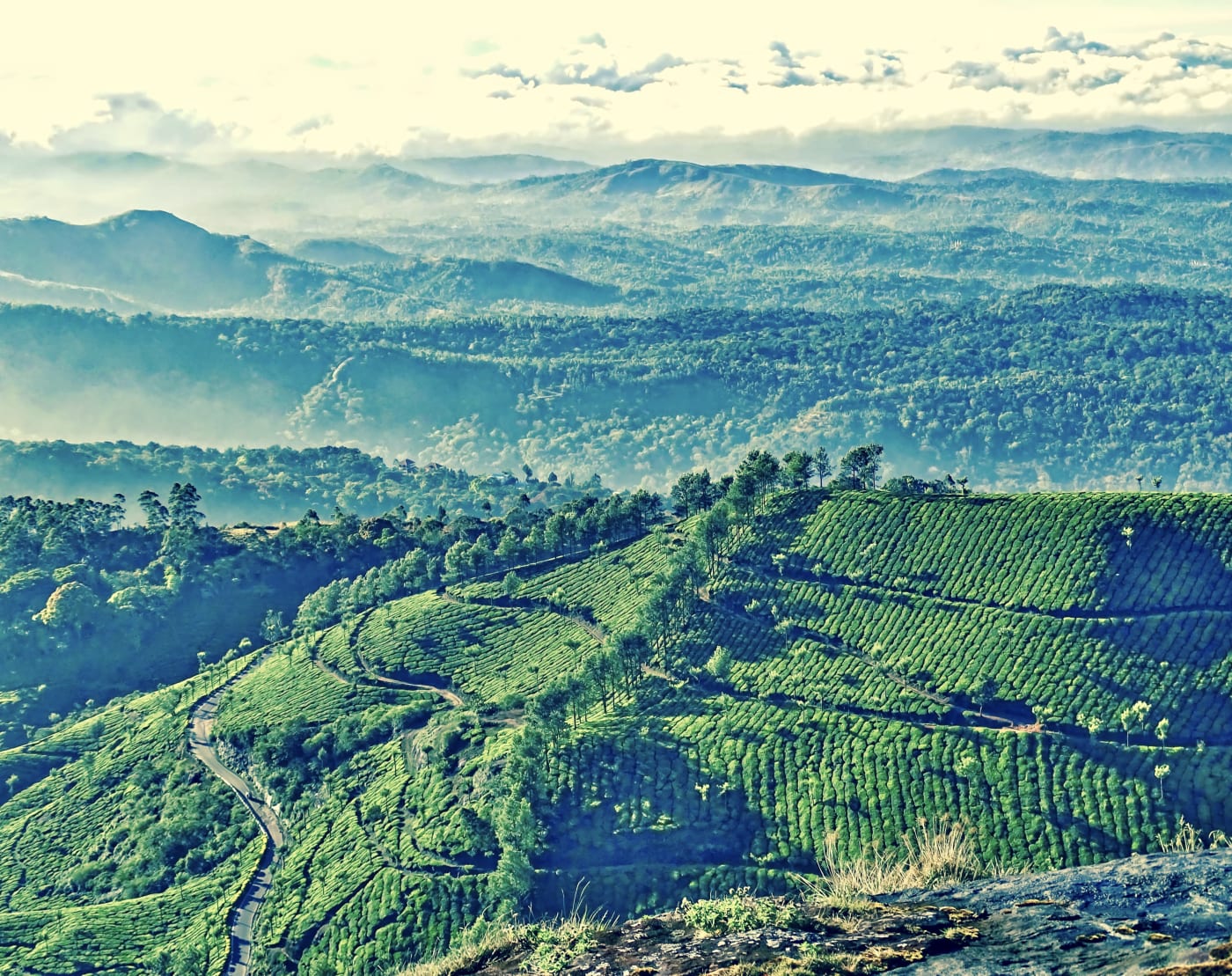
Tea is woven into India's identity — from the gardens of Assam and Darjeeling to the Nilgiri hills — and India is the world's second-largest producer. Production rose from 1,207 million kg in 2014 to a record 1,396 million kg in 2025. Most of India's tea is consumed at home, with premium Darjeeling and Assam varieties prized as exports.
Tea & Plantations
Tea & Plantations
India is the world's second-largest tea producer, and tea — from Assam and Darjeeling to the Nilgiris — is both a major employer and a cultural icon. Production rose from 1,207 million kg in 2014 to a record 1,396 million kg in 2025, after dipping to 1,304 million kg in 2024. The organised sector employs 11.56 lakh workers, nearly 58% of them women. The counter shows tea production.
1,207 → 1,396
Tea production (M kg, 2014 → 2025)
2nd
Largest producer globally
Assam·Darjeeling
Iconic origins
Tea production (M kg, 2014 → 2025)
| Year | Tea production |
|---|---|
| 2014 | 1,207 M kg |
| 2015 | 1,209 M kg |
| 2016 | 1,267 M kg |
| 2017 | 1,322 M kg |
| 2018 | 1,339 M kg |
| 2019 | 1,390 M kg |
| 2020 | 1,258 M kg |
| 2021 | 1,343 M kg |
| 2022 | 1,366 M kg |
| 2023 | 1,394 M kg |
| 2024 | 1,304 M kg |
| 2025 | 1,396 M kg |
2014
0M kg
Tea production
20142025
Since 2014
Added
+189 M kg
2014
1,207 M kg
2025
1,396 M kg
Why it matters Tea plantations sustain livelihoods for millions in hill and forest regions and remain an iconic Indian export, backed by plantation-worker housing, healthcare and welfare programmes under the Tea Board.
- Tea production: 1,207 M kg (2014) → 1,396 M kg (2025)
- World's 2nd-largest producer; Assam, Darjeeling, Nilgiris
- Source: Tea Board of India
History
Notable strengths
India's tea carries unique Geographical Indication (GI) tags — Darjeeling was India's first GI product — that protect and premium-price its heritage varieties. The organised sector alone employs 11.56 lakh workers, nearly 58% of them women, and orthodox, green and specialty teas are a growing niche for health-conscious global buyers.
How it works
Tea grows on large estates concentrated in a few regions — Assam and the Dooars for volume, Darjeeling and the Nilgiris for premium leaf. Each estate is a self-contained world: workers (a large share of them women) pluck leaves that must be processed within hours in the estate's own factory. The Tea Board regulates the industry and protects prized names like Darjeeling through GI status; producers must sell half their tea through public auctions.
Outlook
India is the world's second-largest tea producer (1,300–1,400 million kg a year in recent years), a global name in Assam and Darjeeling, and a steady exporter. The priorities ahead are worker welfare — housing, healthcare and wage programmes run through the Tea Board — alongside replanting older bushes, premium branding in specialty and organic tea, and growing export demand.
By the numbers
1,207 → 1,396 M kg tea production (2014→2025). 2nd-largest producer. GI tags (Darjeeling, Assam). 11.56 lakh organised-sector workers, nearly 58% women. Sources: Tea Board of India; PIB.
Data current to: Calendar year 2025
Source: Tea Board of India — all-India tea production by calendar year (January–December), million kg, 2014–2025: 1,207 (2014), 1,390 (2019), 1,258 (2020), 1,394 (2023), 1,304 (2024) and 1,396 (2025, final figures of August 2026) (linked). Financial-year totals differ slightly (2024-25: 1,316). · link