Village homes in India long sat outside the formal land record. Revenue surveys mapped agricultural land, but the inhabited village area, the abadi, was often never surveyed, so millions of families could not prove they owned the house they lived in. Without a title, a home could not be used as collateral, and boundary disputes could drag on for years.
SVAMITVA · Village Property Cards
SVAMITVA · Village Property Cards
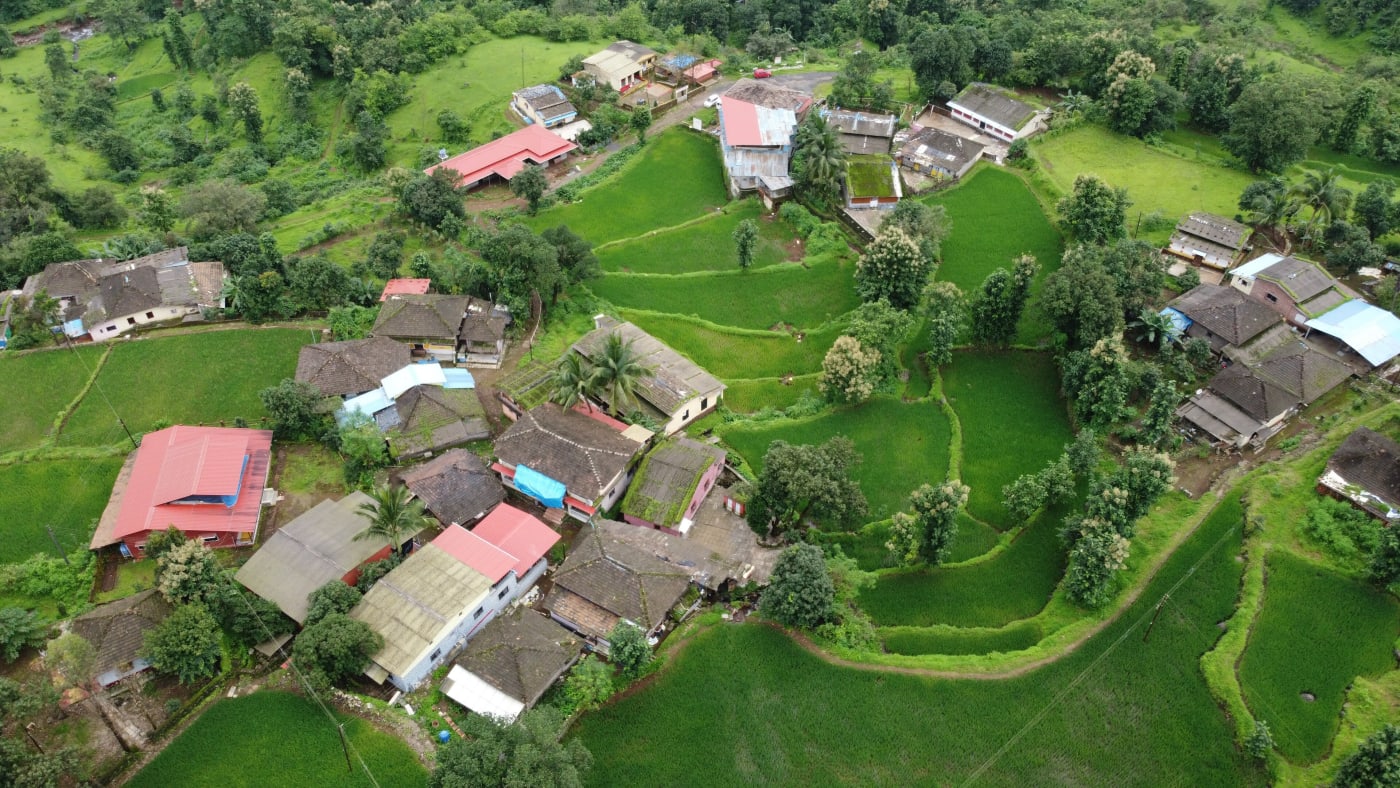
For generations, homes in India's villages had no legal title: land records covered farms, but the inhabited village area often was never surveyed. SVAMITVA, launched on National Panchayati Raj Day in April 2020, maps those villages by drone and gives each household a property card, a legal record of the home it owns. By August 2026, drone surveys were complete in 3.30 lakh villages and 3.24 crore property cards had been prepared, 2.72 crore of them already handed to owners. The counter shows property cards prepared.
3.30 lakh
Villages surveyed by drone
2.72 cr
Cards handed to owners
65 lakh
Cards in a single day (Jan 2025)
Property cards prepared
| Year | Property cards prepared |
|---|---|
| 2023 | 1.63 crore |
| 2024 | 2.19 crore |
| 2025 | 2.76 crore |
| 2026 | 3.24 crore |
2023
0.00crore
Property cards prepared
20232026
Since 2023
Added
+1.61 crore
2023
1.63 crore
2026
3.24 crore
Why it matters A legal title turns a house into an asset. It settles boundary disputes, lets a family prove what it owns, can support a bank loan, and gives the panchayat accurate maps to plan roads, drains and services.
- 3.24 crore property cards prepared for 1.97 lakh villages; 2.72 crore handed to owners (August 2026).
- Drone surveys completed in 3.30 lakh villages (August 2026).
- On 18 January 2025, 65 lakh property cards were distributed in a single day across more than 50,000 villages in 10 states and 2 union territories.
- By January 2025 the scheme had reached full saturation in Puducherry, Andaman & Nicobar Islands, Tripura, Goa, Uttarakhand and Haryana.
- India showcased SVAMITVA as a Country Champion at the World Bank Land Conference 2025.
- SVAMITVA received the National Award for e-Governance 2023 (Gold).
History
Notable milestone
The Prime Minister launched SVAMITVA on National Panchayati Raj Day, 24 April 2020, in pilot mode in six states. The first physical cards reached one lakh families in October 2020, and the scheme was rolled out across the country in April 2021. On 18 January 2025, 65 lakh property cards were distributed in a single day across more than 50,000 villages.
How it works
Survey of India flies drones over each village and produces high-resolution maps of every property. Teams then verify the boundaries on the ground with the owners, objections are settled, and the state issues a property card, a record of rights for the house and plot. The same maps feed Gram Manchitra, the GIS platform panchayats use to plan village development.
Outlook
Drone surveys are complete in 3.30 lakh of the 3.38 lakh villages the states have notified, and card preparation has kept climbing, from 1.63 crore at the end of 2023 to 3.24 crore by August 2026. The model is also drawing international attention: India presented SVAMITVA as a Country Champion at the World Bank Land Conference 2025, and officials from 22 countries attended India's international workshop on land governance that year.
By the numbers
3.24 crore property cards prepared for 1.97 lakh villages; 2.72 crore handed to owners (August 2026). 3.30 lakh villages drone-surveyed, of 3.38 lakh notified. 65 lakh cards distributed in a single day (18 January 2025). Sources: Ministry of Panchayati Raj, Survey of India, PIB.
Data current to: August 2026
Source: Ministry of Panchayati Raj (Parliament replies, via PIB) — cumulative SVAMITVA property cards prepared (crore), December 2023 to August 2026. · link