India's space programme was founded in 1969 under Vikram Sarabhai, growing from a modest science effort into one of the world's most cost-effective space agencies — with more than 100 launches from Sriharikota and over 430 foreign satellites placed in orbit. Milestones stacked up: the first Moon mission Chandrayaan-1 (2008), the Mars Orbiter Mission (2013-14, which reached Mars on the very first attempt), and in August 2023 Chandrayaan-3, which made India the first country to land near the Moon's south pole. The sector was opened to private players in 2020, with IN-SPACe now authorising private activity, and the national space economy was estimated at about $8.4 billion in 2023.
Space · ISRO
Space · ISRO
India's space programme reached a series of milestones over the decade — from the Mars Orbiter Mission in 2014 to the Chandrayaan-3 lunar landing in 2023. The timeline reveals each milestone in the year it occurred.
Chandrayaan-3
South-pole Moon landing (2023)
$8.4 bn
Space economy (2023)
434
Foreign satellites launched (Jan 2026)
Missions & launches
2014
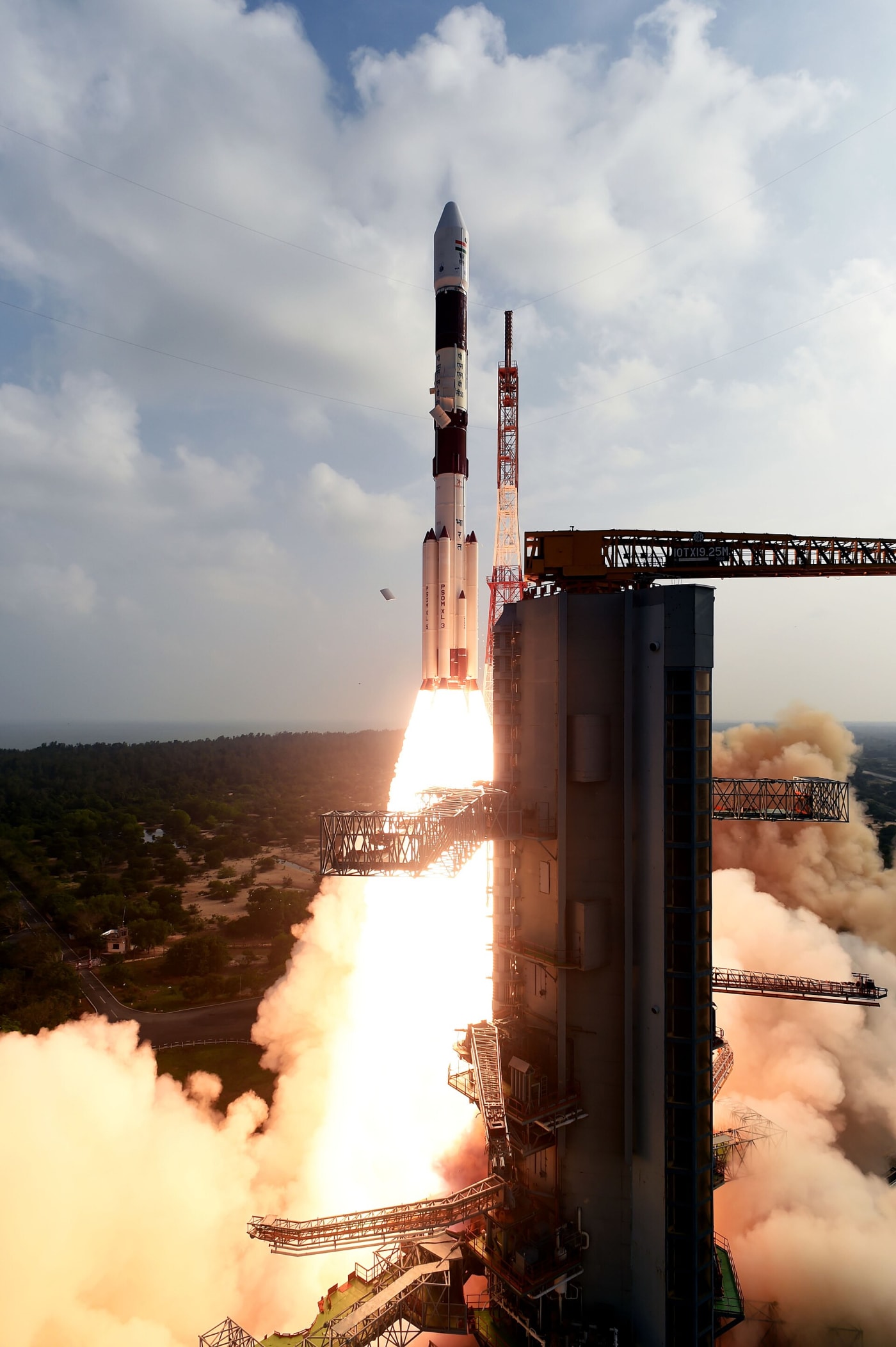
Mars Orbiter Mission reaches Mars
India becomes the first nation to reach Mars orbit on its maiden attempt.
2017
104 satellites on one rocket
2019
Chandrayaan-2 launched
2022
SSLV test flight; Vikram-S
2023
Chandrayaan-3 lands on the Moon
2024
XPoSat launched
2025
SpaDeX: India docks in space
2014
1milestones
20142025
Latest
Mars Orbiter Mission reaches Mars
India becomes the first nation to reach Mars orbit on its maiden attempt.
Why it matters These missions expanded India's capabilities in launch, deep-space navigation, and planetary exploration, often at comparatively low cost.
- 2014: first nation to reach Mars orbit on a maiden attempt
- 2017: 104 satellites on a single launch
- 2023: Chandrayaan-3 lands near the lunar south pole
History
Notable projects
Recent milestones came quickly. In January 2025, the SpaDeX mission made India the fourth nation to master satellite docking in orbit — a key step toward a space station. ISRO marked its 100th launch from Sriharikota, launched the NASA-ISRO NISAR Earth-observation satellite in July 2025, and saw astronaut Shubhanshu Shukla fly to the ISS. The Aditya-L1 solar observatory began returning data.
How it works
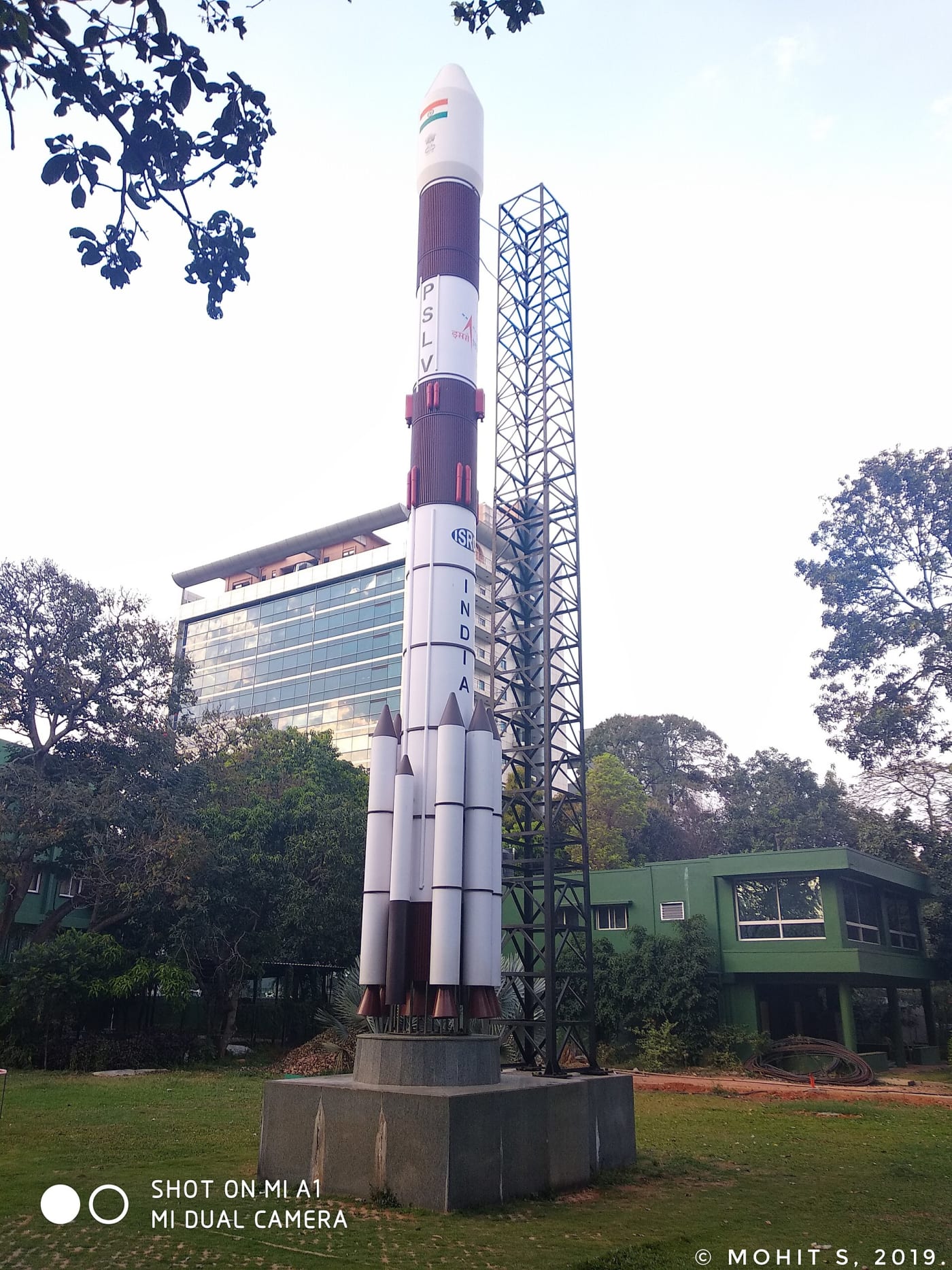
ISRO's reputation rests on doing more with less. Its workhorse PSLV rocket has launched hundreds of satellites reliably and cheaply, while the heavier GSLV / LVM3 carries big payloads like Chandrayaan and the future crew capsule; launches fly from Sriharikota on the east coast. India's famously low costs come from frugal engineering and in-house manufacturing. Since the 2020 opening, a private sector of 400-plus space startups now builds components and small satellites under IN-SPACe and NSIL.
Outlook
The next chapter is human spaceflight. Gaganyaan — which would make India one of the few nations able to send humans to space independently — has its first uncrewed flight targeted for the fourth quarter of 2026, followed by two more uncrewed missions by 2027 before the first crewed flight. Beyond it, ISRO plans the first module of the Bharatiya Antariksh Station by 2028, a full station by 2035, and a crewed Moon landing by 2040.
By the numbers
Chandrayaan-3 — first at the lunar south pole (2023). 4th nation to master space docking (SpaDeX, 2025). $8.4 billion space economy (2023). 434 foreign satellites launched (January 2026). ₹13,416 crore space budget (2025-26). Gaganyaan first uncrewed flight targeted for late 2026. Sources: ISRO, Department of Space, PIB.
Data current to: March 2026
Source: Department of Space / ISRO via PIB — major missions and milestones, 2014–2025. PIB, June 2026: Mars orbit on the first attempt (2014), Chandrayaan-3's landing near the lunar south pole (2023), the SpaDeX docking (January 2025) and the NISAR launch (July 2025), a space economy of about $8 billion, and 399 foreign satellites launched since 2014 on top of 35 before (linked). · link