Two Acts framed the decade before 2014: the Right to Education Act, 2009 made schooling a fundamental right for children aged 6 to 14, and Sarva Shiksha Abhiyan put a school within reach of nearly every village. Access was largely solved; quality was not. Swachh Bharat: Swachh Vidyalaya (2014-15) built toilets in every government school in a single year. In 2018 the school schemes were merged into Samagra Shiksha, one integrated programme from pre-primary to higher secondary. Then in July 2020 the National Education Policy replaced the 1986 policy and restructured schooling itself, from 10+2 to 5+3+3+4 — three years of pre-school, then foundational, preparatory, middle and secondary stages built around how children actually develop.
School Education
School Education
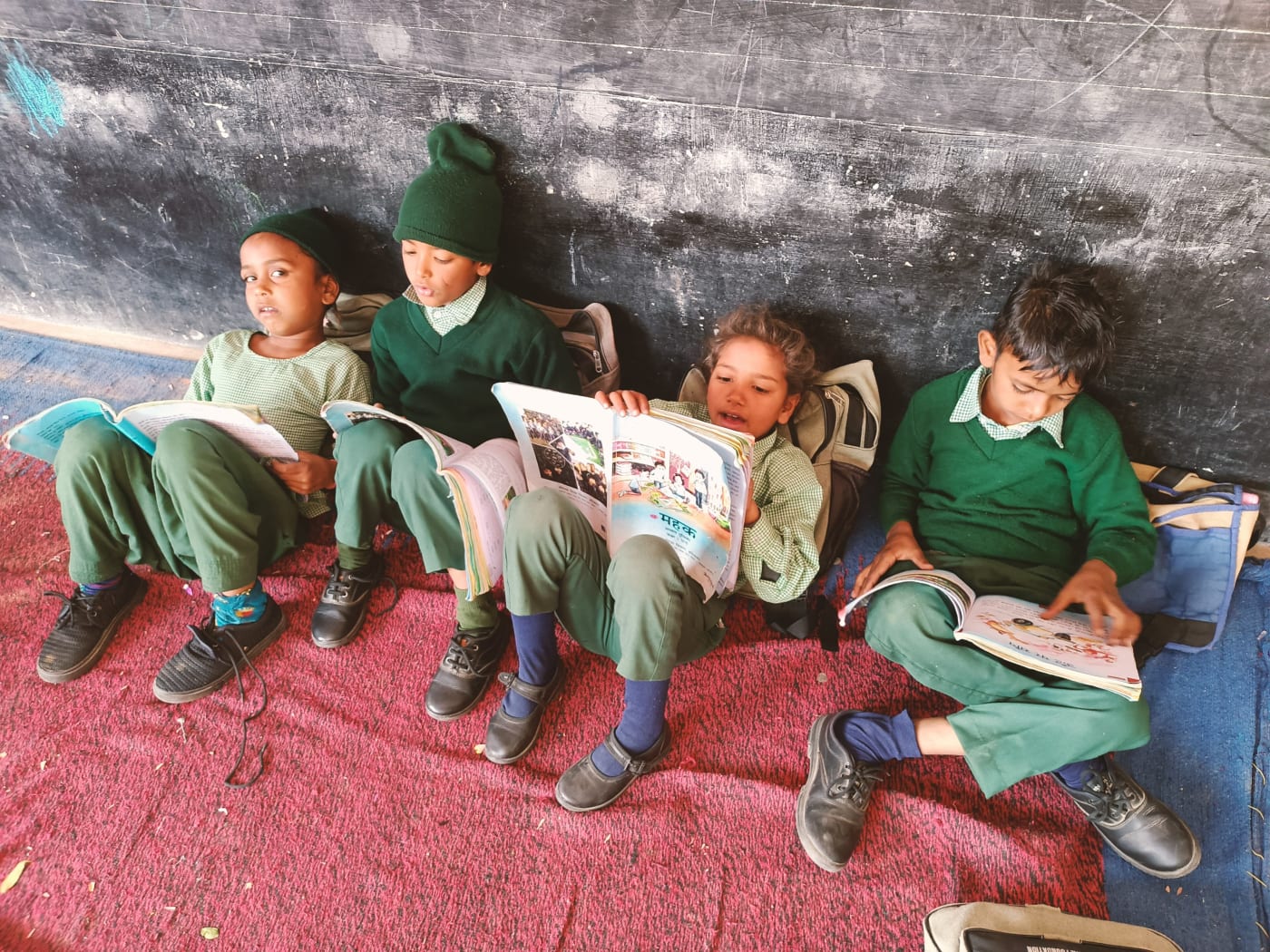
India runs the largest school system in the world: 24.8 crore students in 14.72 lakh schools in 2024-25, taught by more than a crore teachers — a figure that crossed one crore for the first time that year and reached 1,02,73,020 in 2025-26. Since 2014 the work has been less about building new schools than about what is inside the ones that exist. Teachers were added and the pupil-teacher ratio fell to 10 at the foundational stage and 21 at secondary, both comfortably inside the National Education Policy's 1:30 target. Facilities were filled in: 99.5% of schools now have safe drinking water, 98.5% have girls' toilets, 95.0% have electricity, and the share with internet access rose from 22.3% in 2019-20 to 67.4% in 2025-26. The counter shows that last figure.
1.02 crore+
School teachers in 2025-26 (past 1 crore since 2024-25)
24.8 cr
Students in 14.72 lakh schools (2024-25)
1:10
Pupil-teacher ratio, foundational stage
Share of schools with internet access
| Year | Schools with internet access |
|---|---|
| 2023 | 49.7 % of schools |
| 2024 | 53.9 % of schools |
| 2025 | 63.5 % of schools |
| 2026 | 67.4 % of schools |
2023
0.0% of schools
Schools with internet access
20232026
Since 2023
Added
+17.7 % of schools
2023
49.7 % of schools
2026
67.4 % of schools
Why it matters School is where most Indians meet the state for the first time, and for the longest. Whether a child can read by Class 3, stays until Class 10 and sits in a room with light, water and a working computer decides far more about the next thirty years than any policy passed later.
- Teachers crossed one crore for the first time in 2024-25: 94.83 lakh (2022-23) → 1,01,22,420 (2024-25) → 1,02,73,020 (2025-26).
- Pupil-teacher ratio in 2025-26 is 10 (foundational), 12 (preparatory), 17 (middle) and 21 (secondary), against NEP's 1:30 norm.
- Dropout rates in 2025-26: 1.8% preparatory, 3.6% middle, 7.0% secondary, against 2.3%, 3.5% and 8.2% in 2024-25 and 3.7%, 5.2% and 10.9% in 2023-24.
- Class III children in government schools able to read a Grade II text: 20.9% (2018) → 23.4% (2024), the highest since 2005 (ASER, cited by PIB).
- PARAKH Rashtriya Sarvekshan 2024 tested 21.15 lakh students; at Grade 3, state government school pupils outperformed private and urban schools.
- Single-teacher schools fell to 104,125 and zero-enrolment schools by 38% to 7,993 in 2024-25, and to 100,843 and 5,663 in 2025-26.
- PM SHRI: ₹27,360 crore to upgrade more than 14,500 schools as NEP exemplars; 12,084 selected across 32 States/UTs by the end of 2024.
History
Notable milestone
In 2024-25 the number of school teachers crossed one crore for the first time since UDISE+ began — 1,01,22,420, up 6.7% in two years. The effect shows in the pupil-teacher ratio, now 10 at the foundational stage and 21 at secondary, both well inside the National Education Policy's 1:30 recommendation. In the same year single-teacher schools fell to 104,125 and schools with zero enrolment dropped by 38%, as states used the individual-student data to move teachers where the children actually were. In 2025-26 the number of teachers rose to 1,02,73,020, single-teacher schools fell to 100,843 and zero-enrolment schools to 5,663.
How it works
The policy runs on four tracks. Foundations: NIPUN Bharat (July 2021) targets reading and arithmetic by Class 3 by 2026-27; Vidya Pravesh has given 4.2 crore Grade 1 entrants a 12-week play-based start across 8.9 lakh schools; over 1.1 crore children are enrolled in Balvatikas. Teachers: 12.97 lakh have been trained on foundational literacy and numeracy under NISHTHA. Exemplars: PM SHRI puts ₹27,360 crore into upgrading more than 14,500 existing schools into models that implement NEP in full, chosen by a competitive Challenge Method — 12,084 had been selected across 32 States and UTs by the end of 2024. Measurement: the PARAKH Rashtriya Sarvekshan replaced the old National Achievement Survey, testing 21.15 lakh students in Grades 3, 6 and 9 on 4 December 2024.
What the data can and cannot show
This page charts internet access rather than enrolment for a reason. In 2022-23 UDISE+ moved from school-level returns to individual student records, and the Ministry of Education states plainly that its data "is not strictly comparable with previous reports on various educational indicators like GER, NER, Dropout rates". So no honest line runs from 2014 to 2025 for enrolment or dropout — the counting method changed underneath. Facility counts were never student-record based, which is why they survive the break. The chart still covers only four years: the share of schools with internet was 22.3% in 2019-20, but 2020-21 and 2021-22 were published as counts of schools rather than percentages, and turning those into a percentage would be our arithmetic rather than the Ministry's figure. Two further numbers belong here rather than buried: secondary-stage retention was 51.9% in 2025-26, up from 47.2% a year earlier but still only just over half, which the Ministry links partly to how many schools offer secondary grades at all; and while Class III reading is at its highest since 2005, 23.4% means most children of that age still cannot read a Grade II text. The direction is the achievement; the level is the work left.
Outlook
NIPUN Bharat's deadline for universal foundational literacy and numeracy is 2026-27, the same year PM SHRI finishes its five-year funding cycle — so the next two years are when both are judged. The measurement system is now in place to do that judging: PARAKH surveys every few years, individual student records in UDISE+, and the Holistic Progress Card replacing marksheets with a fuller picture of each child. The unfinished items are visible in the same tables as the progress: 58.2% of schools had ramps and handrails in 2025-26, and secondary retention needs to rise a long way before the policy's goal of universal enrolment by 2030 is in reach.
Data current to: FY 2025-26 (UDISE+)
Source: Ministry of Education, UDISE+ via PIB — share of schools with internet access: 49.7% (2022-23), 53.9% (2023-24), 63.5% (2024-25) and 67.4% (2025-26, UDISE+ report released 7 July 2026, linked). The chart covers only these four consecutive years, because the 2019-20 figure of 22.3% is the last one published on this basis and 2020-21 and 2021-22 were reported as school counts rather than percentages. Enrolment, GER and dropout are not charted because UDISE+ changed to individual student records in 2022-23 and the Ministry states the data is not comparable with earlier years. · link