India's artisans — the carpenter, blacksmith, potter, cobbler, weaver, goldsmith — have practised inherited crafts for centuries, but many worked outside formal support, without cheap credit, updated skills or market links. Launched on 17 September 2023 by the Ministry of MSME, PM Vishwakarma is named after Vishwakarma, the divine craftsman of Indian tradition.
PM Vishwakarma · Artisans
PM Vishwakarma · Artisans
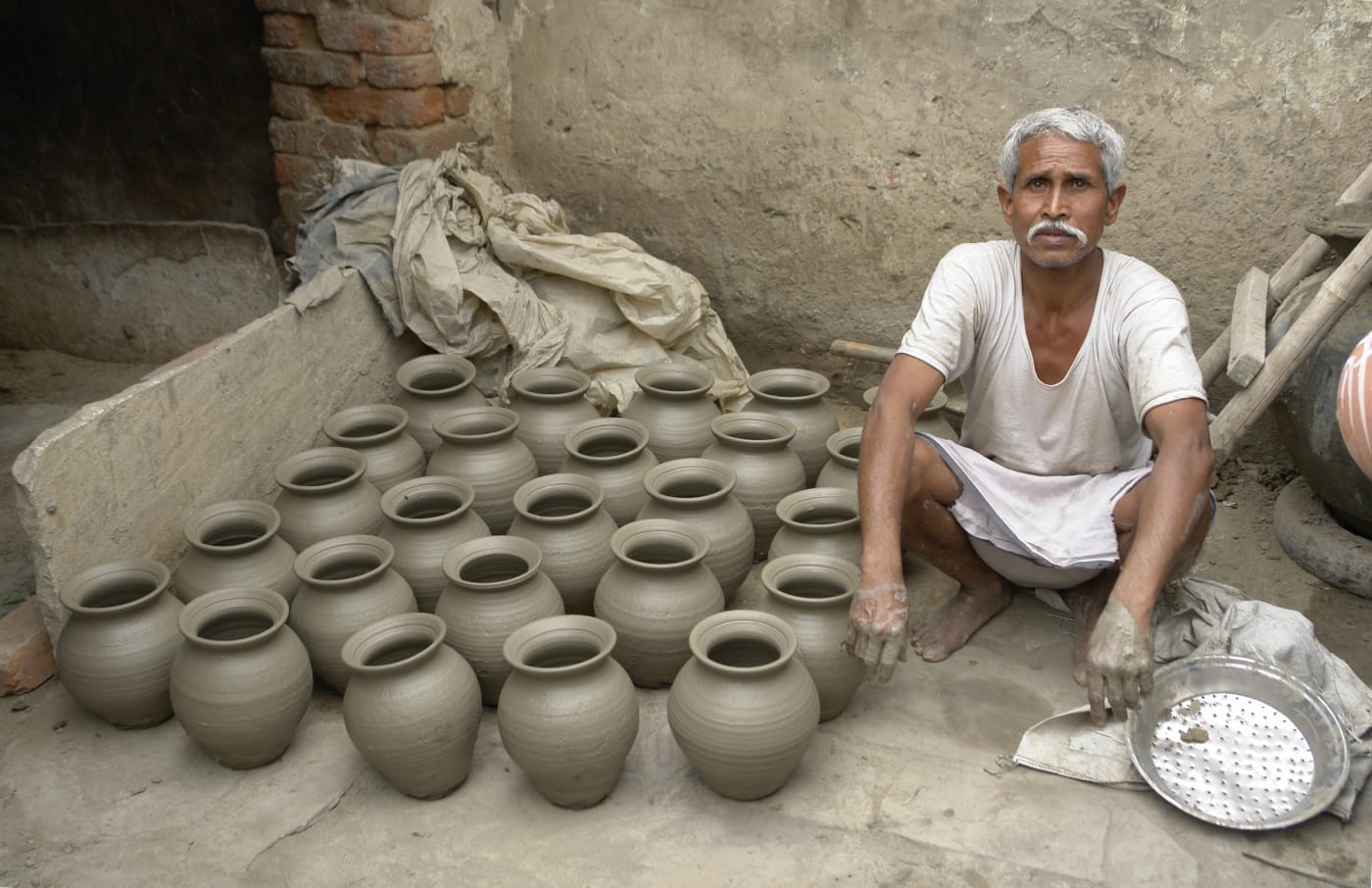
PM Vishwakarma, launched on 17 September 2023, gives India's traditional artisans — carpenters, blacksmiths, potters, weavers, goldsmiths and 13 more trades — modern support: skilling, a toolkit grant, cheap collateral-free credit and market access. The counter shows artisans registering under the scheme (illustrative).
18
Traditional trades
Rs 13,000 cr
Scheme outlay (to 2028)
30 lakh
Artisan families (target)
Artisans registered
| Year | Artisans registered |
|---|---|
| 2023 | 0 lakh |
| 2025 | 30 lakh |
| Dashed bars are years the source does not publish; the shape between published years is drawn, not measured. | |
2023
0lakh
Artisans registered
20232025
Since 2023
Added
+30 lakh
2023
0 lakh
2025
30 lakh
Dashed bars are years the source does not publish; the shape between published years is drawn, not measured.
Why it matters Millions of Indians earn a living with their hands, in crafts passed down for generations — but often without training updates, capital or a way to reach customers. PM Vishwakarma tries to bring these 'Vishwakarmas' (after the divine craftsman) into the formal economy without erasing their craft.
- PM Vishwakarma launched on 17 September 2023, run by the Ministry of MSME.
- It covers 18 traditional trades and targets over 30 lakh (3 million) artisan families.
- It has a Rs 13,000 crore outlay across 2023-24 to 2027-28.
- Benefits include skilling with a stipend, a toolkit incentive and collateral-free credit.
History
Notable milestone
The scheme covers 18 traditional trades and targets over 30 lakh (3 million) artisan families, with a Rs 13,000 crore outlay to 2027-28. Uptake was heavy from the start: over 2 crore applications were submitted in its first year, with lakhs registered after verification.
How it works
A registered artisan gets skill training with a Rs 500-a-day stipend, a Rs 15,000 toolkit incentive, a certificate and ID, and collateral-free credit — Rs 1 lakh first, then up to Rs 2 lakh — at a subsidised 5% interest. Digital and marketing support helps them reach buyers, including on e-commerce.
Outlook
The bet is that a small package — a better toolkit, a short course, a first loan and a market link — can lift a traditional craftsperson's income without pulling them off their craft. It complements existing MSME and Mudra credit, aimed squarely at the hand-and-tool worker often missed by formal schemes.
By the numbers
18 traditional trades covered. 30 lakh+ artisan families targeted. Rs 13,000 crore outlay (2023-24 to 2027-28). Rs 15,000 toolkit incentive; 5% collateral-free credit. Launched 17 September 2023. Sources: Ministry of MSME, PIB.
Data current to: as on 1 December 2025
Source: Ministry of MSME via PIB — artisans registered under PM Vishwakarma (lakh), from its launch on 17 September 2023. PIB: 30 lakh beneficiaries registered as on 1 December 2025, of whom 23.09 lakh had been trained (linked). Years without a published total are not plotted. · link