Most Indian workers are informal — vendors, farm and construction labour, gig workers — long invisible to any welfare system. The e-Shram portal (2021) built the first national registry of unorganised workers.
Labour & Social Security
Labour & Social Security
Most of India's workforce is in the informal sector — street vendors, construction workers, gig workers — historically outside any social-security net. The e-Shram portal (2021) built the first national database of unorganised workers, registering over 30 crore of them (about 54% women) and linking them toward welfare schemes. Four labour codes replacing 29 old laws took effect on 21 November 2025. The counter shows e-Shram registrations.
31.9 cr
e-Shram registrations (Aug 2026)
~54%
Women among registered
21 Nov 2025
Labour Codes in force
e-Shram registrations (Aug 2021 → Aug 2026)
| Year | e-Shram registrations |
|---|---|
| 2021 | 15.5 crore |
| 2023 | 29.2 crore |
| 2024 | 30.5 crore |
| 2025 | 31.4 crore |
| 2026 | 31.9 crore |
| Dashed bars are years the source does not publish; the shape between published years is drawn, not measured. | |
2021
0.0crore
e-Shram registrations
20212026
Since 2021
Added
+16.4 crore
2021
15.5 crore
2026
31.9 crore
Dashed bars are years the source does not publish; the shape between published years is drawn, not measured.
Why it matters A registry of informal workers is the first step to giving them insurance, pensions and portable benefits — extending the safety net to those who need it most.
- e-Shram: 31.89 crore workers registered (Aug 2021 → Aug 2026)
- 54% women; 4 labour codes replacing 29 laws in force since 21 Nov 2025
- Source: Ministry of Labour & Employment
History
Building a safety net
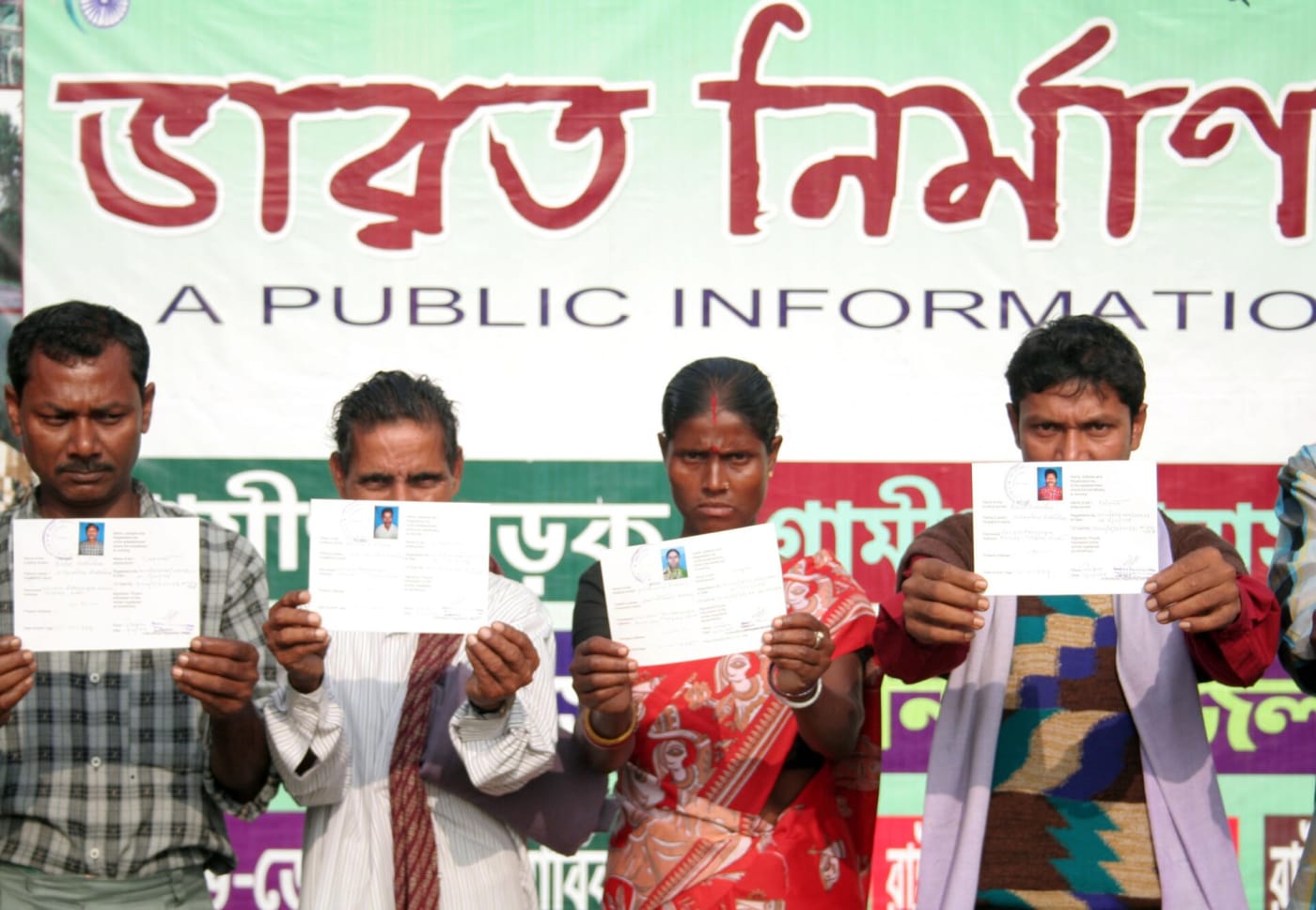
Over 31.89 crore workers (about 54% women) had registered by August 2026, a step toward insurance, pensions and portable benefits. Four labour codes, in force since 21 November 2025, replace 29 central labour laws and extend social security, including to gig and platform workers.
How it works
Four Labour Codes, on wages, industrial relations, social security and occupational safety, replaced 29 central labour laws from 21 November 2025. The centrepiece for informal workers is the e-Shram portal — a national database that gives each unorganised worker a Universal Account Number, linking them to pensions, insurance and welfare schemes in one place.
Outlook
Over 31.89 crore unorganised workers — more than half of them women — are now registered on e-Shram, and for the first time the Social Security Code explicitly covers gig and platform workers. Registration is the foundation the benefits are built on: pension through the Pradhan Mantri Shram Yogi Maan-dhan scheme, life and accident cover through the Jan Suraksha schemes, and the four labour codes, in force since 21 November 2025, to give India's informal workforce a formal safety net for the first time.
By the numbers
e-Shram: 31.89 crore workers registered (18 Aug 2026); 54.28% women; 4 labour codes consolidating 29 laws, in force since 21 Nov 2025. Source: Ministry of Labour & Employment (PIB).
Data current to: 18 August 2026
Source: Ministry of Labour & Employment (via PIB) — cumulative registrations of unorganised workers on the e-Shram portal since its launch on 26 August 2021, crore, at the latest date reported each year: 15.53 (28 December 2021), 29.23 (17 December 2023), 30.48 (19 December 2024), 31.42 (22 December 2025) and 31.89 (18 August 2026, linked); 54.28% of those registered are women. No year-end figure was found for 2022. · link