Generic medicines were available in India, but trust in them was low and few shops stocked them. The Jan Aushadhi scheme, begun in 2008, had only 80 stores, in a handful of states, by May 2014. In September 2015 it was revamped as the Pradhan Mantri Janaushadhi Yojana, and it now runs as the Pradhan Mantri Bhartiya Janaushadhi Pariyojana (PMBJP).
Jan Aushadhi · Affordable Medicines
Jan Aushadhi · Affordable Medicines
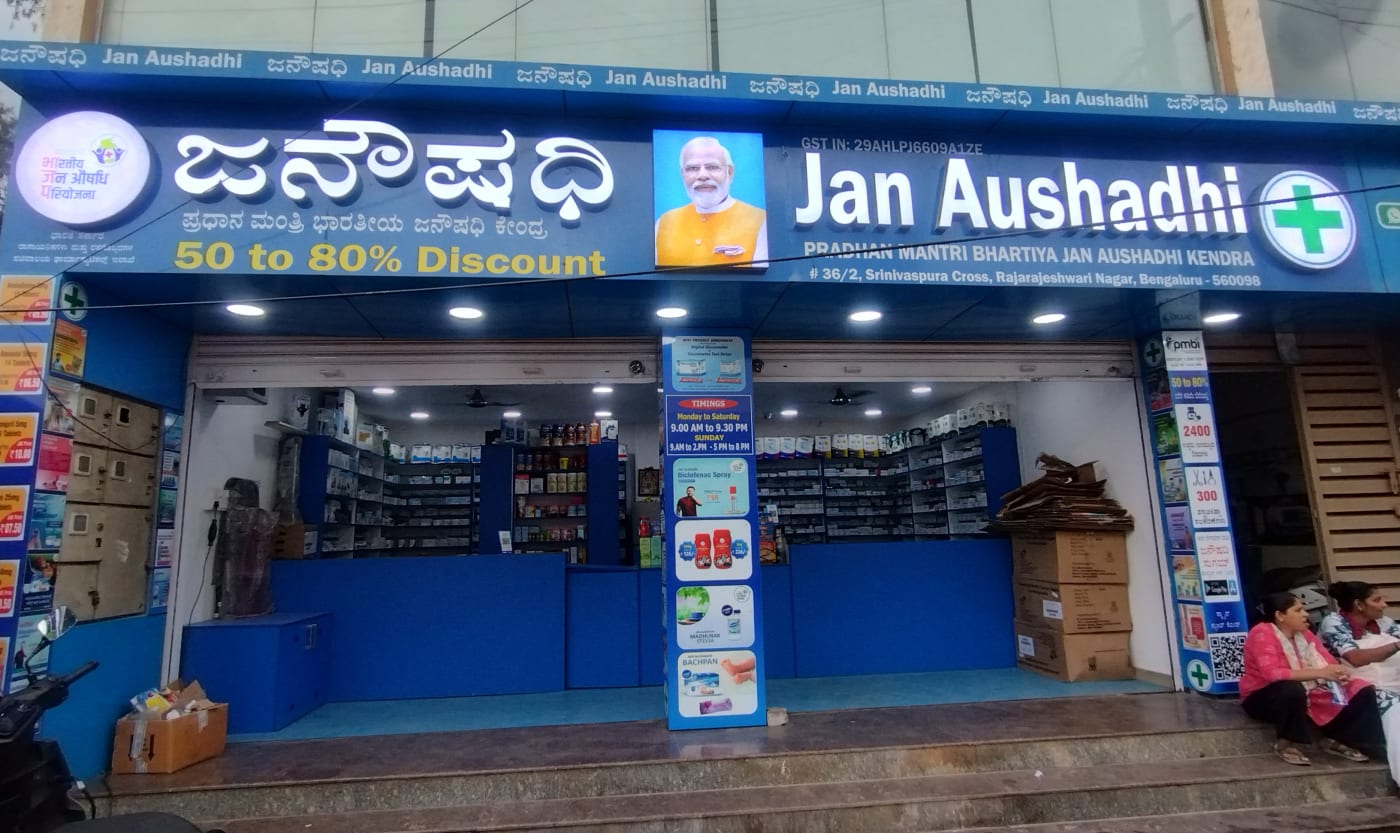
Jan Aushadhi Kendras sell quality generic medicines at 50 to 80 percent less than branded equivalents. From just 80 stores in 2014, the network grew to 20,149 by June 2026, stocking 2,110 medicines and 315 surgical items, with every batch tested before it reaches a shelf. Sales reached ₹2,252 crore in 2025-26, and citizens have saved an estimated ₹45,000 crore over 12 years. The counter shows Jan Aushadhi Kendras open.
₹45,000 cr
Saved by citizens in 12 years (est.)
50–80%
Cheaper than branded medicines
₹1
Suvidha sanitary pad (100 crore+ sold)
Jan Aushadhi Kendras open
| Year | Jan Aushadhi Kendras |
|---|---|
| 2014 | 80 kendras |
| 2021 | 7,500 kendras |
| 2023 | 10,000 kendras |
| 2025 | 17,610 kendras |
| 2026 | 20,149 kendras |
| Dashed bars are years the source does not publish; the shape between published years is drawn, not measured. | |
2014
0kendras
Jan Aushadhi Kendras
20142026
Since 2014
Added
+20,069 kendras
2014
80 kendras
2026
20,149 kendras
Dashed bars are years the source does not publish; the shape between published years is drawn, not measured.
Why it matters Medicines are one of the biggest health costs families pay themselves. A trusted, low-cost store nearby lowers that bill, above all for people on long-term treatment, without any compromise on quality.
- Jan Aushadhi Kendras: 80 (2014) → 20,149 (30 June 2026).
- Medicines cost 50% to 80% less than branded equivalents.
- 2,110 medicines and 315 surgical items, with every batch tested before distribution.
- Annual sales: ₹7.29 crore (2014-15) → ₹2,252 crore (2025-26).
- About 15 lakh people visit Jan Aushadhi Kendras every day.
- More than 100 crore Suvidha sanitary pads had been sold at ₹1 each by January 2026.
History
Notable milestone
The network passed 7,500 kendras in March 2021 and 10,000 in November 2023, when the 10,000th opened at AIIMS Deoghar. By 30 June 2026 it had reached 20,149, and in the North East it grew from a single kendra in 2014 to 417. More than 100 crore Suvidha sanitary pads have been sold at ₹1 each.
How it works
Medicines are bought centrally and priced at no more than half the average price of the top three brands, which is why they cost 50 to 80 percent less. Every batch is tested before it reaches a store. Kendras are run by pharmacists, entrepreneurs and organisations across the country, and the Jan Aushadhi Sugam app lets people find the nearest store and compare prices.
Outlook
The target is 25,000 kendras by March 2027. With about 15 lakh people visiting every day and annual sales at ₹2,252 crore, Jan Aushadhi is moving toward an affordable-medicine store within easy reach of every community.
By the numbers
80 → 20,149 Jan Aushadhi Kendras (2014 → June 2026). 50–80% cheaper than branded medicines. 2,110 medicines and 315 surgical items. ₹7.29 crore → ₹2,252 crore annual sales (2014-15 → 2025-26). ₹45,000 crore estimated savings to citizens over 12 years. 15 lakh visitors a day. Target: 25,000 kendras by March 2027. Sources: Department of Pharmaceuticals, PMBI, PIB.
Data current to: June 2026
Source: Department of Pharmaceuticals / PMBI via PIB — Jan Aushadhi Kendras open: 80 (2014), 7,500th (March 2021), 10,000th (November 2023), 17,610 (November 2025), 20,149 (June 2026). · link