India entered the last decade with too few doctors and thin public health infrastructure. A sustained expansion followed: the number of medical colleges doubled from 387 in 2013-14 to 808 in 2025-26, MBBS seats grew from about 51,000 to about 1,23,700, and the number of AIIMS institutions rose from 7 to more than 20. In 2018, Ayushman Bharat launched a two-part push — neighbourhood health centres plus a large public health-insurance scheme.
Health
Health
India's medical-education capacity expanded sharply over the past decade. The number of medical colleges doubled, from 387 in 2013-14 to 808 in 2025-26, and MBBS seats grew from about 51,000 to about 1,23,700. Alongside this, the Ayushman Bharat programme built a network of health centres and launched one of the world's largest public health-insurance schemes. The counter shows the number of medical colleges.
387 → 808
Medical colleges
7 → 20+
AIIMS operational
~55 crore
Eligible for Ayushman Bharat PM-JAY
Medical colleges
| Year | Medical colleges |
|---|---|
| 2014 | 387 colleges |
| 2019 | 502 colleges |
| 2023 | 648 colleges |
| 2024 | 706 colleges |
| 2025 | 780 colleges |
| 2026 | 808 colleges |
| Dashed bars are years the source does not publish; the shape between published years is drawn, not measured. | |
2014
0colleges
Medical colleges
20142026
Since 2014
Added
+421 colleges
2014
387 colleges
2026
808 colleges
Dashed bars are years the source does not publish; the shape between published years is drawn, not measured.
Why it matters More colleges and seats mean more doctors, and public health infrastructure shapes life expectancy, disease burden and household financial security.
- Medical colleges: 387 (2013-14) → 808 (2025-26)
- AIIMS: 7 → 20+ operational; 1,82,944 Ayushman Arogya Mandirs (December 2025)
- Source: Ministry of Health / NMC
History
Notable projects
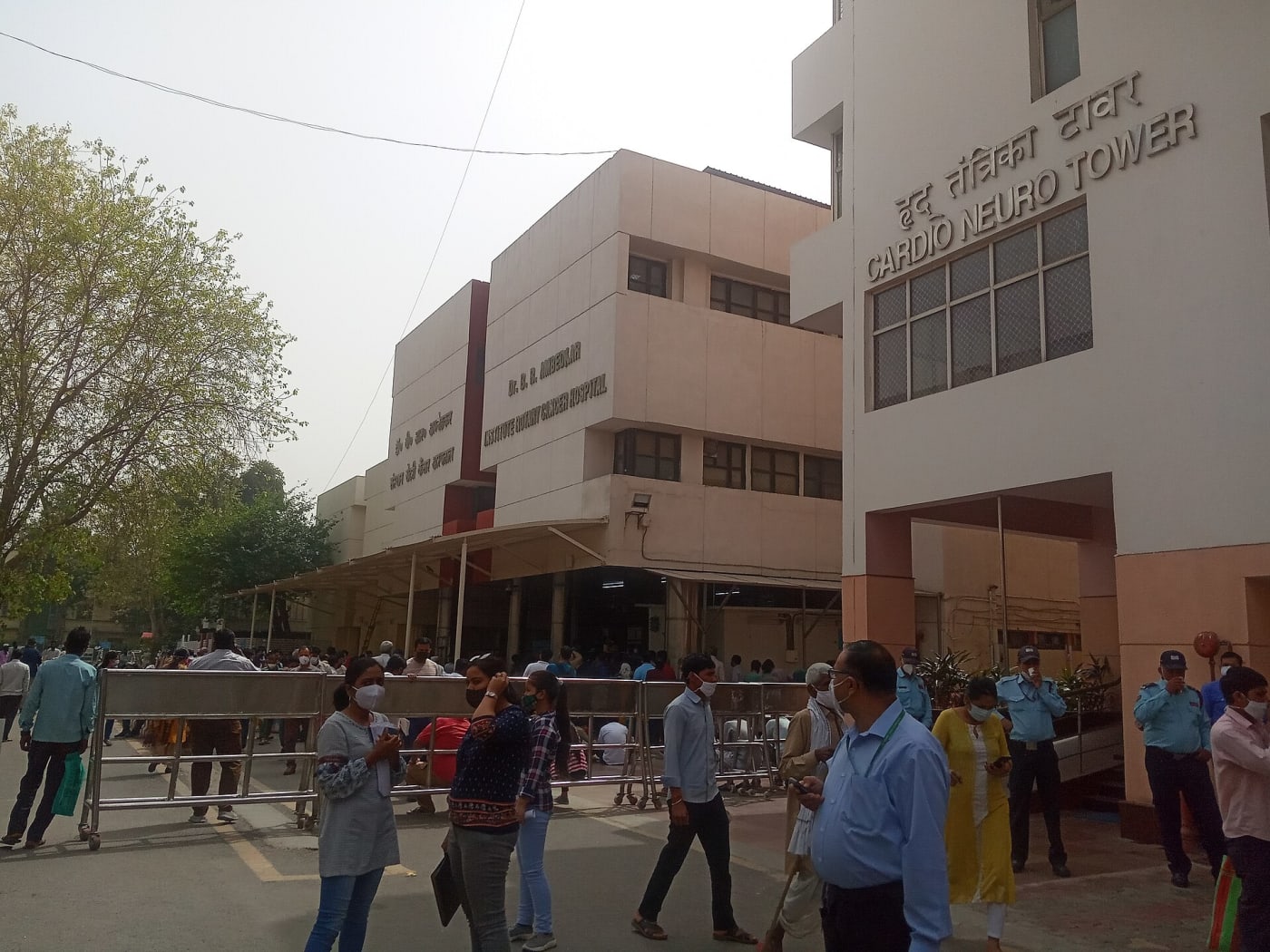
Ayushman Bharat PM-JAY is among the world's largest health-assurance schemes, offering cover of up to ₹5 lakh per family a year; about 55 crore people in 12 crore families are eligible, and all citizens aged 70 and above were added in 2024. More than 1.8 lakh Ayushman Arogya Mandirs (1,82,944 by December 2025; the former health & wellness centres) now provide primary care and screening close to home, and new AIIMS and medical colleges have spread specialist care into states that had little of it before.
How it works
India runs a mixed health system: a public network of sub-centres, primary health centres and district hospitals (free or nearly free), alongside a large private sector that treats most outpatient illness, much of it paid out of pocket (households still bore 43.4% of total health spending in 2022-23, down from 64.2% in 2013-14). The decade's shift has been to strengthen the base — converting sub-centres into Ayushman Arogya Mandirs (wellness centres) for primary care and screening — and to protect families from ruinous hospital bills through the PM-JAY insurance scheme.
Outlook
The gains are real: life expectancy has risen to about 70.6 years (2020-24), infant and maternal mortality have fallen sharply (IMR from 39 in 2014 to 24 in 2024; MMR from 130 in 2014-16 to 87 in 2022-24), and full immunisation has climbed (87.1% in NFHS-6). The next step is turning wider coverage into better care — raising public health spending (government health spending was 1.43% of GDP in 2022-23, short of the National Health Policy goal of 2.5% by 2025), fixing the rural doctor shortage, and tackling the rising burden of diabetes, heart disease and mental health.
By the numbers
387 → 808 medical colleges (2013-14→2025-26). 7 → 20+ AIIMS. ~51,000 → ~1,23,700 MBBS seats. ~55 crore people eligible under PM-JAY. 1,82,944 Ayushman Arogya Mandirs (December 2025). 70.6 years life expectancy (2020-24). Sources: Ministry of Health & Family Welfare, NMC, NHA, SRS, via PIB.
Data current to: Academic session 2025-26
Source: Ministry of Health & Family Welfare / NMC via PIB — number of medical colleges, 2013-14 to 2025-26. PIB, September 2025 (linked): medical colleges doubled to 808 in 2025-26 from 387 in 2013-14, with 1,23,700 MBBS seats. The chart shows only official counts, each labelled by the year its academic session ends: 387 (2013-14), 502 (2018-19), 648 (December 2022), 706 (December 2023), 780 (May 2025) and 808 (2025-26). · link