India has launched satellites since the 1970s and landed on the Moon in 2023 — but has never sent its own astronauts to space aboard its own rocket. Gaganyaan ('sky craft'), announced in 2018, is the programme to change that: a crewed orbital mission using a human-rated Indian launch vehicle.
Gaganyaan · Human Spaceflight
Gaganyaan · Human Spaceflight
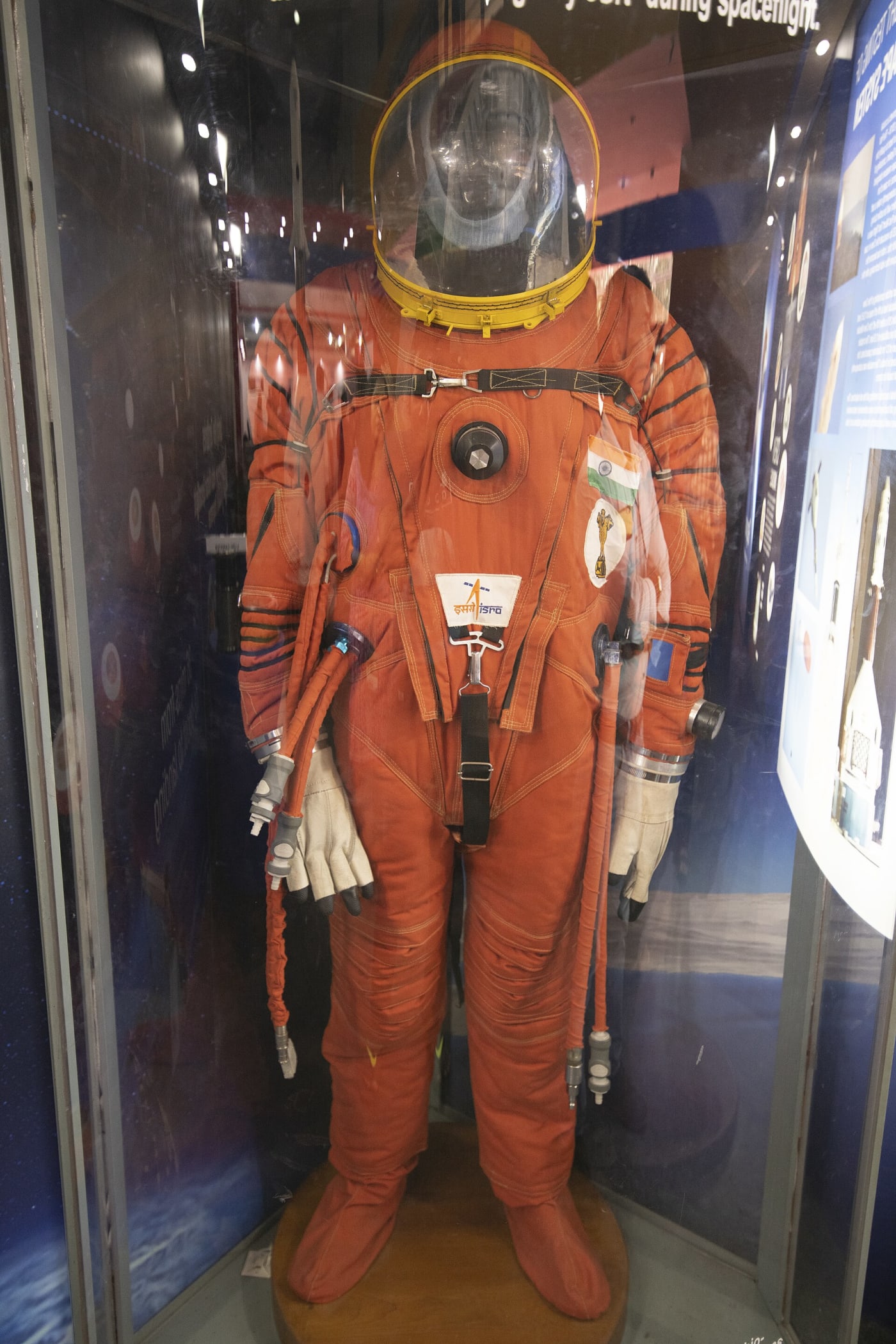
Gaganyaan is ISRO's programme to send Indians into space on an Indian rocket from Indian soil. After uncrewed tests, the first crewed orbital flight is targeted for 2027 — a step toward a national space station by 2035.
2027
First crewed mission (target)
4
Gaganyatris selected
2035
Indian space station (target)
Key milestones since 2014
2018
Cabinet approves Gaganyaan
2020
Four astronauts selected
2023
Crew escape test flight succeeds
2024
Astronaut-designates named
2024
Funding raised to ₹20,193 crore
2025
First Indian aboard the ISS
2026
Second air-drop test completed
2027 · Planned
First crewed flight
2014
0milestones
20142027
Why it matters Human spaceflight is mastered by very few nations. Succeeding would give India its own human spaceflight capability, build life-support and re-entry expertise, and inspire a generation — the human complement to Chandrayaan and Aditya.
- The first crewed Gaganyaan mission is targeted for 2027, to low-Earth orbit.
- Four Indian Air Force officers were named astronaut-designates (Gaganyatris) in February 2024; one of them, Shubhanshu Shukla, flew an 18-day mission to the International Space Station in June–July 2025.
- It uses the human-rated LVM-3 rocket; the first uncrewed flight, carrying the Vyommitra half-humanoid, is targeted for late 2026.
- Longer-term goals: an Indian space station (Bharatiya Antariksh Station) by 2035, a crewed Moon mission by 2040.
History
Notable milestone
Four Indian Air Force pilots, named astronaut-designates in February 2024, are the first Gaganyatris; they have completed generic training, and mission-specific training is under way. ISRO is running a sequence of uncrewed test flights — including the robotic astronaut Vyommitra — to prove crew safety before the first human flight, now targeted for 2027.
How it works
A human-rated LVM-3 rocket carries a crew module to low-Earth orbit, where astronauts orbit for up to three days before a parachute-assisted splashdown. New systems had to be built from scratch: life support, a crew-escape system for aborts, and heat shields for re-entry — the hardest parts of human spaceflight.
Outlook
Gaganyaan would give India its own capability to launch people on its own rocket. It is the human anchor for a bigger roadmap — an Indian space station (Bharatiya Antariksh Station) by 2035 and an Indian on the Moon by 2040.
By the numbers
2027 — target for the first crewed flight. 4 Gaganyatris selected. ₹20,193 crore approved for eight missions (September 2024); first uncrewed flight targeted for late 2026. LVM-3 — the human-rated launch vehicle. 2035 space station and 2040 crewed Moon mission — the longer roadmap. Sources: ISRO, Department of Space, PIB.
Data current to: Programme approved December 2018; first crewed flight targeted 2027
Source: Department of Space, Lok Sabha reply published by PIB (5 August 2026, linked) — the first uncrewed Gaganyaan flight, carrying the Vyommitra half-humanoid, is targeted for the fourth quarter of 2026, with two more uncrewed flights and the first crewed flight targeted by 2027. The Cabinet approved ₹20,193 crore for eight missions in September 2024, and the Bharatiya Antariksh Station is targeted to be operational by 2035. These dates are targets, not achievements, so no chart is shown. · link