The e-Courts project began in 2007 as a Mission Mode Project under the National e-Governance Plan, and Phase I (2011–2015) computerised over 14,000 courts. The Cabinet approved Phase II on 16 July 2015 at ₹1,670 crore. It ran until 2023, computerised 18,735 district and subordinate courts, and introduced the National Judicial Data Grid, e-filing and eSewa Kendras. Separately, the Centrally Sponsored Scheme for judicial infrastructure has helped States build court halls and residential units since 1993-94.
e-Courts & Judicial Infrastructure
e-Courts & Judicial Infrastructure
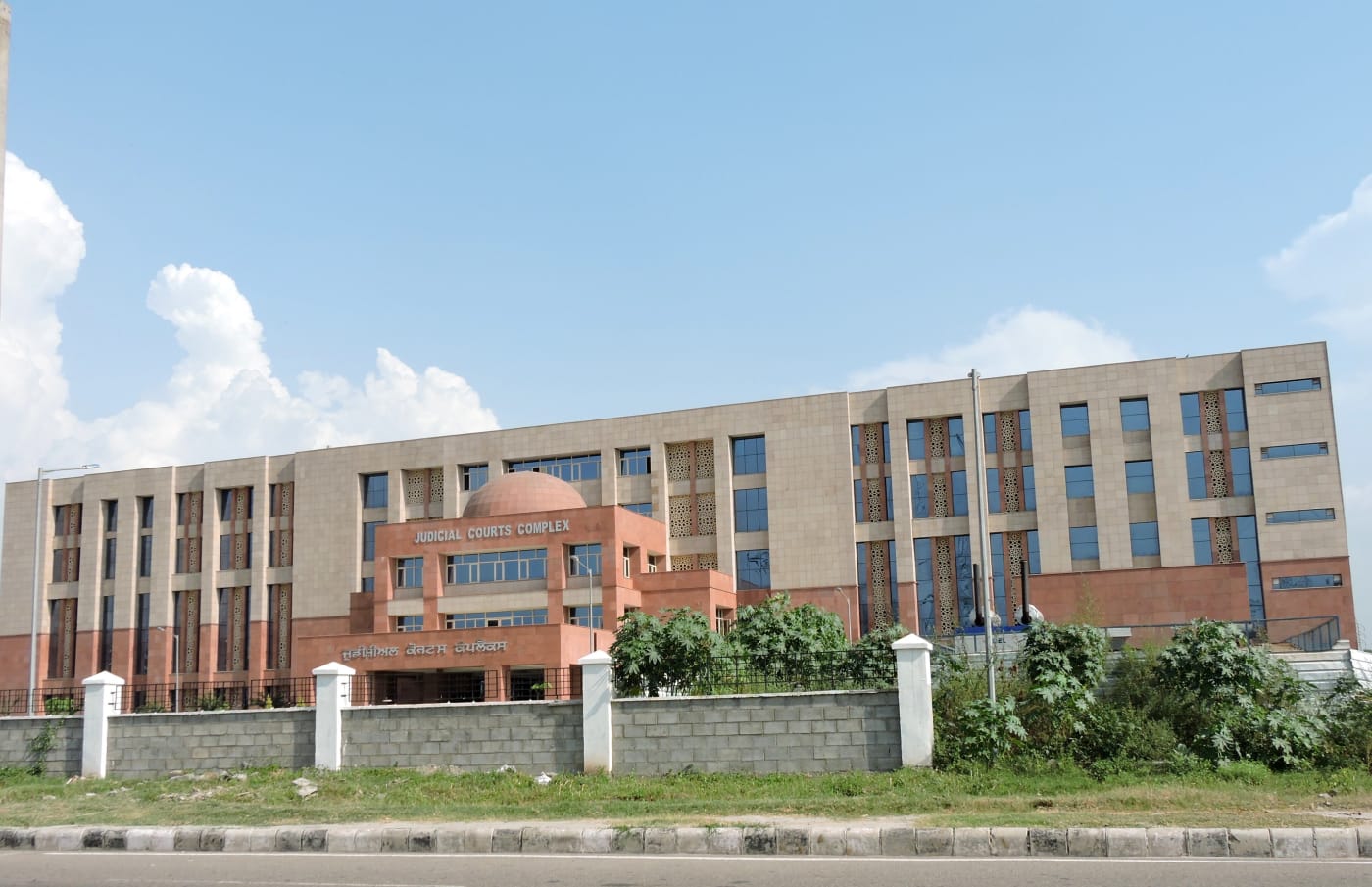
The e-Courts Mission Mode Project brings technology to India's courts, while a separate Centrally Sponsored Scheme helps States build court halls and homes for judicial officers. Phase II of e-Courts (2015–2023) had an outlay of ₹1,670 crore; Phase III (2023–2027), approved by the Cabinet on 13 September 2023, has ₹7,210 crore. PIB reported on 7 August 2026 that over 753 crore pages of court records had been digitised and courts had held over 4.18 crore remote hearings. Court halls available in district and subordinate courts rose from 15,818 in 2014 to 22,663 on 30 November 2025. The counter shows funds utilised each financial year under the Centrally Sponsored Scheme for judicial infrastructure.

4.18 crore
Remote hearings held by courts (Aug 2026)
22,712
Court halls in district and subordinate courts (28 Feb 2026)
₹7,210 cr
e-Courts Phase III outlay (approved Sep 2023)
Funds utilised for judicial infrastructure (₹ crore)
| Year | CSS funds utilised |
|---|---|
| 2017 | 538.74 ₹ crore |
| 2018 | 620.21 ₹ crore |
| 2019 | 650.00 ₹ crore |
| 2020 | 982.00 ₹ crore |
| 2021 | 593.00 ₹ crore |
| 2022 | 684.60 ₹ crore |
| 2023 | 858.00 ₹ crore |
| 2024 | 1,060.17 ₹ crore |
| 2025 | 1,123.40 ₹ crore |
2017
0.00₹ crore
CSS funds utilised
20172025
Since 2017
Added
+584.66 ₹ crore
2017
538.74 ₹ crore
2025
1,123.40 ₹ crore
Why it matters Digitised records, e-filing and video hearings let litigants, lawyers and undertrials take part in a case without repeated trips to court, and case data and orders are public on the National Judicial Data Grid. Courtrooms are a constraint on how many judges can sit: on 28 February 2026, district and subordinate courts had 22,712 court halls against a sanctioned strength of 25,894 judges.
- 16 July 2015: the Cabinet approved Phase II of e-Courts at ₹1,670 crore; ₹1,668.43 crore was spent and 18,735 district and subordinate courts were computerised.
- 13 September 2023: the Cabinet approved Phase III with an outlay of ₹7,210 crore for four years; the Union Budget 2026 allocated ₹1,200 crore to it (PIB, 25 July 2026).
- 31 January 2026: 30 virtual courts had received 10.13 crore traffic challans, and challans worth ₹1,002.73 crore had been paid.
- 31 January 2026: 48 eSewa Kendras were functioning in High Courts and 2,396 in district courts.
- 12 March 2026: litigants could access over 35.17 crore orders on the National Judicial Data Grid.
- 30 November 2025: residential units for judicial officers stood at 20,033, up from 10,211 in 2014.
History
Notable milestone
PIB reported on 7 August 2026 that over 753 crore pages of court records had been digitised, up from 637.85 crore pages till 31 December 2025 and 660.36 crore as on 31 January 2026. By then courts had held over 4.18 crore remote hearings, and more than 1.25 crore cases had been filed on the e-filing platform. Video conferencing links 3,240 court complexes and 1,272 jails (31 January 2026).
How it works
Case Information System software runs in all courts and feeds the National Judicial Data Grid, a public dashboard of pending and disposed cases, orders and judgments. Lawyers and litigants can file cases online and pay court fees and fines electronically, and eSewa Kendras in court complexes help those without access to technology. Virtual courts adjudicate traffic challans online. The Centrally Sponsored Scheme funds court halls, residential units, lawyers' halls, toilet complexes and digital computer rooms, with progress tracked on the Nyaya Vikas portal.
Outlook
Phase III aims at digital and paperless courts: digitising legacy and current records, extending video conferencing to all courts, jails and selected hospitals, and taking online courts beyond traffic violations. The Union Budget 2026 allocated ₹1,200 crore to e-Courts Phase III and ₹810 crore to the judicial infrastructure scheme. On 5 May 2026 the Cabinet approved a Bill to raise the number of Supreme Court judges from 33 to 37, excluding the Chief Justice of India. In district and subordinate courts, 21,027 judges were working against a sanctioned strength of 25,894 on 28 February 2026.
By the numbers
753 crore+ court-record pages digitised (7 Aug 2026). 4.18 crore+ remote hearings (Aug 2026). 1.25 crore+ cases e-filed (Aug 2026). 30 virtual courts; 10.13 crore traffic challans received (31 Jan 2026). 2,444 eSewa Kendras (Mar 2026). 15,818 → 22,663 court halls and 10,211 → 20,033 residential units, 2014 to 30 Nov 2025. ₹1,123.40 crore utilised under the judicial infrastructure scheme in FY 2024-25. Sources: Department of Justice, Ministry of Law and Justice, via PIB.
Data current to: As reported on 7 August 2026
Source: Department of Justice via PIB. The chart shows funds utilised each financial year under the Centrally Sponsored Scheme for judicial infrastructure in district and subordinate courts, FY 2016-17 to FY 2024-25, in ₹ crore, with each FY labelled by the year it ends: FY 2016-17 to 2020-21 from a Rajya Sabha reply of 24 March 2022, FY 2021-22 to 2024-25 from a reply of 12 March 2026. The headline is PIB's figure of over 753 crore pages of court records digitised, 7 August 2026 (linked). · link