For decades India bought most of its weapons abroad. 'Make in India' and Aatmanirbhar Bharat set out to change that — with positive indigenisation lists banning imports of thousands of items, higher FDI, and a push for private and startup participation.
Defence & Indigenisation
Defence & Indigenisation
India long bought most of its weapons abroad. Under 'Make in India' and Aatmanirbhar Bharat, domestic defence production hit a record ~₹1.78 lakh crore (FY26), up from ₹46,429 crore in FY15, with more than 15,700 items indigenised in five years and private firms and startups (via iDEX) joining in. Indigenous warships, the Tejas fighter, missiles and artillery now roll off Indian lines. The counter shows the value of defence production.
₹1.78 L cr
Defence production (FY26)
15,700+
Items indigenised (five years to May 2026)
80+
Countries buy Indian arms
Defence production
| Year | Defence production |
|---|---|
| 2014 | 0.44 ₹ lakh cr |
| 2015 | 0.46 ₹ lakh cr |
| 2020 | 0.79 ₹ lakh cr |
| 2021 | 0.85 ₹ lakh cr |
| 2022 | 0.95 ₹ lakh cr |
| 2023 | 1.09 ₹ lakh cr |
| 2024 | 1.27 ₹ lakh cr |
| 2025 | 1.54 ₹ lakh cr |
| 2026 | 1.78 ₹ lakh cr |
| Dashed bars are years the source does not publish; the shape between published years is drawn, not measured. | |
2014
0.00₹ lakh cr
Defence production
20142026
Since 2014
Added
+1.34 ₹ lakh cr
2014
0.44 ₹ lakh cr
2026
1.78 ₹ lakh cr
Dashed bars are years the source does not publish; the shape between published years is drawn, not measured.
Why it matters Building your own weapons means security that can't be cut off, a high-tech industrial base, skilled jobs, and a new export earner — India now exports defence gear to over 80 countries.
- Defence production ₹0.44 → ₹1.78 lakh crore (FY14→FY26)
- 15,700+ items indigenised in five years; target ₹3 lakh cr by 2029
- Source: Ministry of Defence
History
Made in India, for the world
Defence production hit a record ₹1.78 lakh crore in 2025-26, with more than 15,700 items indigenised in five years. India now builds its own aircraft carrier, Tejas fighters, missiles, artillery, warships and submarines — and exports defence gear to over 80 countries, targeting ₹3 lakh crore of production by 2029.
Ships & submarines India builds
India's navy has become a builder of its own fleet: of 40 vessels added over the past decade, 39 were built in Indian yards, and INS Tamal (July 2025) was the last warship India will import. On the surface are the stealth Visakhapatnam-class destroyers (Project 15B — four ships, 2021 to 2025), the Nilgiri-class stealth frigates (Project 17A — seven ships led by INS Nilgiri, 2025), Kamorta-class anti-submarine corvettes, and INS Vikrant, the first aircraft carrier designed and built in India — most armed with BrahMos cruise and Barak-8 air-defence missiles. Conventional submarines come from Project 75: six Scorpene / Kalvari-class boats built at Mazagon Dock with France's Naval Group, from INS Kalvari (2017) to INS Vaghsheer (commissioned January 2025), with a follow-on Project 75I for six air-independent-propulsion boats. And the Arihant-class nuclear submarines (INS Arihant, 2016; INS Arighaat, 2024) form the sea-based leg of India's nuclear triad, carrying K-15 and K-4 missiles — with a third boat and India's first home-built nuclear attack submarines (Project 77) to follow.
Missiles & the nuclear triad
Beyond the naval K-missiles, India fields a full missile ladder. The Agni family anchors the land leg of the nuclear triad: Agni-V, an ICBM-class missile of 5,000-plus km, was flight-tested with multiple-warhead (MIRV) technology in 2024 under Mission Divyastra — putting India in a small club alongside the US, Russia, China, France and the UK — with the lighter, road-mobile Agni-Prime alongside it. For conventional strike there is the Astra beyond-visual-range air-to-air missile, the Rudram anti-radiation missile and the supersonic BrahMos; and India has moved into hypersonics, testing long-range scramjet-powered cruise missiles (ET-LDHCM). Together with the air leg flown by fighter jets, these complete a land-air-sea nuclear triad.
Air defence & the drone war
India's air-defence shield is deliberately layered and multi-origin: the indigenous Akash and QRSAM at short-to-medium range, the Indo-Israeli MRSAM/Barak-8 in the middle tier, and the imported Russian S-400 Triumf for the long-range layer, knitted together by an integrated command network. Drones run the same indigenous-plus-imported mix: Nagastra-1, India's first home-built loitering munition, and the TAPAS and Rustom surveillance UAVs, alongside the stealth Ghatak combat drone still in development — while 31 high-endurance MQ-9B Predators are being bought from the United States. During Operation Sindoor in May 2025, after the terror attack in Pahalgam, indigenous systems such as the Akash air-defence missile, BrahMos and anti-drone systems supported the armed forces.
Fighters: Tejas to AMCA
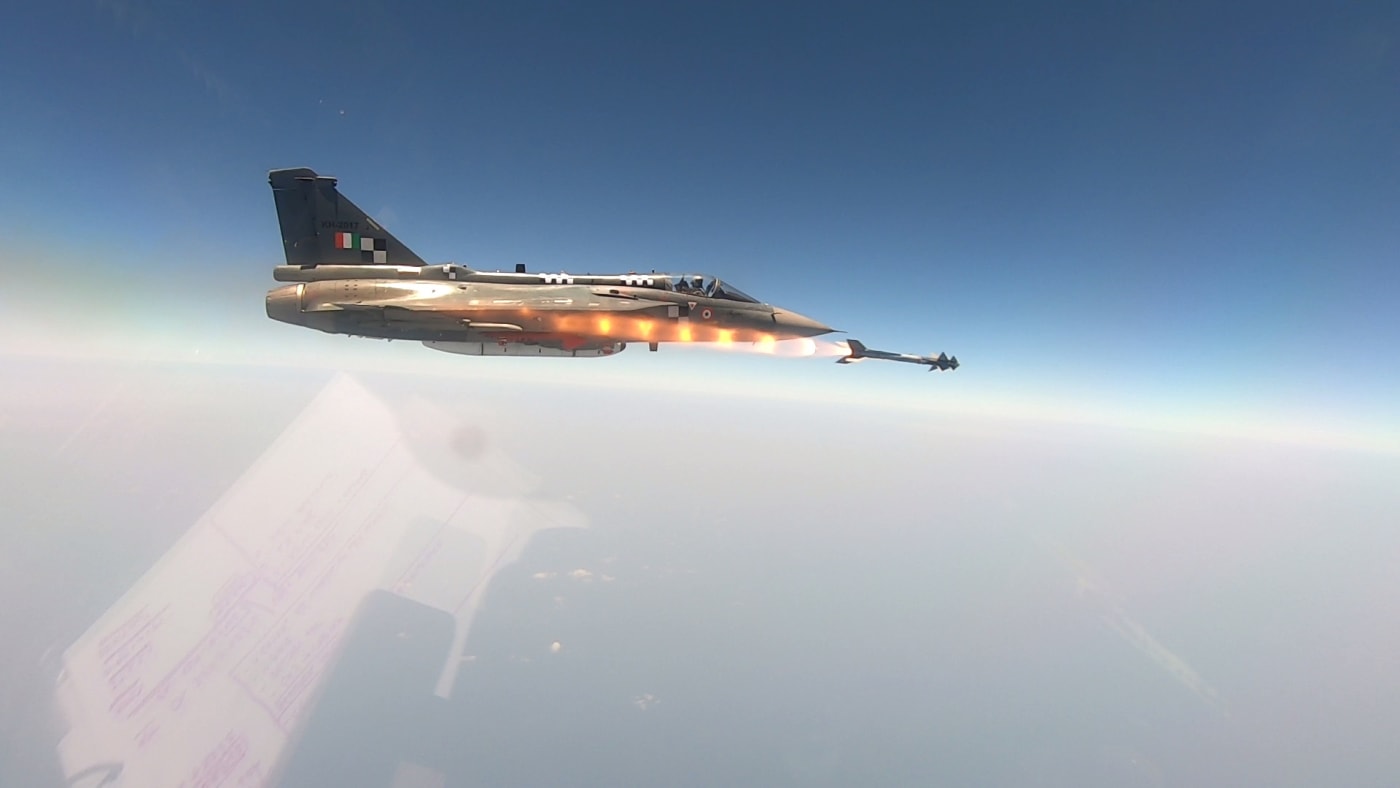
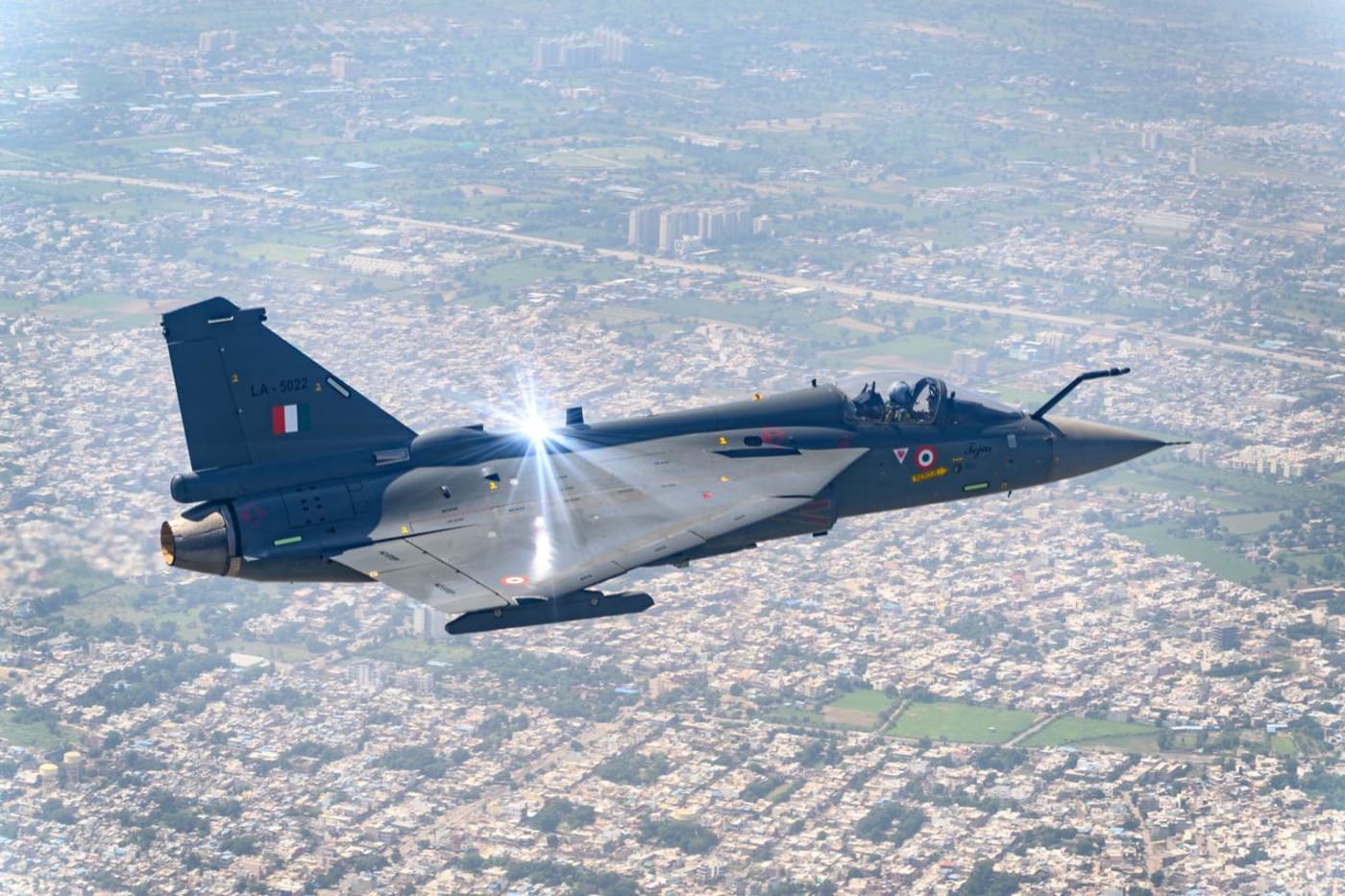
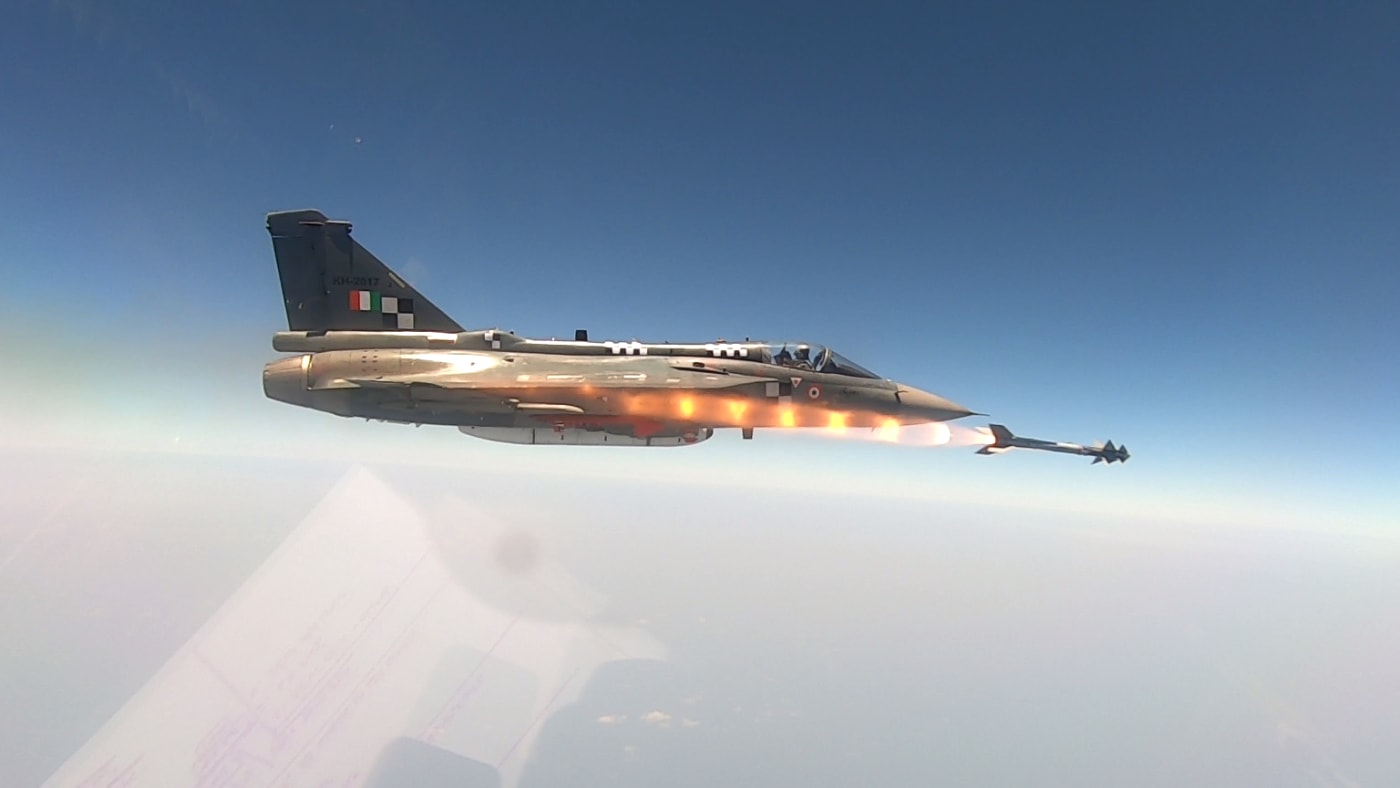
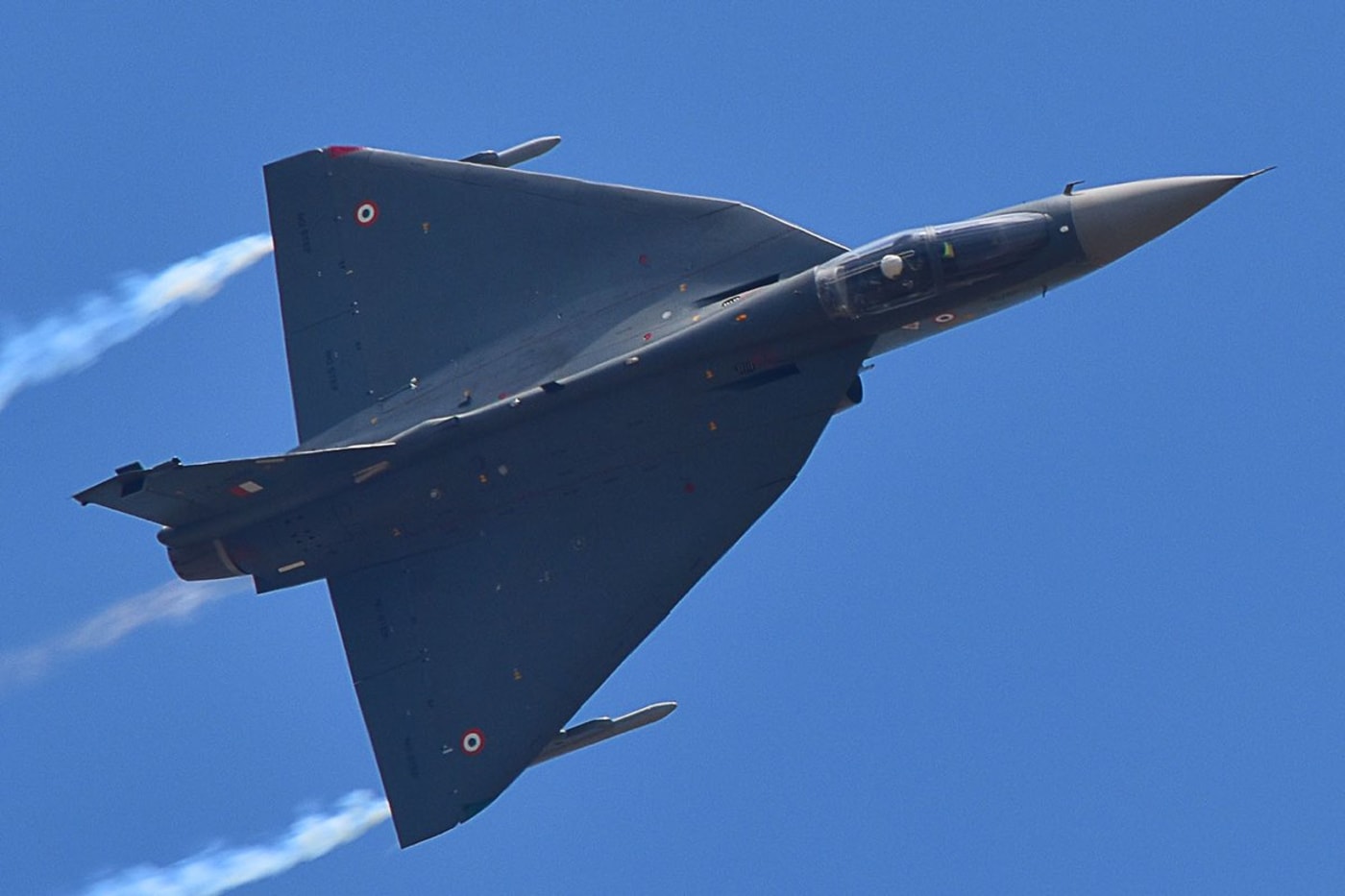
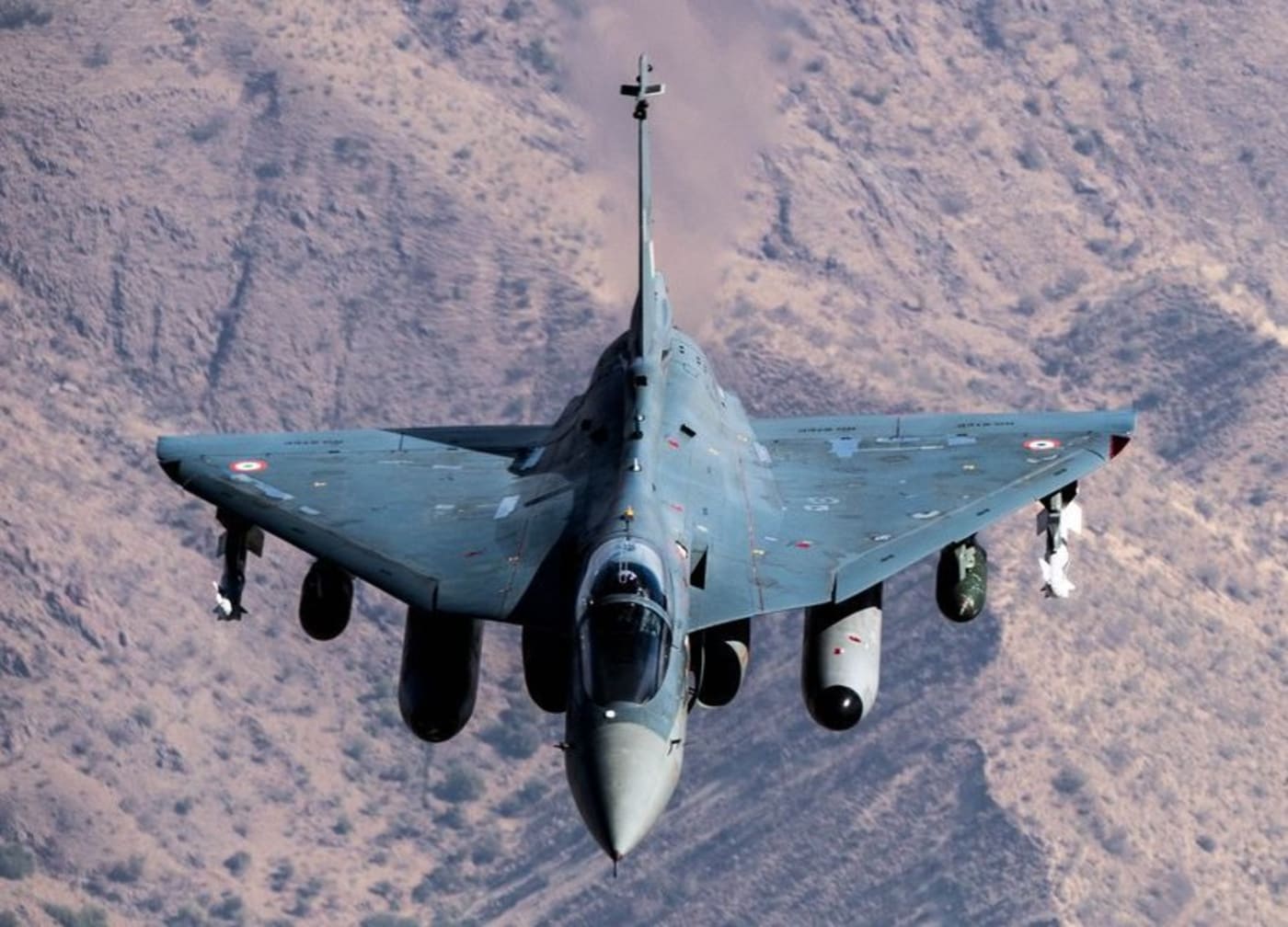
In the air, the home-built Tejas light combat aircraft is the near-term backbone, with the Mk1A now in delivery from HAL and the heavier Tejas Mk2 in development. The bigger bet is the Advanced Medium Combat Aircraft (AMCA), a fifth-generation stealth fighter whose execution model was approved in 2025 to let private firms compete alongside state agencies. In the meantime India flies the imported French Rafale — 36 for the Air Force and 26 naval Rafale-M on order.
How it works
India builds its arms through a mix of state and private players: big Defence Public Sector Undertakings (HAL for aircraft, BEL for electronics, shipyards for warships), the DRDO labs that design weapons, and a fast-growing private sector and thousands of MSMEs. The state forces the shift home with 'positive indigenisation lists' — items that can no longer be imported — reserving a large slice of the budget for domestic buys, and funding startups through the iDEX programme.
Outlook
Domestic defence production hit a record ₹1.78 lakh crore in 2025-26 (from ₹46,429 crore in 2014-15), with private firms and MSMEs a rising share. The target is ₹3 lakh crore of production by 2029. The next frontier is high-end design: the AMCA stealth fighter, indigenous jet engines and advanced sensor programmes move India from building world-class platforms to designing them, backed by positive indigenisation lists that reserve hundreds of systems for domestic industry.
By the numbers
Defence production ₹0.44 → ₹1.78 lakh crore (FY14→FY26); 15,700+ items indigenised in five years; exports to 80+ countries; target ₹3 lakh cr by 2029. Navy: 39 of 40 vessels added over the past decade were built in Indian yards. Sources: Ministry of Defence; Indian Navy.
Data current to: FY 2025-26
Source: Ministry of Defence (via PIB) — value of defence production by defence PSUs, other public-sector units and private firms, ₹ lakh crore, by financial year: ₹43,746 crore (2013-14), ₹46,429 crore (2014-15), ₹79,071 crore (2019-20), ₹84,643 crore (2020-21), ₹94,846 crore (2021-22), ₹1,08,684 crore (2022-23), ₹1,27,434 crore (2023-24), ₹1,54,071 crore (2024-25) and a record ₹1.78 lakh crore (2025-26, linked). No official public-plus-private figure was found for 2015-16 to 2018-19. · link