India's grid was built as five regional grids: Northern, Eastern, Western, North Eastern and Southern. The first inter-regional AC link, between the Eastern and North Eastern regions, came in 1992, and large-scale integration began in 2003 with the 400 kV Rourkela–Raipur line. On 31 December 2013 the 765 kV Raichur–Sholapur line joined the Southern grid to the rest, creating one synchronous national grid. In January 2019 the 220 kV Srinagar–Leh system connected Leh to the national grid.
Transmission & One Nation One Grid
Transmission & One Nation One Grid
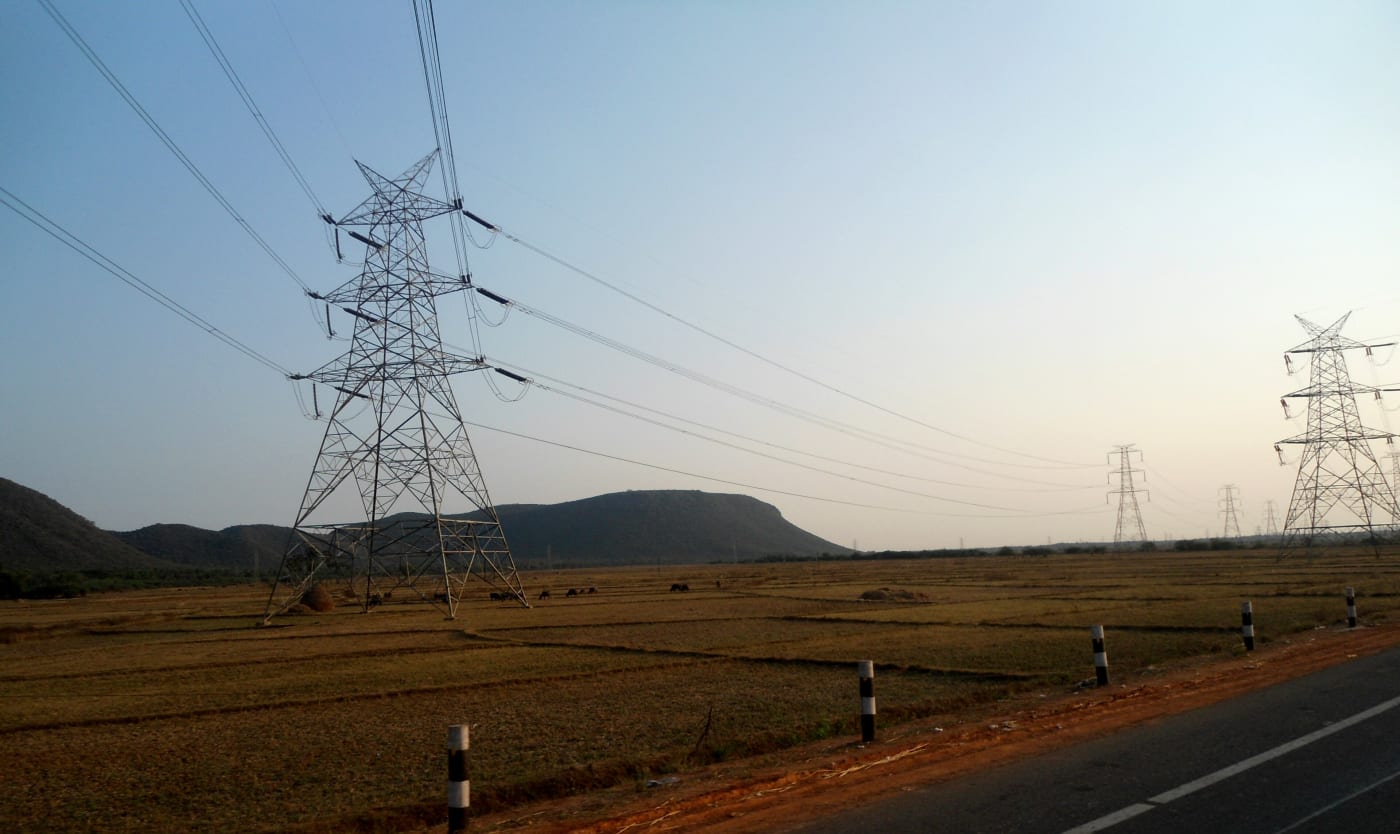
India's five regional grids became one synchronous national grid on 31 December 2013, when the 765 kV Raichur–Sholapur line linked the Southern Region to the rest of the country. Inter-regional transmission capacity, the amount of power that can move between regions, rose from 36 GW on 31 March 2014 to 1,12,250 MW in January 2022 and 1,20,340 MW by July 2026. The network of lines at 220 kV and above grew from 2.91 lakh circuit km in March 2014 to about 5.04 lakh circuit km in February 2026. The National Electricity Plan (Transmission) aims for 168 GW of inter-regional capacity by 2032. The counter shows cumulative inter-regional transmission capacity in GW.
5.04 lakh ckm
Transmission network, 220 kV and above (Feb 2026)
26 of 44 GW
Renewable power integrated under Green Energy Corridor I and II (Mar 2026)
168 GW
Planned inter-regional capacity (2032)
Inter-regional transmission capacity, GW (official dates only)
| Year | Inter-regional transmission capacity |
|---|---|
| 2014 | 36.00 GW |
| 2016 | 59.55 GW |
| 2022 | 112.25 GW |
| 2023 | 116.54 GW |
| 2026 | 120.34 GW |
| Dashed bars are years the source does not publish; the shape between published years is drawn, not measured. | |
2014
0.00GW
Inter-regional transmission capacity
20142026
Since 2014
Added
+84.34 GW
2014
36.00 GW
2026
120.34 GW
Dashed bars are years the source does not publish; the shape between published years is drawn, not measured.
Why it matters A connected grid lets a state with spare power supply a state that is short, so a shortage in one region can be met from another. It also carries solar and wind power from the sunny and windy states where it is generated to cities across the country.
- 31 December 2013: 765 kV Raichur–Sholapur line commissioned, creating One Nation, One Grid, One Frequency
- Inter-regional capacity: 36 GW (31 March 2014) → 1,12,250 MW (31 January 2022) → 1,20,340 MW (July 2026)
- Transmission network, 220 kV and above: 2.91 lakh circuit km (31 March 2014) → 4.85 lakh (31 March 2024) → about 5.04 lakh (February 2026)
- Transmission lines added: 14,390 circuit km in 2023, 10,273 in 2024 and 6,511 in 2025 (Ministry of Power year-end reviews)
- 6 January 2022: Green Energy Corridor Phase-II (intra-state) approved, about 10,750 circuit km at ₹12,031.33 crore
- 14 October 2024: National Electricity Plan (Transmission) launched, targeting 168 GW inter-regional capacity by 2032
History
Notable milestone
Inter-regional transmission capacity rose from 36 GW on 31 March 2014 to 59,550 MW in June 2016, 1,12,250 MW on 31 January 2022 and 1,20,340 MW by July 2026. Over the same period the network of lines at 220 kV and above grew from 2.91 lakh circuit km (March 2014) to 4.85 lakh (March 2024) and about 5.04 lakh (February 2026). Transformation capacity rose from 530 GVA to 1,251 GVA between March 2014 and March 2024.
How it works
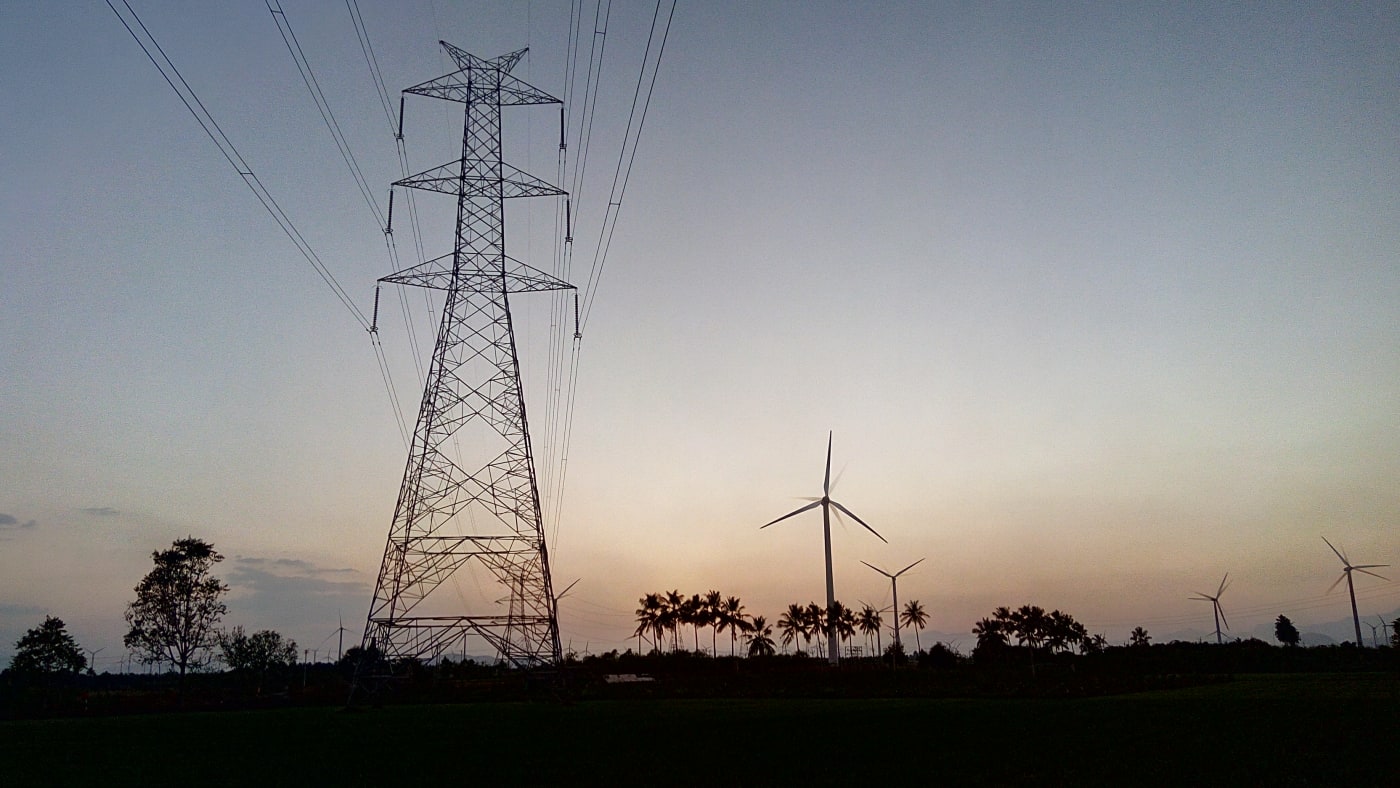
Inter-state lines carry power from central generating stations to the states that buy it, and inter-regional links let surplus power flow to deficit regions when there is spare line capacity. Renewable power is moved through Green Energy Corridors: Phase-I covers about 9,700 circuit km in eight states, and Phase-II (approved January 2022) adds about 10,750 circuit km in seven states with 33% central support. By March 2026, 26 GW of the 44 GW of renewable capacity planned under both phases had been integrated. A separate inter-state corridor, approved in October 2023 at ₹20,773.70 crore, will carry 13 GW from Ladakh over 713 km of lines, including 480 km of HVDC.
Outlook
The National Electricity Plan (Transmission), launched on 14 October 2024, plans over 1,91,000 circuit km of lines and 1,270 GVA of transformation capacity from 2022-23 to 2031-32, plus 33 GW of HVDC bipole links. It aims to raise inter-regional capacity to 143 GW by 2027 and 168 GW by 2032, and the network to 6.48 lakh circuit km by 2032. The plan also covers cross-border links with Nepal, Bhutan, Myanmar, Bangladesh and Sri Lanka. The plan puts the investment opportunity in transmission at over ₹9,15,000 crore till 2032.
By the numbers
1,20,340 MW inter-regional capacity (July 2026), up from 36 GW (31 March 2014). 5.04 lakh circuit km of lines at 220 kV and above (February 2026). 14,390, 10,273 and 6,511 circuit km added in 2023, 2024 and 2025. ₹12,031.33 crore for Green Energy Corridor Phase-II intra-state lines. 168 GW inter-regional capacity planned by 2032. Sources: Central Electricity Authority executive summary (July 2026); Ministry of Power releases and year-end reviews via PIB.
Data current to: as on July 2026
Source: Ministry of Power and Central Electricity Authority (CEA) — cumulative inter-regional transmission capacity of the national grid, GW, at the dates officially reported: 36 GW (31.03.2014, Ministry of Power highlights via PIB), 59,550 MW (June 2016), 1,12,250 MW (31.01.2022), 1,16,540 MW (Year End Review up to November 2023) and 1,20,340 MW (CEA, as on July 2026). Years without an official figure are left blank. Headline: 120 GW as on February 2026, National Electricity Plan (Transmission) reply (linked). · link