When the Swachh Bharat Mission launched on 2 October 2014, roughly half of rural households had no toilet and around 55 crore people practised open defecation — a major driver of disease and, for women, a daily indignity and safety risk. In five years the rural mission built over 11 crore household toilets, and sanitation coverage rose from about 39% to India being declared Open Defecation Free in 2019.
Swachh Bharat
Swachh Bharat
In 2014, roughly half of rural India had no toilet, and open defecation was a major cause of disease. The Swachh Bharat Mission, launched on Gandhi's birthday that October, built over 11 crore household toilets in five years, and rural sanitation coverage rose from about 39% to being declared Open Defecation Free in 2019. The counter shows cumulative household toilets built under the rural mission.
0 → 12 cr
Household toilets built
39% → 100%
Rural sanitation coverage
2019
Declared Open Defecation Free
Household toilets built
| Year | Household toilets built |
|---|---|
| 2014 | 0.0 crore |
| 2015 | 1.0 crore |
| 2016 | 3.0 crore |
| 2017 | 5.5 crore |
| 2018 | 8.5 crore |
| 2019 | 10.0 crore |
| 2020 | 10.5 crore |
| 2021 | 11.0 crore |
| 2022 | 11.5 crore |
| 2023 | 11.8 crore |
| 2024 | 12.1 crore |
| 2025 | 12.2 crore |
2014
0.0crore
Household toilets built
20142025
Since 2014
Added
+12.2 crore
2014
0.0 crore
2025
12.2 crore
Why it matters Toilets cut disease, keep girls in school, and restore dignity and safety — especially for women — making sanitation one of the highest-impact public-health investments.
- Household toilets: 0 → ~12 crore (2014→September 2025); ODF in 2019
- Rural sanitation coverage ~39% → ~100%
- Source: Ministry of Jal Shakti (SBM-Grameen)
History
Notable impact
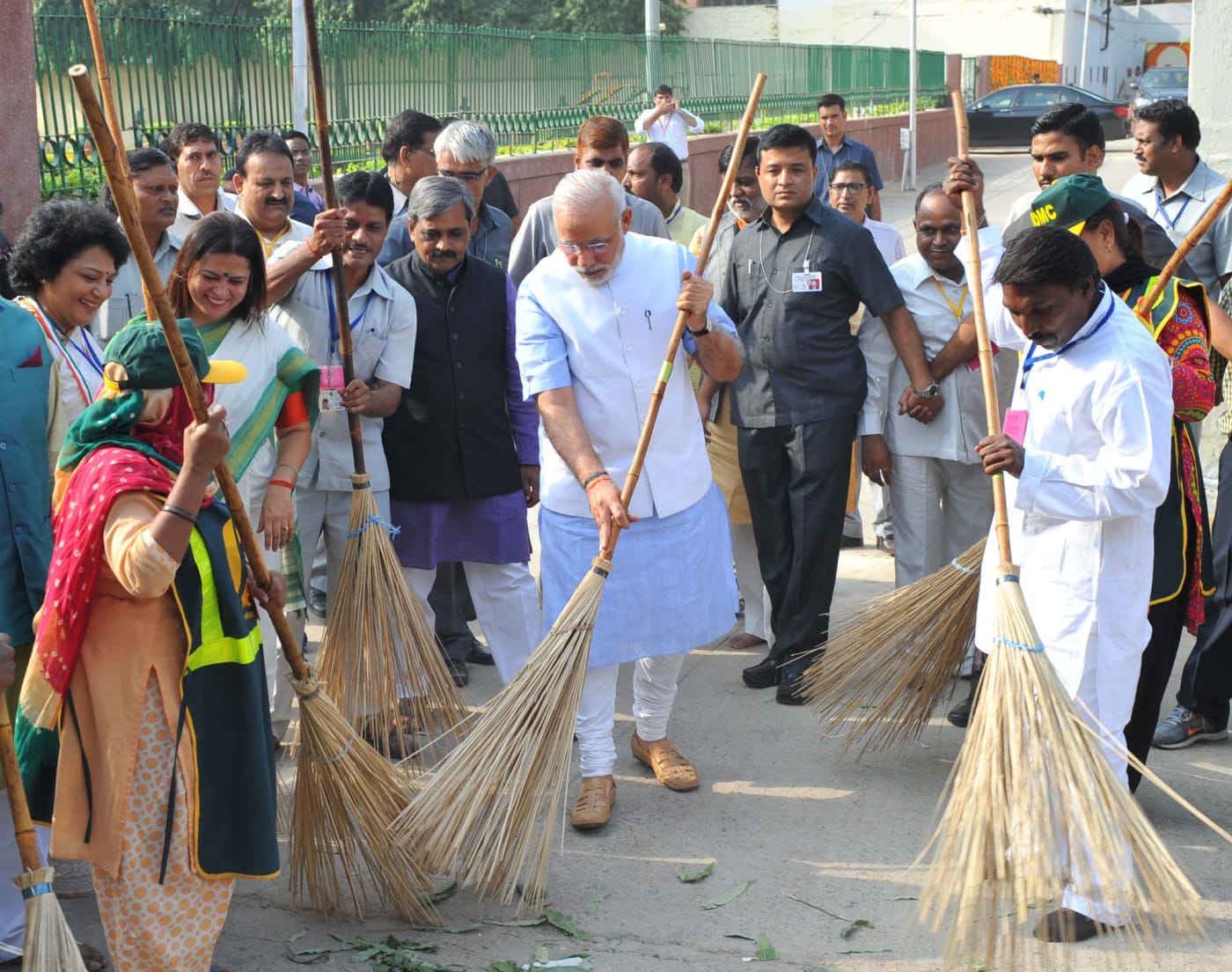
Every toilet was geo-tagged and tracked in a real-time information system, and the mission was as much about behaviour change as construction — mobilising swachhagrahis, students and celebrities. Studies have linked the drive to lower infant mortality and disease. Phase II (2020-26) shifts focus to sustaining ODF status and managing solid and liquid waste, with over 5 lakh villages now ODF-Plus.
How it works
Swachh Bharat worked less like a construction scheme and more like a behaviour-change campaign. It combined subsidies to build household toilets with relentless publicity, community monitoring and local committees to make open defecation socially unacceptable — village by village declaring themselves open-defecation-free (ODF). In cities, the parallel push is on door-to-door waste collection and processing.
Outlook
The scale is huge — over 11 crore household toilets built, and rural India declared broadly ODF, a shift linked to falling child mortality and disease. The harder, longer task is sustaining the change: keeping toilets in use with water and upkeep, and moving to the next frontier under SBM 2.0 — solid and liquid waste management, plastic waste, and truly clean towns rather than just toilet-equipped ones.
By the numbers
0 → ~12 crore household toilets (2014→September 2025). Rural sanitation ~39% → ~100%; ODF in 2019. 5 lakh+ villages ODF-Plus. Sources: Ministry of Jal Shakti (SBM-Grameen).
Data current to: as of September 2025
Source: Ministry of Jal Shakti (SBM-Grameen) via PIB — cumulative household toilets built (crore), 2014–September 2025. PIB: over 12 crore toilets constructed as of September 2025. · link