Hydropower's share of India's installed capacity fell from 50.36% in the 1960s to around 13% in 2018-19, according to the Cabinet release of March 2019. Until then only projects below 25 MW counted as renewable energy. On 7 March 2019 the Cabinet declared large hydro projects a renewable source and created a Hydro Purchase Obligation, a share of power that buyers must take from new large hydro plants. The same decision extended project life to 40 years and debt repayment to 18 years so that tariffs could start lower.
Hydropower & Pumped Storage
Hydropower & Pumped Storage
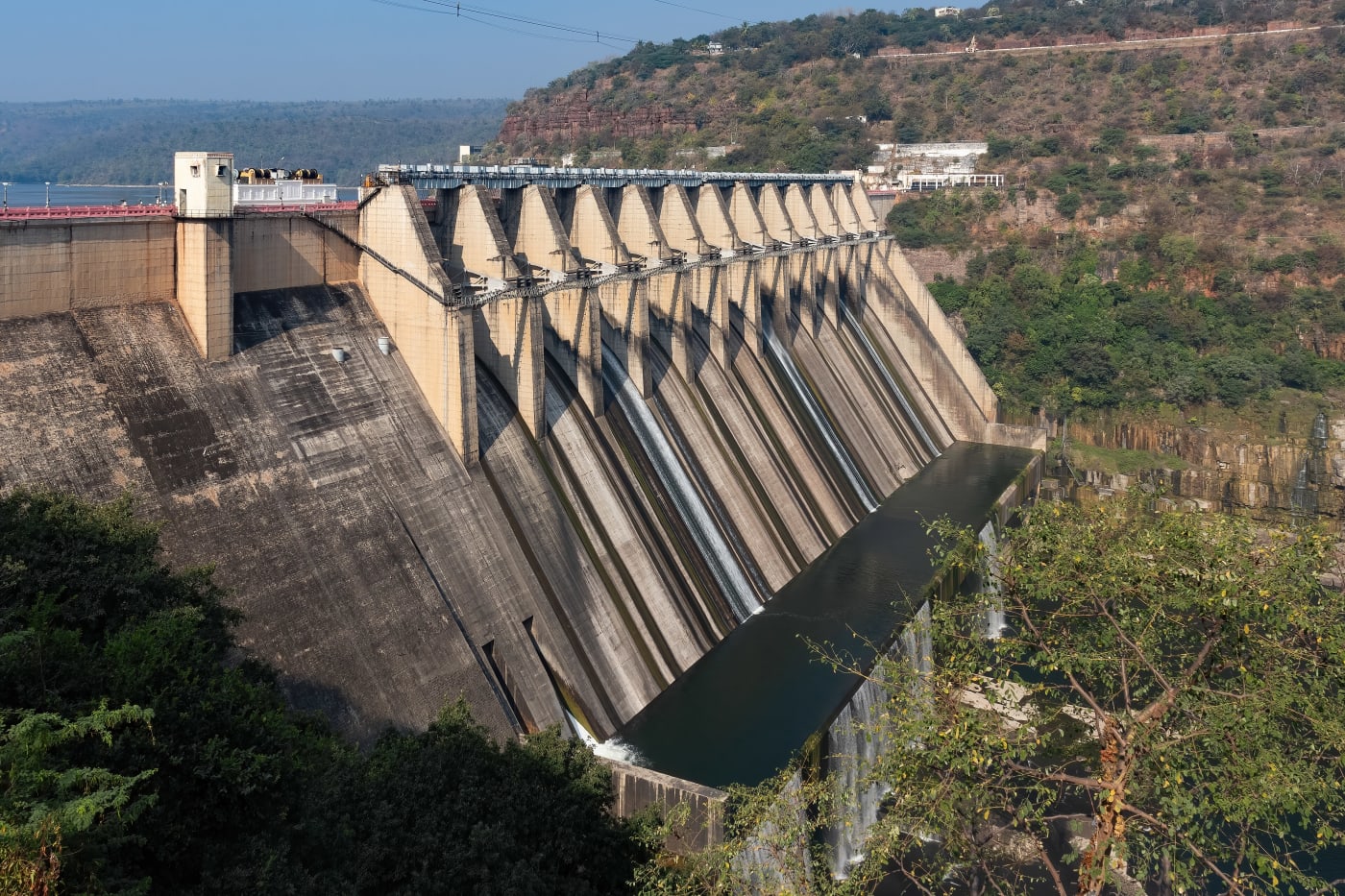
Large hydropower means plants above 25 MW, and pumped storage plants pump water uphill when power is plentiful and release it when demand peaks. CEA figures put large hydro installed capacity at 44,478.42 MW in March 2017 and 52,064.66 MW on 31 July 2026. In March 2019 the Cabinet declared large hydro a renewable energy source and created a Hydro Purchase Obligation for electricity buyers. Pumped storage is growing from 8 plants of 4,745.6 MW in operation in February 2023, with 11 projects of 15,870 MW under construction in July 2026.
44,478 MW
Large hydro installed capacity (March 2017)
15,870 MW
Pumped storage under construction (July 2026)
₹12,461 cr
Enabling-infrastructure support (FY 2024-25 to 2031-32)
Large hydro installed capacity (31 July 2026)
2017
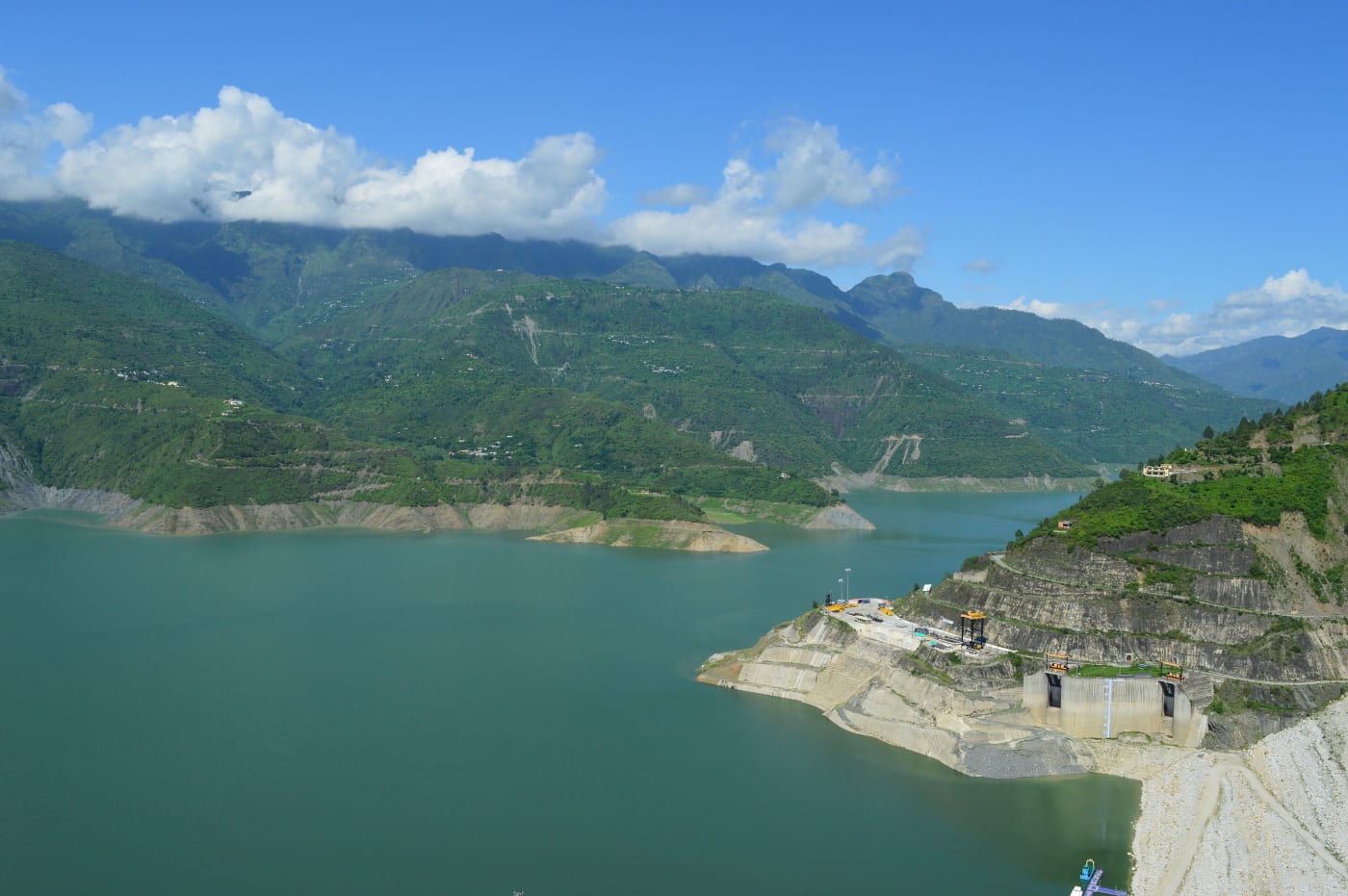
Teesta-III (1,200 MW) commissioned in Sikkim
One of nine hydro projects totalling 2,412 MW commissioned in the North Eastern Region, including Sikkim, since 2014-15 (Ministry of Power, 7 December 2023).
2019
Large hydro declared a renewable energy source
2021
Hydro Purchase Obligation trajectory notified
2023
Guidelines to promote pumped storage projects
2024
Equity support for hydro projects in the North East
2024
₹12,461 crore scheme for enabling infrastructure
2025
Parbati-II completed; Subansiri Lower's first unit in operation
2026
Kamala project approved; Subansiri Lower reaches 750 MW
2017
1milestones
20172026
Latest
Teesta-III (1,200 MW) commissioned in Sikkim
One of nine hydro projects totalling 2,412 MW commissioned in the North Eastern Region, including Sikkim, since 2014-15 (Ministry of Power, 7 December 2023).
Why it matters Hydro plants can ramp up within minutes, which helps keep supply steady when solar output falls in the evening. Storage dams can also moderate floods, and projects in hill states bring roads, bridges and local jobs.
- Large hydro installed capacity: 44,478.42 MW (March 2017) → 52,064.66 MW (31 July 2026), CEA
- 7 March 2019: Cabinet declares hydro projects above 25 MW a renewable energy source
- Pumped storage commissioned: 8 plants, 4,745.6 MW (February 2023) → 10 plants, 6.2 GW (30 June 2025)
- Pumped storage under construction: 11 projects, 15,870 MW; a further 6 projects of 8,140 MW concurred or appraised by CEA (July 2026)
- Subansiri Lower (2,000 MW): 750 MW commissioned by April 2026, remaining units expected by December 2026
- Exploitable large hydro potential: 1,33,410 MW (CEA reassessment study, 2017–2023)
History
Notable milestone
The 2,000 MW Subansiri Lower project, built by NHPC on the Subansiri river at the Arunachal Pradesh–Assam border, has eight 250 MW units. Commercial operation of Unit-2 was inaugurated on 23 December 2025, and 750 MW was commissioned by April 2026, with the rest expected by December 2026. When complete it is designed to generate about 7,422 million units a year. NHPC's Parbati-II (800 MW) was fully commissioned on 15 April 2025.
How it works
A conventional plant turns water flowing down from a dam or river into electricity. A pumped storage plant uses two reservoirs: it pumps water to the upper one when power is surplus and runs it back through turbines at peak hours, acting as long-duration storage. Because many sites are remote, the government pays for enabling infrastructure such as roads, bridges and transmission lines; the September 2024 scheme allows ₹1.0 crore per MW for projects up to 200 MW. CEA must concur with project reports, and its timeline for pumped storage reports was cut from 90 to 50 days.
Outlook
In July 2026, 11 pumped storage projects of 15,870 MW were under construction and 6 more of 8,140 MW had been concurred or appraised by CEA. The Ministry of Power has set a target of adding 57 GW of pumped storage by 2031-32 (January 2026). CERC waived inter-state transmission charges for 25 years for pumped storage projects whose construction is awarded by 30 June 2028. CEA's reassessment puts exploitable large hydro potential at 1,33,410 MW, with 55,930 MW of it in the North Eastern Region.
By the numbers
52,064.66 MW large hydro installed capacity (31 July 2026), up from 44,478.42 MW (March 2017). 6.2 GW pumped storage commissioned (30 June 2025). 15,870 MW pumped storage under construction (July 2026). ₹12,461 crore for enabling infrastructure and ₹4,136 crore for North Eastern states' equity (FY 2024-25 to 2031-32). ₹26,069.50 crore approved for the 1,720 MW Kamala project (April 2026). Sources: Central Electricity Authority executive summaries (February and July 2026); Ministry of Power and Cabinet releases via PIB.
Data current to: as on 31 July 2026
Source: Central Electricity Authority (CEA), Executive Summary on Power Sector — large hydro installed capacity of 52,064.66 MW as on 31-07-2026 (July 2026 edition, linked) and 44,478.42 MW at the end of the 12th Plan, March 2017 (February 2026 edition). The timeline shows dated policy decisions and project milestones from Ministry of Power and Cabinet releases on PIB, 2017–2026. Only two year-end CEA values in this period could be confirmed, so no chart is drawn. · link