Green hydrogen barely existed in India before 2023. In January that year the government launched the National Green Hydrogen Mission with a ₹19,744 crore outlay, aiming for 5 million tonnes of annual production by 2030, backed by 125 GW of dedicated renewable capacity, over ₹8 lakh crore of investment and 6 lakh jobs. The mission's main instrument, the SIGHT scheme, incentivises both electrolyser manufacturing and hydrogen production.
Green Hydrogen
Green Hydrogen
Green hydrogen — made by splitting water with renewable electricity — is India's newest energy frontier. The National Green Hydrogen Mission, launched in January 2023 with a ₹19,744 crore outlay, targets 5 million tonnes of annual production by 2030. Allocation moved fast: SIGHT Tranche I awarded 4.12 lakh tonnes a year to ten companies on 9 January 2024, and by May 2025 nineteen companies held cumulative allocations of 8.62 lakh tonnes a year — alongside 3,000 MW of electrolyser manufacturing capacity. The counter shows green-hydrogen production capacity allocated under the mission.
5 MMT
2030 production target
~8.6 lakh t
Capacity allocated (2025)
₹19,744 cr
Mission outlay
Capacity allocated (t/yr)
| Year | Green H₂ capacity allocated |
|---|---|
| 2023 | 0.0 lakh t/yr |
| 2024 | 4.1 lakh t/yr |
| 2025 | 8.6 lakh t/yr |
| by 2030 | 50.0 lakh t/yr — Govt target |
2023
0.0lakh t/yr
Green H₂ capacity allocated
20232025
Since 2023
Added
+8.6 lakh t/yr
2023
0.0 lakh t/yr
2025
8.6 lakh t/yr
Govt target
50.0 lakh t/yr
by 2030
National Green Hydrogen Mission (5 MMT)
Why it matters Green hydrogen could decarbonise 'hard-to-abate' industries like steel, refining and fertilisers that can't easily run on electricity, and cut fossil-fuel imports.
- Mission (2023): ₹19,744 crore; target 5 MMT/year by 2030
- Allocated: ~8.6 lakh tonnes/yr production; 3,000 MW electrolysers
- Source: MNRE / National Green Hydrogen Mission
History
Notable projects
By 2025 the mission had awarded about 8.6 lakh tonnes a year of green-hydrogen production capacity to 18 companies and 3,000 MW of electrolyser manufacturing to 15 firms, with majors like Reliance, Adani, L&T and Jindal taking part. Three ports — Kandla, Tuticorin and Paradip — were named Green Hydrogen Hubs, green ammonia was contracted to fertiliser plants, and NTPC commissioned the world's highest-altitude hydrogen mobility project, running buses in Leh.
How it works
Green hydrogen is made by electrolysis — passing renewable electricity through water to split it into hydrogen and oxygen, with zero carbon. That clean hydrogen can then replace fossil fuels in the hardest-to-clean industries: steel, fertiliser, refining and long-haul transport. The catch is cost — it only works once renewable power and electrolysers are cheap enough, which is exactly what the mission's incentives target.
Outlook
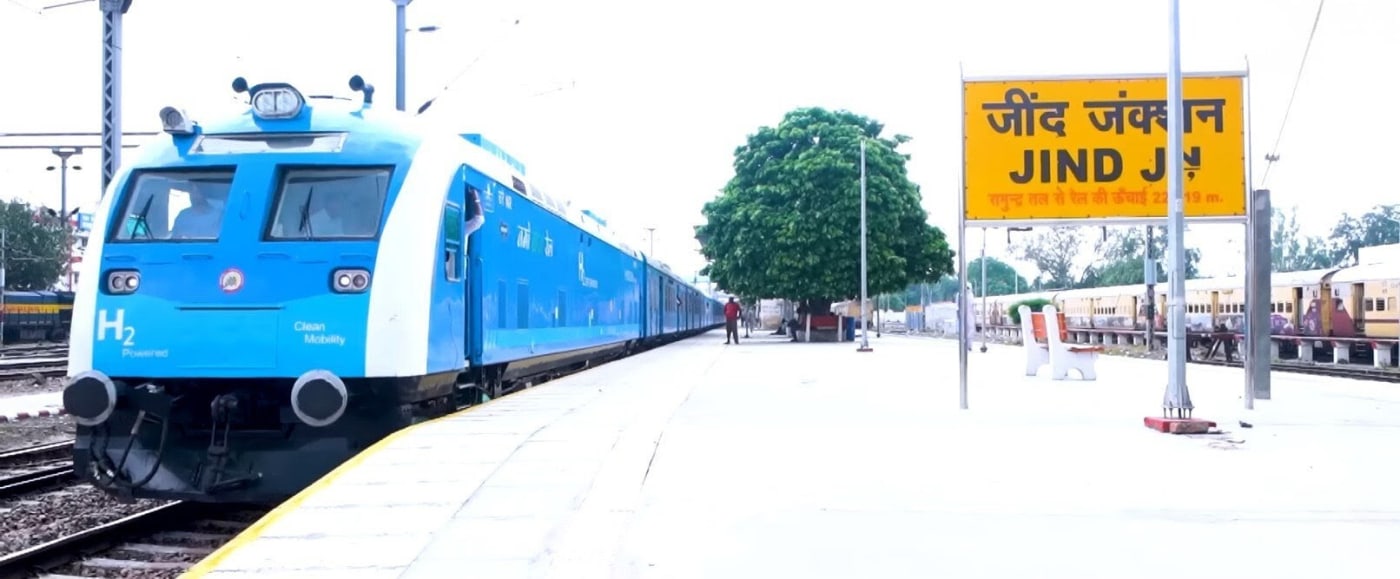
The National Green Hydrogen Mission (₹19,744 crore) aims to make India a global hub, targeting 5 million tonnes of green hydrogen a year by 2030 — which would need about 125 GW of extra renewable capacity and could draw over ₹8 lakh crore of investment. Early pilots include hydrogen-powered trains and buses; the decade's task is driving the cost down toward parity with today's fossil-based hydrogen.
By the numbers
5 MMT/year target by 2030. ~8.6 lakh tonnes/yr capacity allocated (2025). ~8,000 tonnes/yr commissioned (early 2026). ₹19,744 crore mission outlay. 3,000 MW electrolyser capacity awarded. Sources: MNRE, National Green Hydrogen Mission, PIB.
Data current to: as reported 16 December 2025
Source: MNRE / National Green Hydrogen Mission via PIB — green H₂ production capacity allocated under SIGHT (lakh tonnes/yr), 2023–2025. PIB, December 2025: 18 companies awarded a cumulative production capacity of 8,62,000 tonnes per annum, and 15 companies 3,000 MW a year of electrolyser manufacturing (linked). · link