India's storage policy began with measures for the grid rather than a single scheme. An order of 23 November 2021 waived inter-state transmission charges for pumped storage and battery projects commissioned up to 30 June 2025. In 2022 energy storage was given legal status as a power-system element, bidding guidelines for battery storage were notified in March, and an Energy Storage Obligation trajectory up to 2029-30 was notified on 22 July 2022. In March 2023 the CEA put installed pumped storage capacity at 4,745.6 MW, and guidelines to promote pumped storage projects followed on 10 April 2023.
Energy Storage (Batteries & Pumped Storage)
Energy Storage (Batteries & Pumped Storage)
Solar and wind output rises and falls with the weather and time of day, so the grid needs storage to hold surplus power and release it at peak hours. India supports two main technologies: battery energy storage systems (BESS) and pumped storage projects (PSP). The Union Cabinet approved Viability Gap Funding for battery storage on 6 September 2023, and two such schemes now support about 43 GWh. On 30 March 2026 existing battery storage in projects above 1 MWh stood at 798 MWh, with 35.8 GWh under construction, while the National Electricity Plan projects a need for 411.4 GWh of storage by 2031-32.
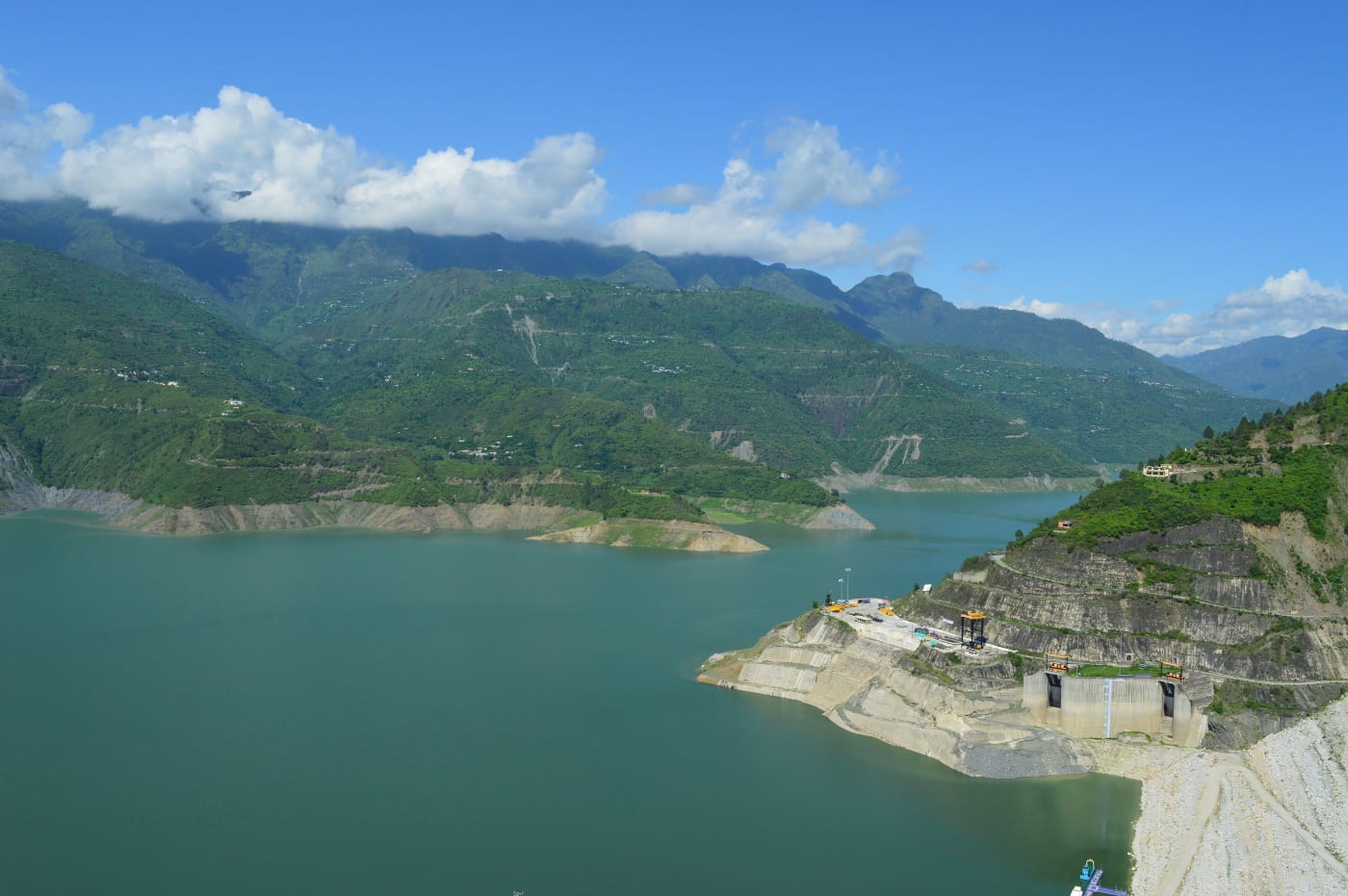
798 MWh
Existing battery storage, projects above 1 MWh (30 Mar 2026)
15,870 MW
Pumped storage under construction, 11 projects (20 Jul 2026)
411.4 GWh
Storage needed by 2031-32 (National Electricity Plan, May 2023)
Battery storage under construction (30 Mar 2026)
2021
Transmission charges waived for storage
An order dated 23 November 2021 waived inter-state transmission (ISTS) charges for pumped storage and battery storage projects commissioned up to 30 June 2025, for 25 years for pumped storage and 12 years for batteries.
2022
Legal status and a storage obligation
2023
Guidelines for pumped storage
2023
National Electricity Plan sets the storage need
2023
Cabinet approves VGF for battery storage
2024
VGF capacity raised to 13,220 MWh
2025
Second VGF scheme for 30 GWh
2026
798 MWh in place, 35.8 GWh being built
2026
15,870 MW of pumped storage under construction
2021
1milestones
20212026
Latest
Transmission charges waived for storage
An order dated 23 November 2021 waived inter-state transmission (ISTS) charges for pumped storage and battery storage projects commissioned up to 30 June 2025, for 25 years for pumped storage and 12 years for batteries.
Why it matters Storage lets power generated from the sun at midday be used in the evening, when demand peaks, which helps minimise costs during peak demand in non-solar hours. It also supports round-the-clock supply as more of India's electricity comes from renewable sources.
- Cabinet approved VGF for 4,000 MWh of battery storage on 6 Sep 2023; outlay ₹9,400 crore
- Second VGF scheme for 30 GWh approved in June 2025, with ₹5,400 crore from the Power System Development Fund
- Battery storage in projects above 1 MWh: 798 MWh existing, 35.8 GWh under construction (30 Mar 2026)
- Pumped storage commissioned: 10 projects, 6.2 GW (30 Jun 2025)
- Pumped storage guidelines notified 10 Apr 2023; Energy Storage Obligation trajectory to 2029-30 notified 22 Jul 2022
- Storage needed by 2031-32: 73.93 GW / 411.4 GWh (National Electricity Plan, May 2023)
History
Notable milestone
On 6 September 2023 the Union Cabinet approved Viability Gap Funding (VGF) for 4,000 MWh of battery storage by 2030-31, with an outlay of ₹9,400 crore including ₹3,760 crore of budgetary support. As battery prices fell, the scheme was approved in March 2024 for 13,220 MWh within the same ₹3,760 crore. A second VGF scheme for 30 GWh followed in June 2025, funded with ₹5,400 crore from the Power System Development Fund. Together the two schemes support about 43 GWh of battery storage.
How it works
Storage takes in surplus energy when renewable generation is high and supplies power during peak demand. Battery projects are procured through tariff-based competitive bidding; under the first VGF scheme at least 85% of project capacity is made available to distribution companies, and the grant is paid in 5 tranches: 10% at financial closure, 45% at commercial operation and 15% a year for the next three years. Pumped storage projects store surplus energy in off-peak periods and generate during peak demand, and also provide balancing and black-start services. Co-located batteries commissioned up to June 2028, and pumped storage projects whose construction is awarded by June 2028, get a 100% waiver of inter-state transmission charges.
Outlook
The CEA's National Electricity Plan projects a need for 73.93 GW / 411.4 GWh of storage by 2031-32, of which 47.24 GW / 236.22 GWh is battery storage and 26.69 GW pumped storage. Against this, existing battery storage in projects above 1 MWh was 798 MWh on 30 March 2026, with 35.8 GWh under construction. On 20 July 2026, 11 pumped storage projects of 15,870 MW were under construction and 6 more of 8,140 MW had been concurred or appraised. A PLI scheme for advanced chemistry cells earmarks 10 GWh of its 50 GWh manufacturing capacity for grid-scale storage.
By the numbers
35.8 GWh battery storage under construction (30 Mar 2026). 798 MWh existing battery storage in projects above 1 MWh (30 Mar 2026). 13,220 MWh and 30 GWh under two VGF schemes (March 2024, June 2025). 10 projects, 6.2 GW pumped storage commissioned (30 Jun 2025). 15,870 MW pumped storage under construction (20 Jul 2026). 411.4 GWh storage needed by 2031-32 (National Electricity Plan, May 2023). Sources: Ministry of Power, MNRE, Union Cabinet and CEA via PIB.
Data current to: Parliament replies up to 27 July 2026
Source: Ministry of Power, MNRE, the Union Cabinet and the Central Electricity Authority via PIB — a timeline of storage policy and capacity from 2021 to July 2026, drawn from Parliament replies, the Cabinet decision of 6 September 2023 and the National Electricity Plan (May 2023). No official annual series of installed battery storage was found, so the page has no chart. The headline, 35.8 GWh of battery storage under construction, is from the Ministry of Power's Rajya Sabha reply of 30 March 2026 (linked), which also puts existing battery storage in projects above 1 MWh at 798 MWh. · link