India had no commercial chip fab of its own. The current push began with the India Semiconductor Mission in December 2021, a ₹76,000 crore programme offering up to 50% capital support. COVID-era supply shocks and US–China tech tensions gave it urgency, and by 2026, 12 projects worth over ₹1.64 lakh crore had been approved.
Semiconductors
Semiconductors
Building a domestic semiconductor industry is a strategic priority for India. Under the India Semiconductor Mission (2021), 12 chip-making projects with investment of over ₹1.64 lakh crore have been approved — anchored by the ₹91,000 crore Tata–PSMC fab at Dholera and several packaging plants. This timeline traces the milestones from policy to physical factories.
₹1.64 lakh cr
Chip investment approved
₹91,000 cr
Dholera fab (Tata–PSMC)
12
Approved facilities (2026)
Chip investment approved (12 projects)
2021
India Semiconductor Mission launched
A ₹76,000 crore programme under MeitY to build a domestic chip ecosystem, with up to 50% capital support.
2023
Micron's Sanand plant approved
2024
Dholera fab approved
2025
First Made-in-India chips; approvals reach 10
2026
Chip plants start production
2021
1milestones
20212026
Latest
India Semiconductor Mission launched
A ₹76,000 crore programme under MeitY to build a domestic chip ecosystem, with up to 50% capital support.
Why it matters Chips sit inside phones, cars, power grids, defence systems and AI hardware, so domestic capacity reduces reliance on a handful of overseas suppliers.
- India Semiconductor Mission: ₹76,000 crore, up to 50% capital support
- Dholera fab (Tata–PSMC): ₹91,000 crore, 50,000 wafers/month
- Micron, Kaynes and CG Semi began commercial production in 2026
- Source: Union Cabinet and MeitY, via PIB (July 2026)
History
Notable projects
The centrepiece is the Tata–PSMC fab at Dholera, Gujarat — India's first commercial wafer fab, a ₹91,000 crore line designed for 50,000 wafer starts a month at 28nm. Packaging came first because it is quicker to scale: Micron, Kaynes Semicon and CG Semi at Sanand began commercial production in 2026, and Tata's unit at Jagiroad (Assam) is among those set to follow.
How it works
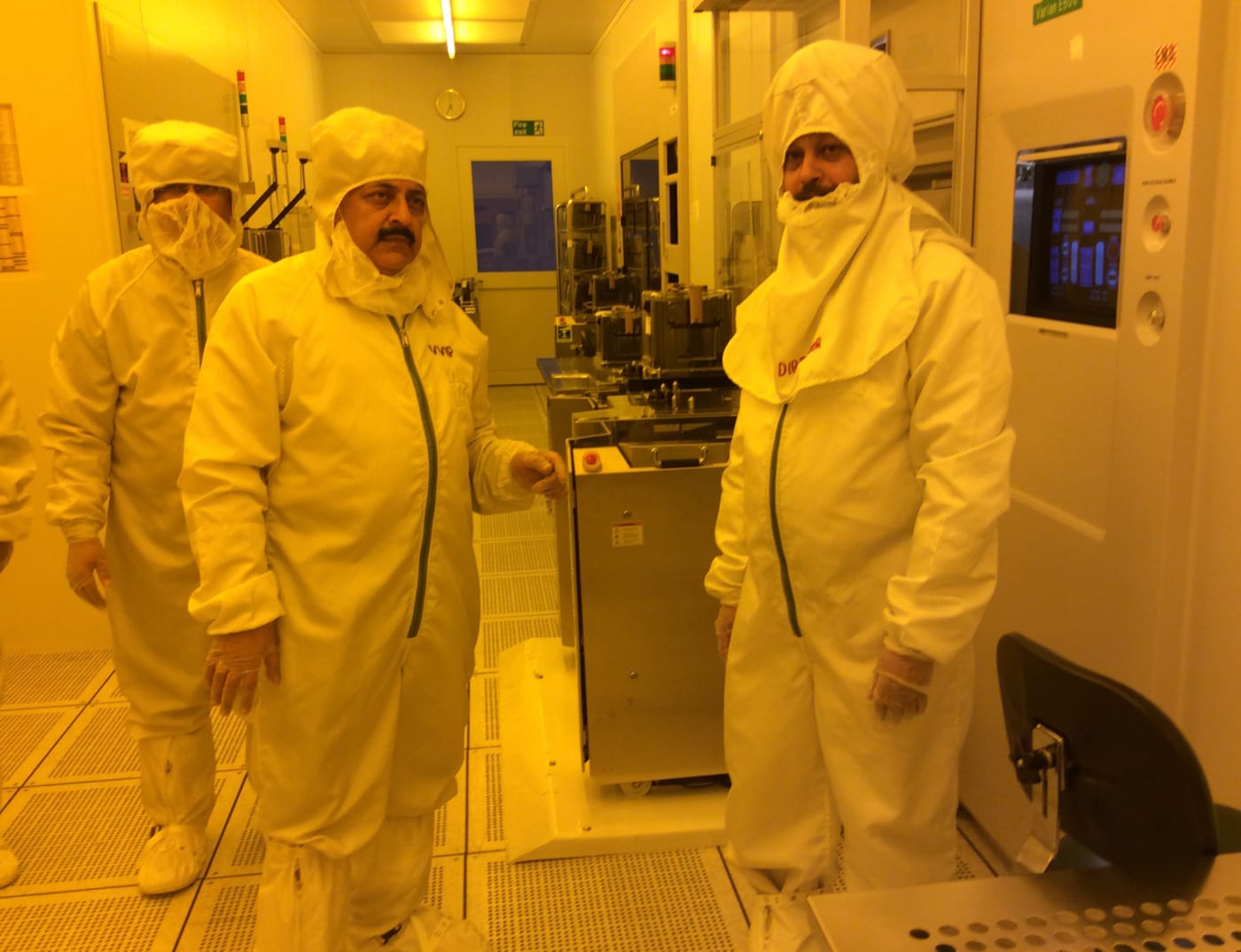
Chip-making has two halves: the ultra-expensive fabrication (etching circuits onto silicon wafers in a 'fab') and the back-end assembly, testing and packaging. India began with the achievable back-end and mature-node fabs rather than cutting-edge chips, under the India Semiconductor Mission, which offers up to half the project cost as a subsidy. Foreign partners bring the technology (Micron; Taiwan's PSMC with Tata) while India supplies land, incentives and its large pool of chip-design engineers.
Outlook
India's semiconductor push moved from paper to reality: Micron's Sanand plant — the first operational facility — was inaugurated in early 2026, and Tata's Dholera fab (₹91,000 crore, with Taiwan's PSMC) is under construction. In July 2026 the Cabinet approved Semicon 2.0, a ₹1,27,500 crore next phase covering design, equipment and materials, more fabs, packaging, research and talent. The prize is cutting reliance on imported chips for everything from phones to cars.
India's first chip
In March 2025 the first production lots of Vikram 3201 were handed to ISRO — the first fully Make-in-India 32-bit microprocessor qualified for the harsh conditions of launch vehicles, designed by ISRO's Vikram Sarabhai Space Centre with the Semi-Conductor Laboratory (SCL) and fabricated at SCL's 180nm fab. It handles floating-point operations and the Ada language used in launch-vehicle avionics, and was validated in space on the PSLV-C60 mission. It is the proof point the mission was built for: not an imported design assembled here, but a chip conceived, designed and fabricated in India.
By the numbers
₹76,000 crore India Semiconductor Mission (2021). Over ₹1.64 lakh crore approved across 12 projects (July 2026). ₹91,000 crore Dholera fab, 50,000 wafer starts a month. Commercial production began in 2026 at Micron, Kaynes and CG Semi. ₹1,27,500 crore Semicon 2.0 (2026). Sources: Union Cabinet, MeitY, PIB.
Data current to: 15 July 2026
Source: Union Cabinet, via PIB (15 July 2026, linked) — under the Semicon India Programme (₹76,000 crore, approved December 2021), 12 semiconductor manufacturing units have been approved with cumulative investment of over ₹1.64 lakh crore: one silicon fab, one silicon-carbide fab, one gallium-nitride micro-LED display fab and nine packaging units. Micron, Kaynes and CG Semi have started commercial production. The figure is approved project investment, not money spent. The same release approved Semicon 2.0, with an outlay of ₹1,27,500 crore. Milestones 2021–2026. · link