For most of its history, India's space programme meant ISRO alone — a government agency that built the rockets, satellites and launchpads. In 2020 the sector was opened to private companies, and a new regulator, IN-SPACe, was set up to authorise and support them. The Indian Space Policy 2023 made the shift formal, defining roles for private industry across launch, satellites and services. Skyroot's Vikram-S suborbital hop in 2022 was the first private rocket — and the race to orbit was on.
Private Space Launch
Private Space Launch
For decades, space in India meant one agency: ISRO. After the sector was opened to private players in 2020 and the Indian Space Policy 2023 formalised their role, a wave of startups began building rockets, satellites and ground systems. On 18 July 2026, Skyroot Aerospace's Vikram-1 became India's first privately developed rocket to reach orbit — making India the third country, after the US and China, with a private orbital launch capability. The counter shows startups registered on the DPIIT Startup India portal: 1 in 2014, 189 in 2023 and around 440 by August 2026.
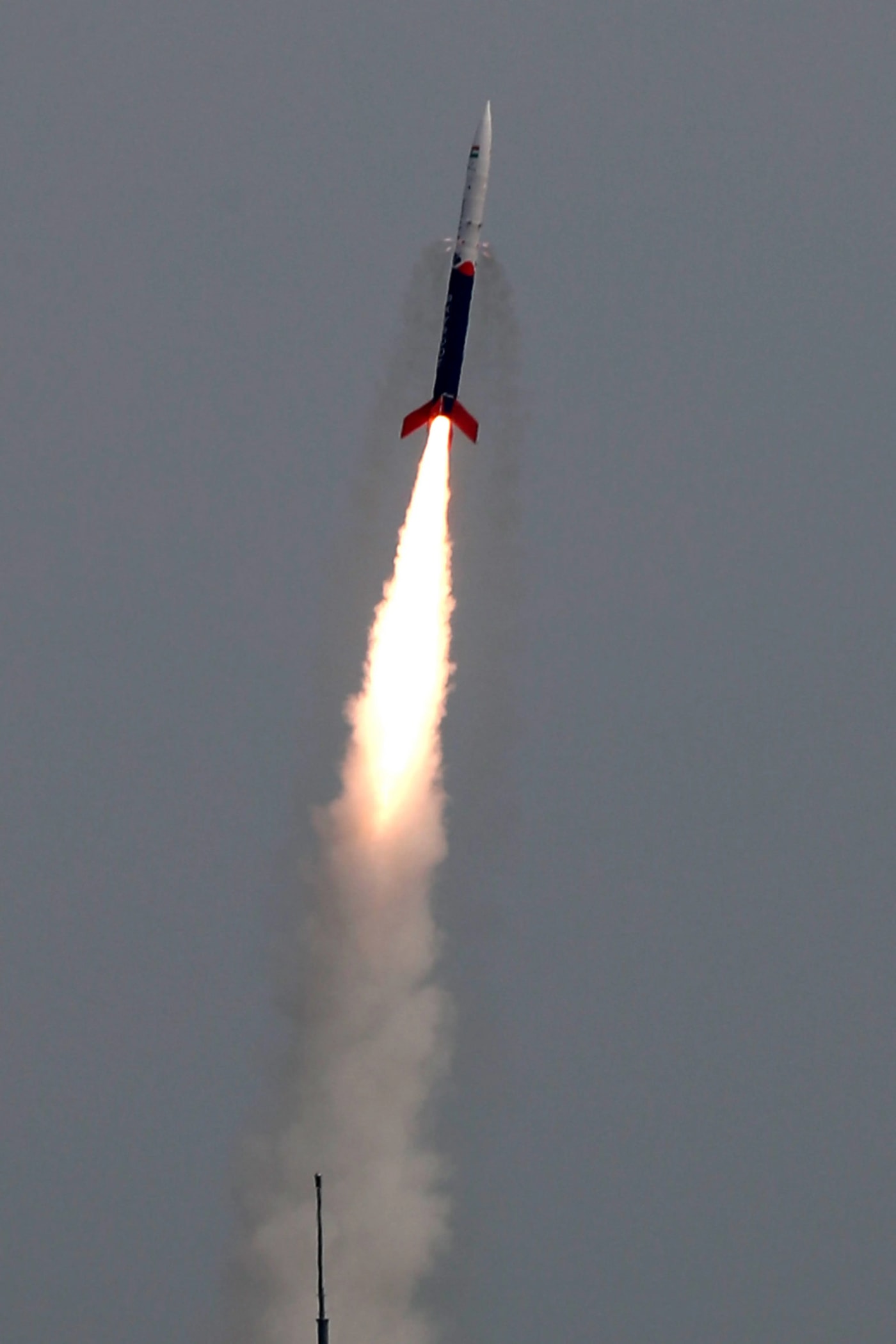
Vikram-1
First private orbital rocket (2026)
3rd
Country with private orbital launch
~440
Space-sector startups (Aug 2026)
Space-sector startups
| Year | Space-sector startups |
|---|---|
| 2014 | 1 startups |
| 2023 | 189 startups |
| 2026 | 440 startups |
| Dashed bars are years the source does not publish; the shape between published years is drawn, not measured. | |
2014
0startups
Space-sector startups
20142026
Since 2014
Added
+439 startups
2014
1 startups
2026
440 startups
Dashed bars are years the source does not publish; the shape between published years is drawn, not measured.
Why it matters A private launch industry lowers the cost and wait time of getting satellites into orbit, lets India compete for the fast-growing global small-satellite launch market, and turns space from a government monopoly into an economy that creates jobs, exports and investment.
- Vikram-1 reached a 450 km orbit on its maiden flight — Mission 'Aagaman' (18 July 2026).
- India became the 3rd country with a private orbital launch capability, after the US and China.
- Space-sector startups registered on the DPIIT Startup India portal grew from 1 in 2014 to around 440 by August 2026.
- India's space economy (~$8.4 bn) is targeted to reach $40-45 bn by 2030.
History
Notable milestone
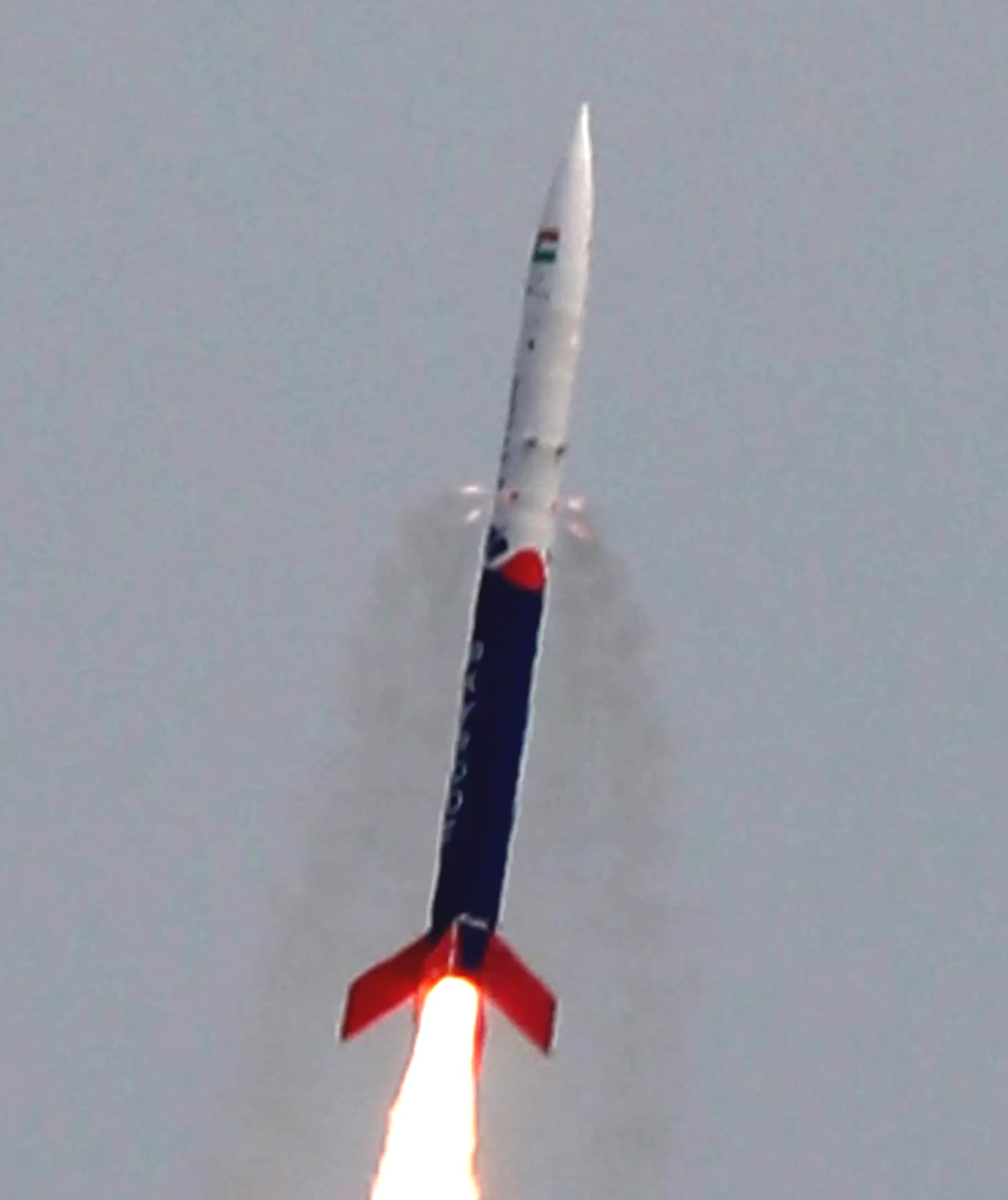
On 18 July 2026, Skyroot Aerospace's Vikram-1 lifted off from Sriharikota on Mission 'Aagaman' and injected its payloads into a 450 km orbit — India's first privately built rocket to reach orbit. It made India the third country in the world, after the United States and China, with a private orbital launch capability. The roughly 22-metre, three-stage rocket can carry up to 350 kg to low-Earth orbit. Prime Minister Modi called it 'a defining moment in India's space journey.'
The players
The launch sits atop a fast-growing ecosystem. Skyroot (Hyderabad) leads on launch, having flown both the first private suborbital rocket (Vikram-S, 2022) and now the first private orbital one (Vikram-1). Agnikul Cosmos (incubated at IIT-Madras) is close behind: its Agnibaan demonstrator flew in May 2024 — India's first launch from a private launchpad, powered by the world's first single-piece 3D-printed engine. Beyond launch, Pixxel (backed by Google) built India's first private satellite constellation, 'Firefly', for hyperspectral Earth imaging; Dhruva Space makes full-stack small satellites and ground systems; Bellatrix Aerospace builds in-space propulsion; and Digantara tracks space debris. Together they span the whole value chain — rockets, satellites, propulsion and data.
How it works
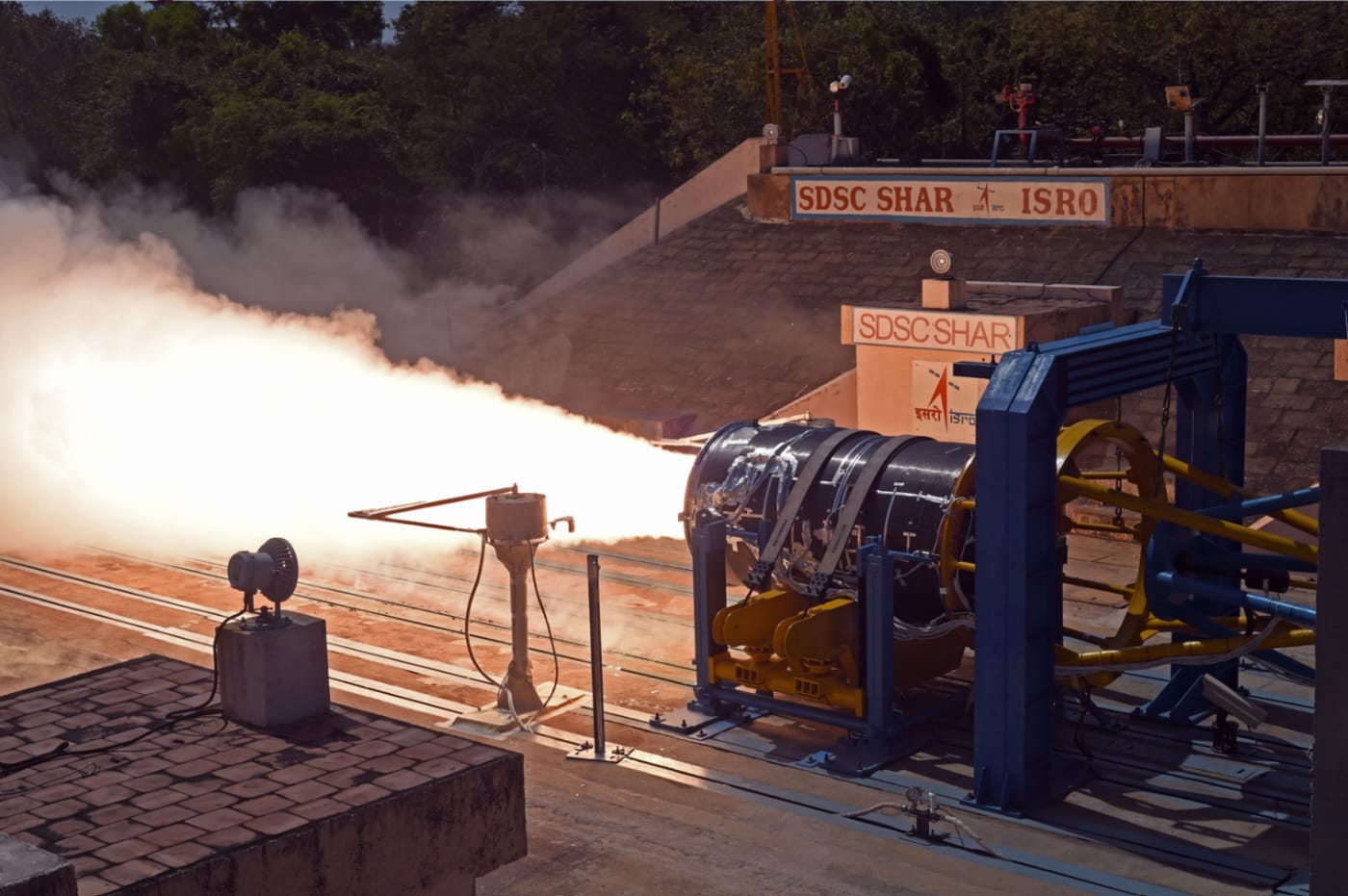
Under the new framework, a private company designs and builds its own rocket, then applies to IN-SPACe for authorisation and to ISRO for the use of national facilities like the Sriharikota range. ISRO also transfers technology and shares expertise. The companies raise private capital, win customer payloads — small satellites for businesses and other countries — and aim to launch them faster and cheaper than traditional providers, the model SpaceX pioneered globally.
Outlook
India now has around 440 space startups registered on the DPIIT Startup India portal (August 2026), up from one in 2014, across launch, satellites, propulsion and data. The space economy, about $8.4 billion today, is targeted at $40-45 billion by 2030. With Vikram-1 proving that Indian private industry can reach orbit, this is a serious bid for a share of the global commercial launch market long dominated by a handful of players.
By the numbers
Vikram-1 — India's first private orbital rocket (18 July 2026). 450 km orbit achieved on the maiden flight. 3rd country with a private orbital launch capability. ~440 space-sector startups (August 2026), from 1 in 2014 and 189 in 2023. Space economy ~$8.4 bn, targeted at $40-45 bn by 2030. Sources: IN-SPACe, DPIIT via PIB, Skyroot Aerospace, news reports (July 2026).
Data current to: August 2026, DPIIT Startup India portal
Source: DPIIT Startup India portal via PIB — space-technology startups registered: 1 in 2014 and 189 in 2023 (PIB, December 2023); around 440 (PIB, August 2026, linked). Years without a published count are left as gaps. · link