India built its pharma industry on world-class generic manufacturing. It is now the third-largest producer by volume, the largest supplier of generic medicines (~20% of global volume) and the biggest vaccine maker, producing over 60% of the world's vaccines. Exports grew from ~$12 billion in 2014 to $30.47 billion in 2024-25 and $31.12 billion in 2025-26, reaching 200+ countries.
Pharmaceuticals
Pharmaceuticals
India is the 'pharmacy of the world' — the largest supplier of generic medicines (about a fifth of global supply by volume) and over 60% of the world's vaccines. Pharma exports grew from about $12 billion in 2014 to $30.47 billion in 2024-25 and $31.12 billion in 2025-26 (quick estimates), reaching 200+ countries, with most going to strictly regulated markets like the US and Europe. The counter shows pharmaceutical exports.
$12 → 31 bn
Pharma exports (to 2025-26)
~20%
Of world's generics
~60%
Of world's vaccines
Pharma exports (to 2025-26)
| Year | Pharma exports |
|---|---|
| 2014 | 12 $ bn |
| 2015 | 13 $ bn |
| 2016 | 16 $ bn |
| 2017 | 17 $ bn |
| 2018 | 19 $ bn |
| 2019 | 20 $ bn |
| 2020 | 24 $ bn |
| 2021 | 24 $ bn |
| 2022 | 25 $ bn |
| 2023 | 27 $ bn |
| 2024 | 28 $ bn |
| 2025 | 30 $ bn |
| 2026 | 31 $ bn |
2014
0$ bn
Pharma exports
20142026
Since 2014
Added
+19 $ bn
2014
12 $ bn
2026
31 $ bn
Why it matters Affordable Indian generics and vaccines lower health costs worldwide, and the industry is a major exporter and employer at home.
- Pharma exports: ~$12 bn (2014) → $31.12 bn (2025-26, quick estimates)
- ~20% of world's generics; ~60% of world's vaccines; 3rd by volume
- Source: Pharmexcil / Dept of Commerce
History
Notable strengths
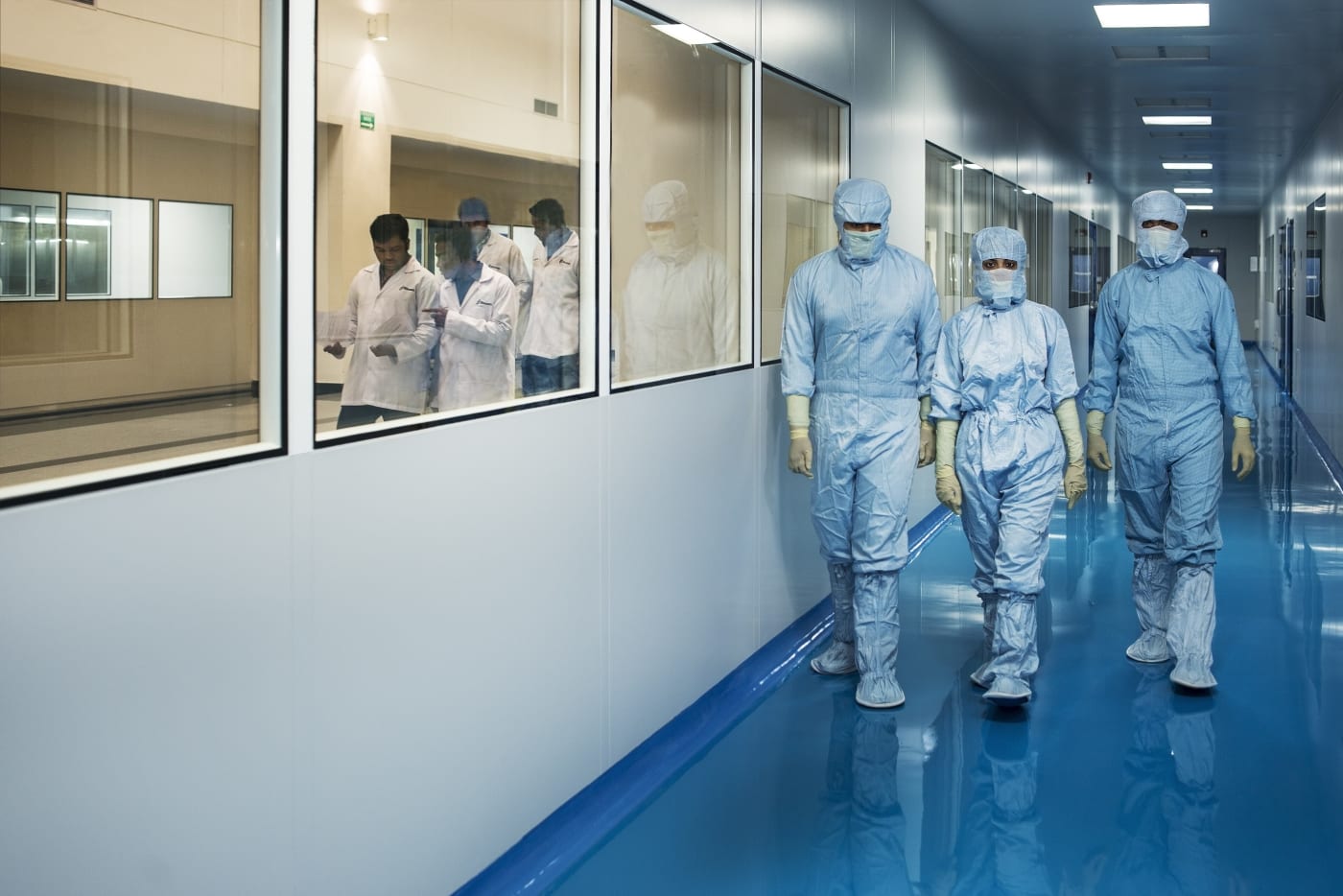
India has the most US-FDA-approved plants outside the US, and its low-cost HIV, TB and COVID medicines and vaccines have saved millions of lives globally. Schemes like Jan Aushadhi (affordable generic stores) cut medicine costs at home, and a PLI scheme aims to bring bulk-drug (API) production back from China. Industry is now moving from generics toward biosimilars and complex drugs.
How it works
India earned the name 'pharmacy of the world' by mastering generics — making low-cost copies of drugs once their patents expire, at enormous scale. It is the world's largest supplier of generic medicines by volume and a major source of affordable vaccines. The next frontier is upstream: a dedicated PLI scheme for active pharmaceutical ingredients (APIs) is bringing production of the chemical building blocks back home, with bulk-drug parks in three states already commissioned.
Outlook
Two directions define the decade. First, self-reliance in APIs — a PLI scheme for bulk drugs aims to rebuild the domestic chemistry India lost to China. Second, moving up the value chain — from cheap generics toward patented drugs, biosimilars, complex generics and contract research — so India captures more value, not just volume, while keeping its quality and regulatory standards world-class.
By the numbers
~$12 → $31.12 bn pharma exports (2014 → 2025-26, quick estimates). ~20% of world's generics; ~60% of vaccines. 3rd by volume. Domestic market ~$60 bn. Sources: Pharmexcil, Department of Commerce, Economic Survey.
Data current to: financial year 2025-26 (quick estimates)
Source: Pharmexcil / Dept of Commerce via PIB — drugs & pharmaceuticals exports (US$ billion), FY2013-14 to FY2025-26. Department of Commerce quick estimates for March 2026 (via PIB, 15 April 2026; linked): US$ 31,116.08 million in 2025-26, up 2.13% on US$ 30,468.21 million in 2024-25. PIB: USD 30.47 billion in 2024-25, up 9.4% on the year before. · link