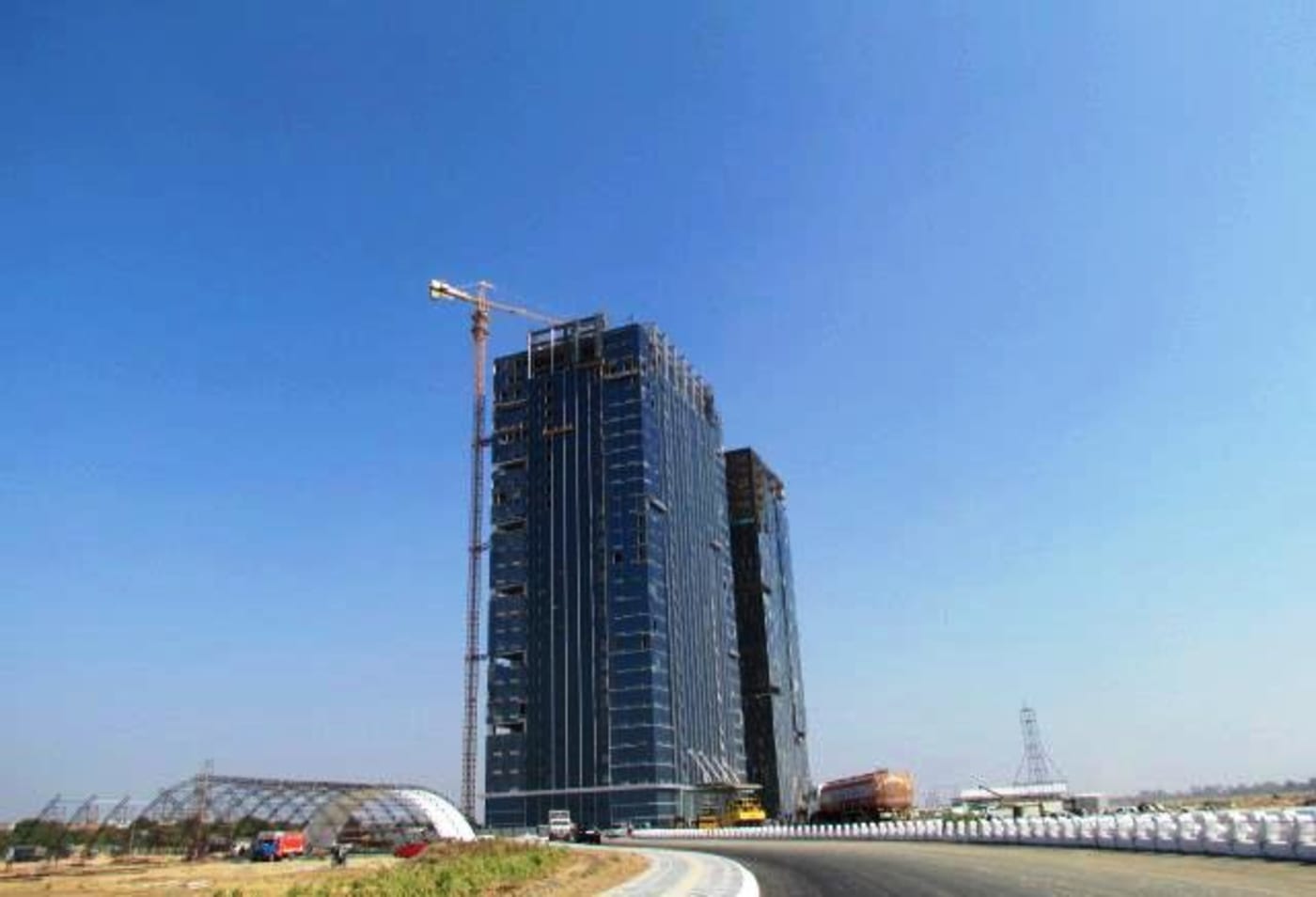
The idea of an Indian financial hub to rival Singapore or Dubai took shape at Gandhinagar. GIFT City became India's first International Financial Services Centre (IFSC) and, in 2020, got a dedicated unified regulator.
GIFT City · IFSC
GIFT City · IFSC
GIFT City — Gujarat International Finance Tec-City in Gandhinagar — is India's first operational International Financial Services Centre (IFSC). It lets banks, funds and insurers do global, foreign-currency business on Indian soil under a single regulator. The counter shows IFSC banking assets climbing from about $14 billion in March 2020 to $88.5 billion in March 2025 and $111 billion in March 2026.
$111 bn
IFSC banking assets (March 2026)
1,000+
Registered entities
38
Banks (Nov 2025)
IFSC banking assets
| Year | IFSC banking assets |
|---|---|
| 2020 | 14.1 $ bn |
| 2021 | 15.0 $ bn |
| 2022 | 29.4 $ bn |
| 2023 | 38.3 $ bn |
| 2024 | 60.3 $ bn |
| 2025 | 88.5 $ bn |
| 2026 | 111.0 $ bn |
2020
0.0$ bn
IFSC banking assets
20202026
Since 2020
Added
+96.9 $ bn
2020
14.1 $ bn
2026
111.0 $ bn
Why it matters For decades, Indian firms raised dollars and traded derivatives in Singapore, Dubai or London. GIFT City aims to bring that business home — with tax incentives, a unified regulator and global-standard rules — creating high-value finance jobs and deepening India's capital markets.
- GIFT-IFSC is regulated by a single unified regulator, the IFSCA, set up in 2020.
- Over 1,000 entities are registered there (1,034+ in November 2025), including 38 banks.
- IFSC banking assets grew from ~$14 billion (March 2020) to $111 billion (March 2026).
- The India International Bullion Exchange (IIBX) was launched at GIFT City in July 2022.
History
Notable milestone
In 2020 the International Financial Services Centres Authority (IFSCA) was set up as a single regulator replacing the RBI, SEBI and others inside the zone — a first for India. GIFT City now has over 1,000 registered entities, including 38 banks, and in July 2022 launched the India International Bullion Exchange (IIBX).
How it works
GIFT-IFSC is treated as a foreign jurisdiction for exchange-control purposes: business is done in foreign currency (mainly US dollars), with tax holidays and lighter rules. That lets Indian and global firms run banking, fund management, insurance, aircraft and ship leasing, and bullion trading that used to be booked offshore.
Outlook
The numbers have grown fast: IFSC banking assets rose from about $14 billion in March 2020 to $88.5 billion in March 2025 and $111 billion in March 2026, and hundreds of funds now manage tens of billions of dollars from GIFT. Aircraft leasing — long done from Ireland — is being pulled onshore too.
By the numbers
$111 bn IFSC banking assets (March 2026), up from $14.1 bn (March 2020) and $88.5 bn (March 2025). 1,034+ registered entities. 38 banks. IIBX — bullion exchange launched July 2022. IFSCA — the unified regulator, operational since April 2020. Sources: IFSCA annual reports and bulletin; PIB.
Data current to: 31 March 2026
Source: IFSCA — total assets of IFSC Banking Units at GIFT IFSC (US$ billion), as on 31 March. IFSCA Bulletin, Q4 FY 2025-26 (January–March 2026): $111 bn at March 2026 (linked); IFSCA Bulletin, January–March 2025: $88.51 bn at March 2025; earlier years from IFSCA Annual Reports 2020-21 ($14.10 bn in 2020, $14.98 bn in 2021), 2022-23 ($29.38 bn in 2022, $38.29 bn in 2023) and 2023-24 ($60.25 bn in 2024). · link