India's coal sector was reshaped after 2014. When the Supreme Court cancelled earlier coal-block allocations that year, the government restructured the sector — amending mining laws and, from 2020, opening it to commercial and private miners. Production climbed steadily and crossed 1 billion tonnes for the first time in 2024-25 (about 1,048 MT), up from around 565 MT a decade earlier.
Coal & Mining
Coal & Mining
Coal still fuels about half of India's energy and over 70% of its electricity, so domestic output is central to keeping the lights on. India's coal production roughly doubled over the decade, crossing 1 billion tonnes for the first time in 2024-25 (about 1,048 MT), up from around 565 MT in 2014, and was 1,040.83 MT (provisional) in 2025-26 — helped by opening the sector to private and commercial miners. The counter shows annual coal production in million tonnes.
565 → 1,041 MT
Coal production (FY26, provisional)
1 bn t
First crossed in 2024-25
~55%
Share of energy mix
Coal production (FY2013-14 → FY2025-26)
| Year | Coal production |
|---|---|
| 2014 | 565 MT |
| 2015 | 609 MT |
| 2016 | 639 MT |
| 2017 | 662 MT |
| 2018 | 675 MT |
| 2019 | 731 MT |
| 2020 | 729 MT |
| 2021 | 716 MT |
| 2022 | 778 MT |
| 2023 | 893 MT |
| 2024 | 998 MT |
| 2025 | 1,048 MT |
| 2026 | 1,041 MT |
2014
0MT
Coal production
20142026
Since 2014
Added
+476 MT
2014
565 MT
2026
1,041 MT
Why it matters Coal underpins India's power and steel, so its output shapes energy security and import bills — even as India expands renewables.
- Coal production: ~565 MT (2014) → ~1,048 MT (2025) → 1,040.83 MT (2025-26, provisional)
- Crossed 1 billion tonnes for the first time in 2024-25
- Source: Ministry of Coal
History
Notable projects
Coal India Limited remains the backbone, producing around 781 MT, while private and captive mines grew fastest — up nearly 29% in a year. Mega-mines like Gevra and Kusmunda in Chhattisgarh rank among the largest in the world. Higher domestic output cut coal imports and saved billions in foreign exchange, and the sector employs around 5 lakh mine workers across 350-plus mines.
How it works
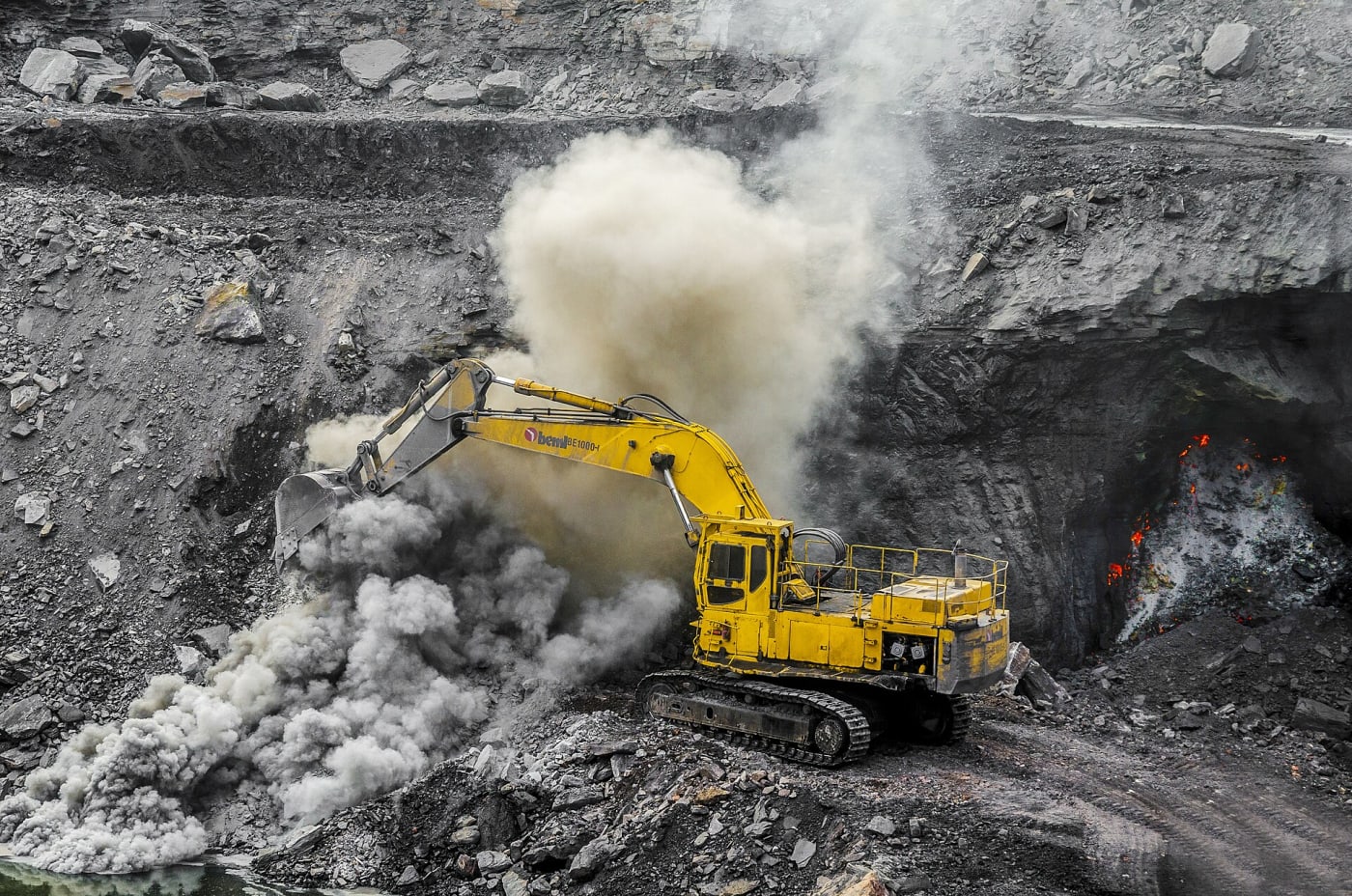
Most of India's coal is dug by the state giant Coal India Limited from vast open-cast mines, then moved by rail to the power plants that still generate the bulk of the country's electricity. For decades mining was a government monopoly; since 2020 the sector was opened to commercial private mining, letting companies mine and sell coal freely for the first time, to lift output and cut import dependence.
Outlook
Coal remains India's energy backstop even as renewables surge — output has climbed past 1 billion tonnes a year, and the government is pushing higher to cut imports. The direction is careful, not abrupt: keep the lights on and industry fed today while gradually raising cleaner sources, improving mine safety and land restoration — and even eyeing retired coal sites for future nuclear plants.
By the numbers
~565 → ~1,048 MT coal production (2014→2025); 1,040.83 MT in 2025-26 (provisional). 1 billion tonnes first crossed in 2024-25. ~55% of energy mix; 70%+ of power. ~5 lakh mine workers. Sources: Ministry of Coal, CIL, PIB.
Data current to: financial year 2025-26 (provisional)
Source: Ministry of Coal — all-India coal production (million tonnes), FY2013-14 to FY2025-26. PIB: 1,047.57 MT (provisional) in FY2024-25, the first year above one billion tonnes, against 997.83 MT in FY2023-24; the Ministry's statistics page gives the final figure as 1,047.523 MT. Ministry of Coal, Monthly Coal Statistics for March 2026: 1,040.83 MT (provisional) in FY2025-26 (linked). · link