India produced 270 million tonnes of cement in 2014-15, according to DPIIT data cited in the Economic Survey 2025-26. Releasing a compendium of the cement industry on 5 February 2019, the Ministry of Commerce and Industry put installed capacity at 509 million tonnes per annum and production at 298 million tonnes in 2018, with per-capita consumption of around 235 kg against a global average of 520 kg. The cement production index fell 10.8% in 2020-21 and rose 20.8% in 2021-22. A DPIIT release of 10 February 2024 put installed capacity at 600 million tonnes and production at 391 million tonnes in 2022-23.
Cement
Cement
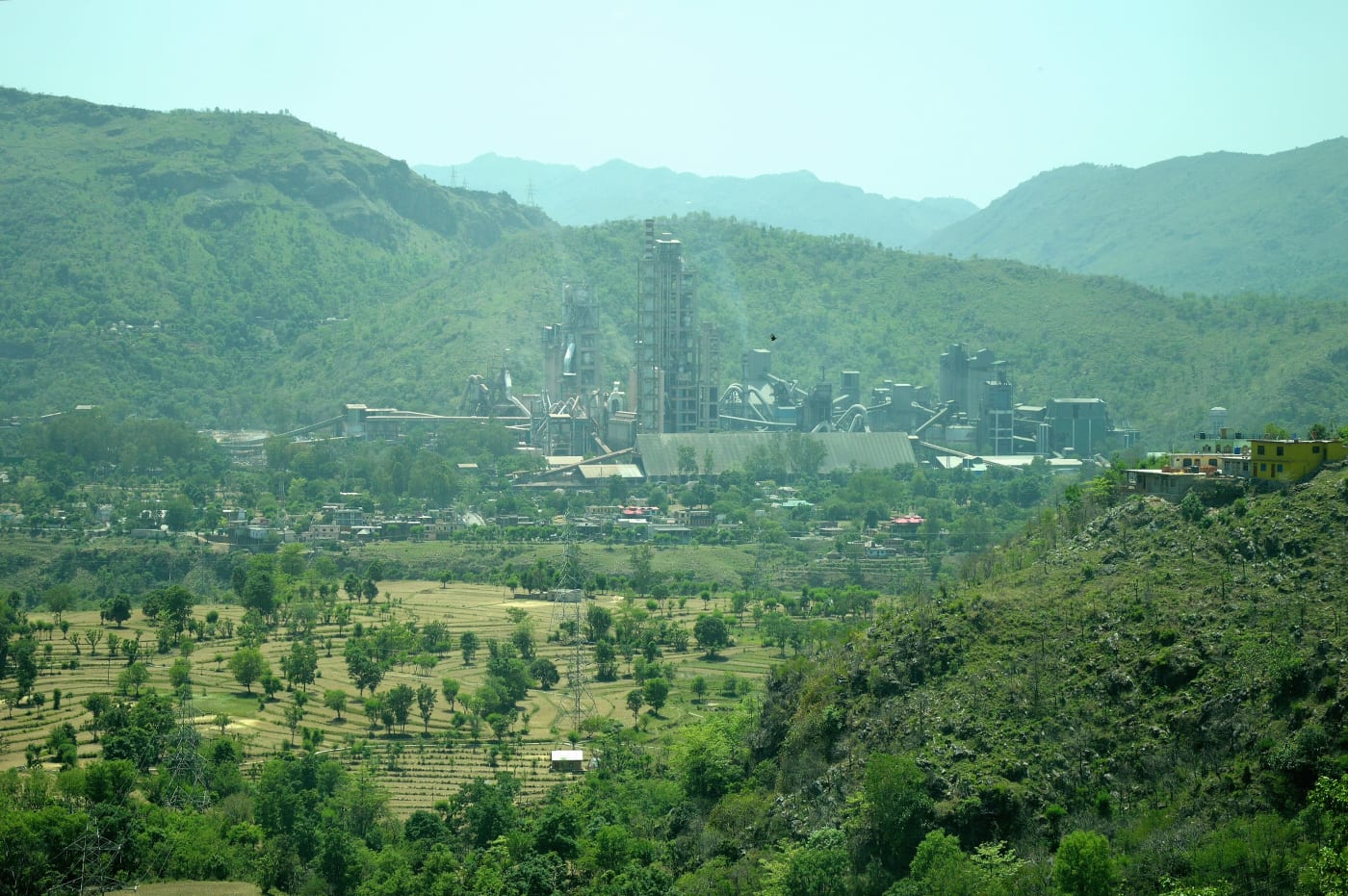
Cement goes into housing, roads, railways and most other construction, and its output is one of the eight core industries tracked each month by the Office of the Economic Adviser, DPIIT, where it carries a weight of 5.37%. India's cement production rose from 270 million tonnes in 2014-15 to around 453 million tonnes in 2024-25, and the Economic Survey 2025-26 describes India as the second-largest cement producer in the world after China, with installed capacity of about 690 million tonnes. The GST rate on cement was cut from 28% to 18% from 22 September 2025. The counter shows the cement production index (base 2011-12 = 100) for each financial year.
~690 MT
Installed cement capacity (Economic Survey 2025-26)
5.37%
Weight of cement in the Index of Eight Core Industries
28% → 18%
GST on cement, from 22 September 2025
Cement production index per financial year (2011-12 = 100)
| Year | Cement production index |
|---|---|
| 2015 | 118.1 index |
| 2016 | 123.5 index |
| 2017 | 122.0 index |
| 2018 | 129.7 index |
| 2019 | 147.0 index |
| 2020 | 145.7 index |
| 2021 | 130.0 index |
| 2022 | 156.9 index |
| 2023 | 170.6 index |
| 2024 | 185.7 index |
| 2025 | 197.4 index |
| 2026 | 214.6 index |
2015
0.0index
Cement production index
20152026
Since 2015
Added
+96.5 index
2015
118.1 index
2026
214.6 index
Why it matters Cement demand follows public and private construction, so its output is a quick read on infrastructure and housing activity. Because cement is heavy and costly to move, most plants sit close to limestone and other raw material sources. Its tax rate feeds directly into the cost of building homes and public works.
- Cement production: 270 million tonnes (2014-15) → 453 million tonnes (2024-25) (DPIIT, via Economic Survey 2025-26 and PIB)
- Installed capacity about 690 million tonnes; 160 integrated large plants, 130 grinding units and 62 mini plants (Economic Survey 2025-26)
- Weight of 5.37% in the Index of Eight Core Industries; cement index up 8.7% in 2025-26 (Office of the Economic Adviser, May 2026)
- GST on cement cut from 28% to 18%, recommended by the 56th GST Council on 3 September 2025 and effective 22 September 2025
- Per-capita cement consumption about 290 kg, against a global average of 540 kg (Economic Survey 2025-26)
- BIS standard IS 18189:2023 covers Portland calcined clay limestone cement, made from clinker, calcined clay and limestone
History
Notable milestone
The Economic Survey 2025-26 states that India is the second-largest cement producer in the world after China, with production of around 453 million tonnes in 2024-25 and installed capacity of about 690 million tonnes. On the Office of the Economic Adviser's index, cement production reached 214.6 in 2025-26 (base 2011-12 = 100), up 8.7% on the previous year and up from 118.1 in 2014-15. In September 2023, India won the bid to host the 17th International Congress on the Chemistry of Cement in New Delhi in 2027; the bid was presented by the National Council for Cement and Building Materials (NCCBM) with IIT Delhi.
How it works
The industry comprises 160 integrated large cement plants, 130 grinding units and 62 mini cement plants, and about 85% of it is concentrated in 11 States, including Rajasthan, Andhra Pradesh, Telangana, Karnataka and Madhya Pradesh. DPIIT collects production data from plants through its Cement Information System (CIS) portal, and the Government uses the data for policy decisions and for calculating the index of industrial production. In the Index of Eight Core Industries, cement carries a weight of 5.37%. Cement is made to BIS standards such as IS 269 for ordinary Portland cement, and IS 18189:2023 covers Portland calcined clay limestone cement, made from clinker, calcined clay and limestone.
Outlook
The 56th GST Council, meeting on 3 September 2025, recommended cutting GST on cement from 28% to 18%, and the change took effect on 22 September 2025; the Economic Survey 2025-26 expects lower GST on cement and construction materials to reduce project costs. Per-capita consumption is about 290 kg, against a global average of 540 kg. A NITI Aayog decarbonisation roadmap released on 21 January 2026 projects cement production rising to about 2,100 million tonnes in 2070 from 391 million tonnes in 2023, and says the sector's carbon intensity must fall from 0.63 to about 0.09–0.13 tCO₂e per tonne of cement by 2070.
By the numbers
270 → 453 million tonnes cement production (2014-15 → 2024-25). ~690 million tonnes installed capacity (Economic Survey 2025-26). 118.1 → 214.6 cement production index, base 2011-12 = 100 (2014-15 → 2025-26). 5.37% weight in the Index of Eight Core Industries. 28% → 18% GST on cement from 22 September 2025. 160 integrated plants, 130 grinding units, 62 mini plants. Sources: Economic Survey 2025-26 and PIB manufacturing backgrounder (February 2026); Office of the Economic Adviser, DPIIT, via PIB (20 May 2026); Ministry of Finance via PIB (3 September 2025); DPIIT via PIB; BIS; NITI Aayog via PIB.
Data current to: FY 2025-26 (index); FY 2024-25 (tonnes)
Source: Office of the Economic Adviser, DPIIT — Index of Eight Core Industries release for April 2026 (PIB, 20 May 2026), Annex I: yearly cement production index (base 2011-12 = 100), 2014-15 to 2025-26 (FY labelled by the year it ends; the latest year may be revised in later releases). Headline: DPIIT data in the Economic Survey 2025-26, tabulated in the PIB backgrounder on the manufacturing sector (12 February 2026, linked) — cement production of 270 million tonnes in FY15 and 453 million tonnes in FY25. No official year-by-year tonnage series from 2014-15 is published in text form, so the chart shows the index. · link