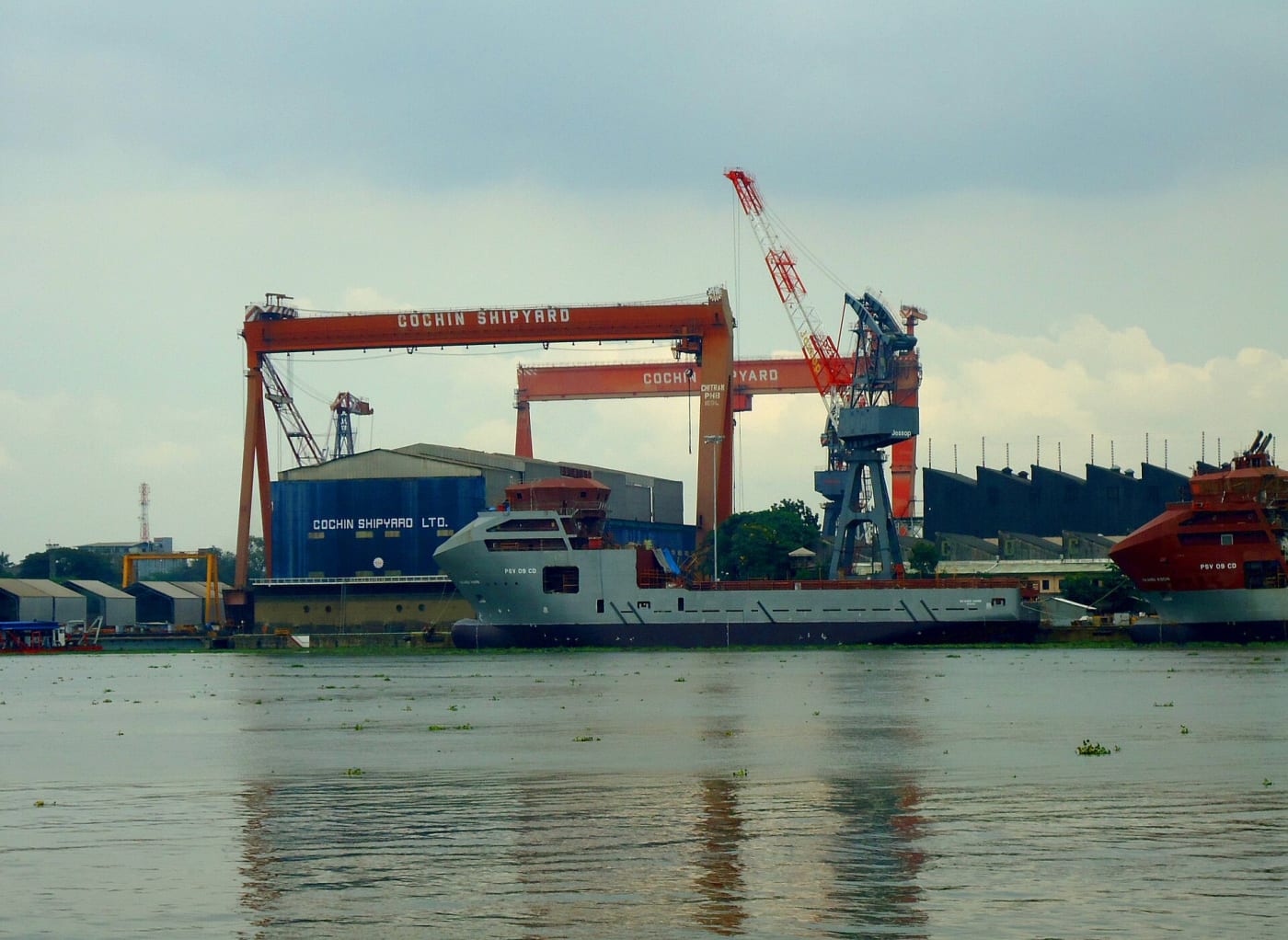
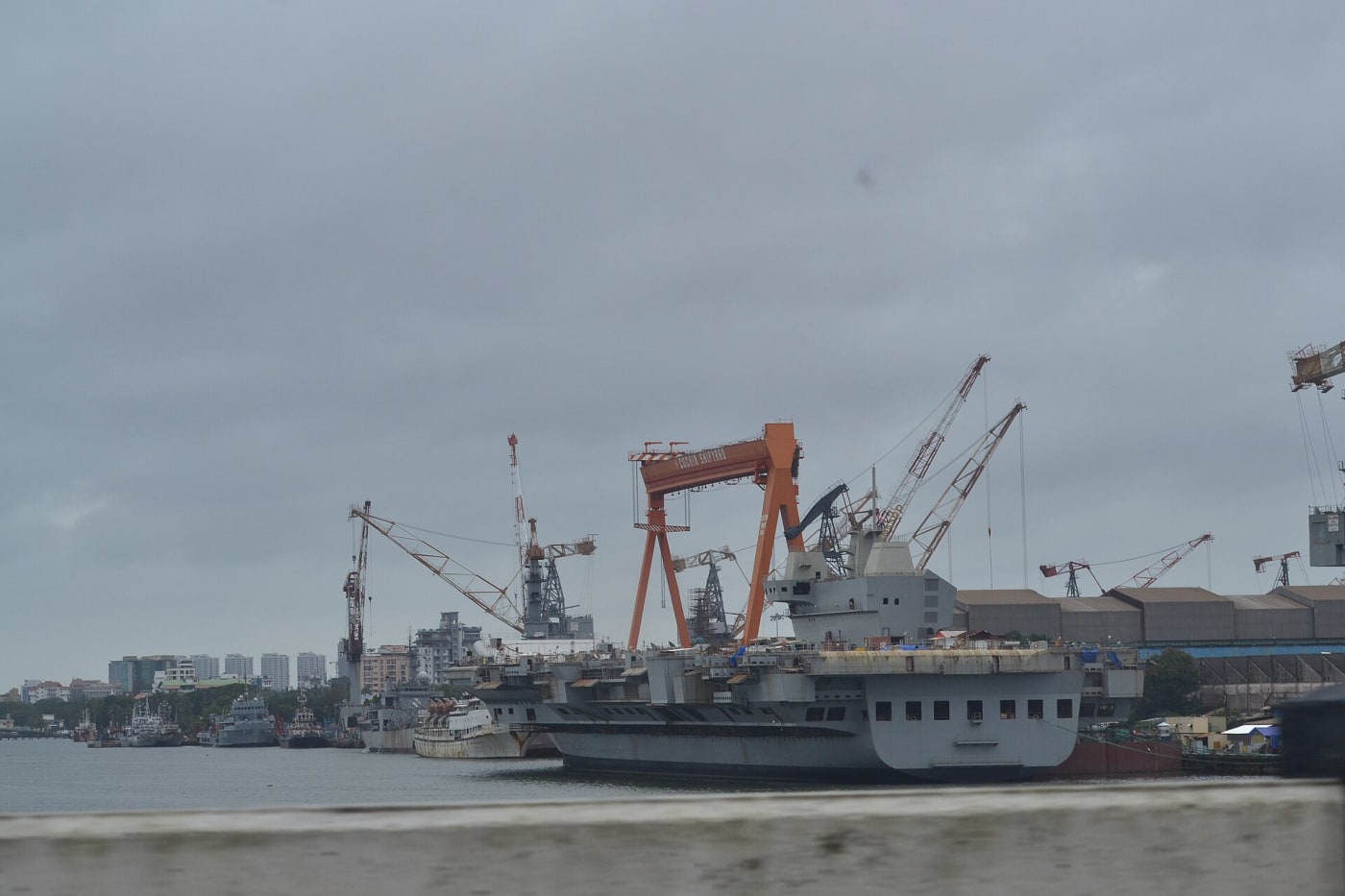
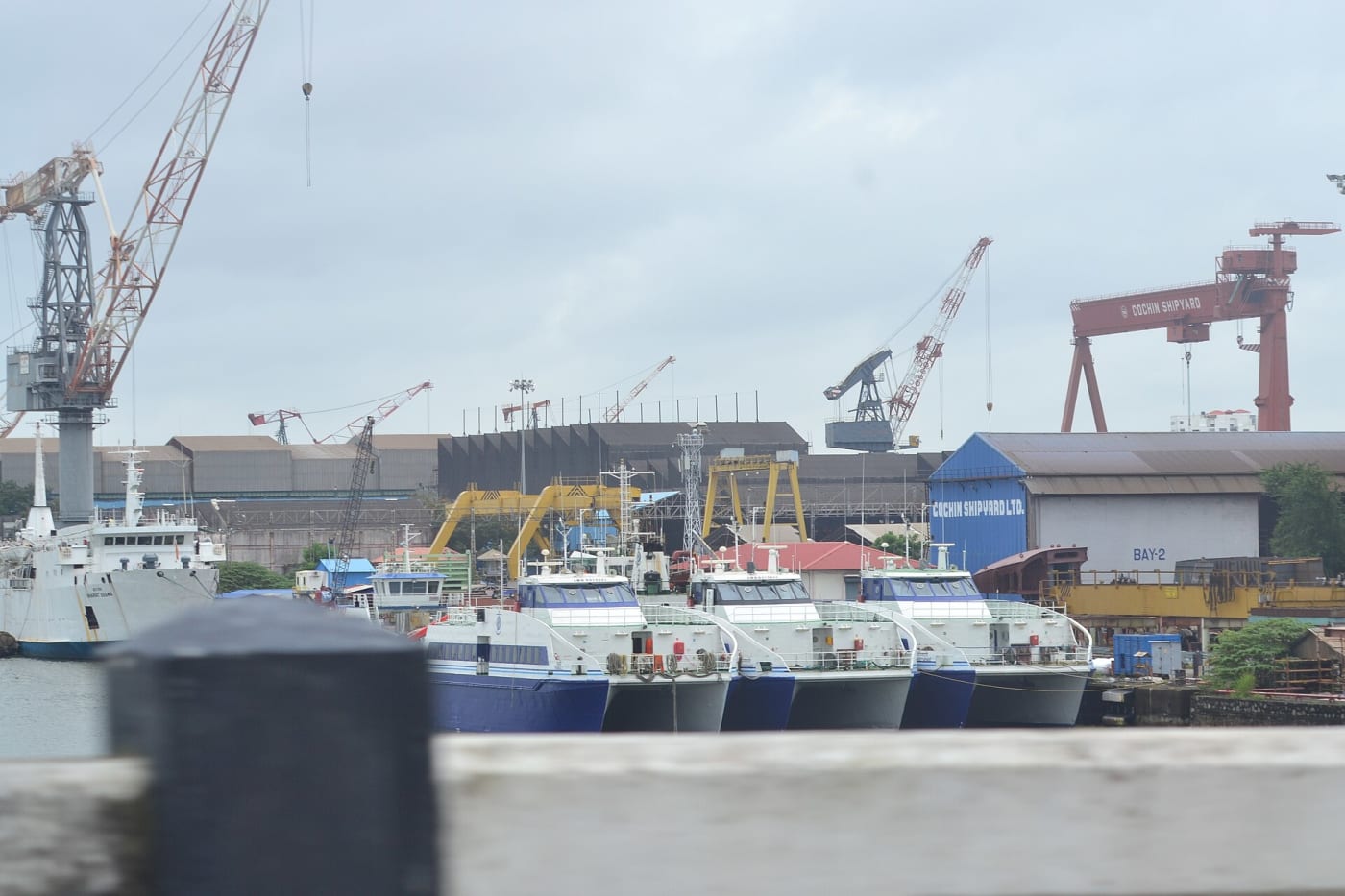
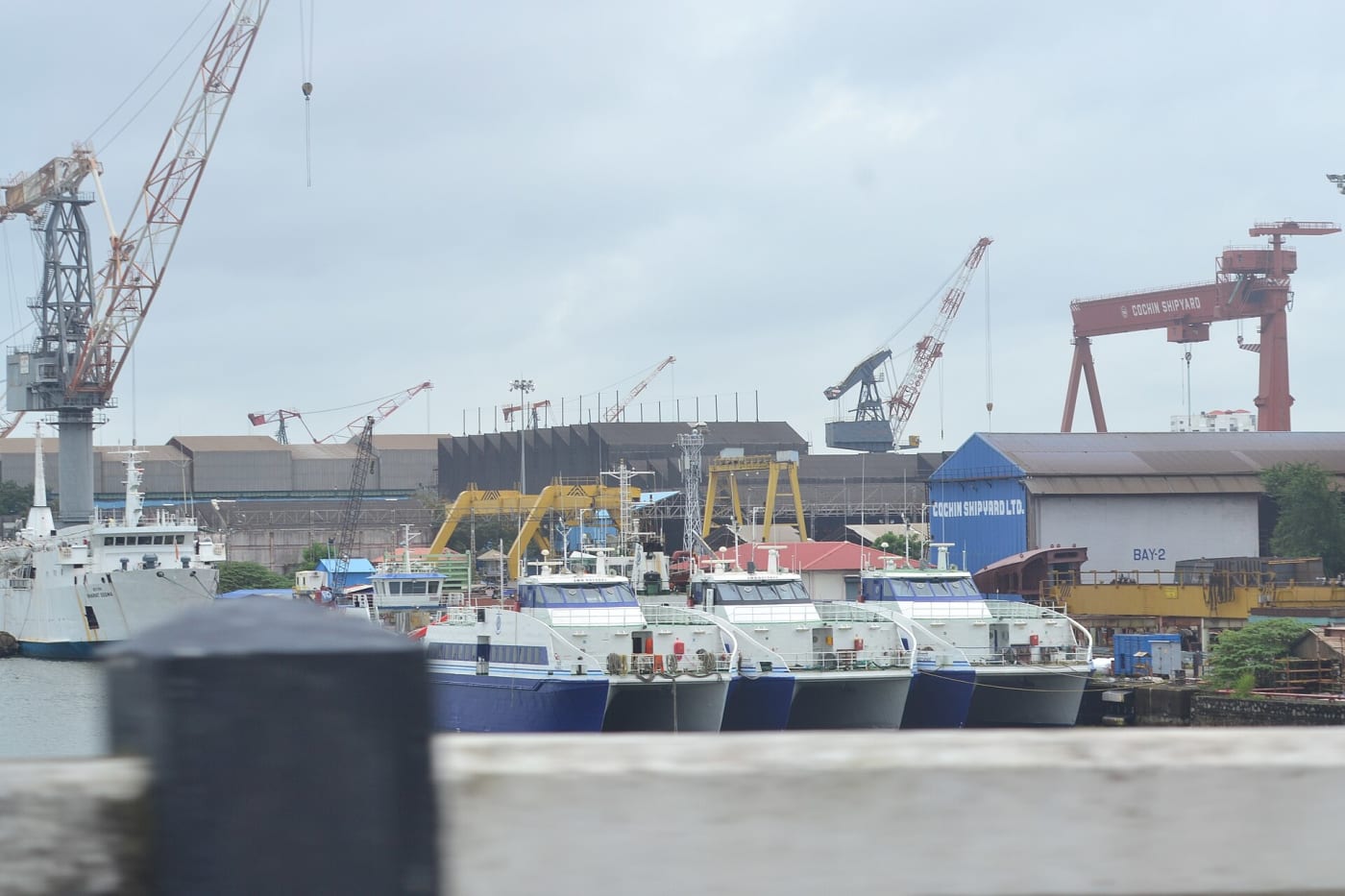
India built ships for centuries, but modern commercial shipbuilding stayed tiny. State yards like Cochin Shipyard, Mazagon Dock and GRSE grew mainly on naval and coast-guard orders; Cochin Shipyard built India's first home-made aircraft carrier, INS Vikrant (2022). Commercial shipbuilding, though, long languished under weak financing and thin scale.
Shipbuilding & Maritime
Shipbuilding & Maritime
India has one of the world's longest coastlines but builds under 1% of the world's ships — most Indian trade still moves on foreign-built, foreign-flagged vessels. After 2014, and especially in the 2025-26 Budget, the government began a serious push to change that, with a large development fund and a revamped assistance scheme.
Rs 69,725 cr
Shipbuilding package (2025)
Rs 25,000 cr
Maritime Development Fund
Top 5
2047 goal
Key milestones since 2014
2015
Shipyard financial assistance policy approved
2021
Maritime India Vision 2030 released
2022
INS Vikrant commissioned
2023
Maritime Amrit Kaal Vision 2047
2024
Cochin Shipyard dry dock opens
2025
Merchant Shipping Bill passed
2025
₹69,725 crore shipbuilding package
2026
Thoothukudi shipyard agreement signed
2014
0milestones
20142026
Why it matters Shipbuilding anchors the blue economy — jobs, defence, and cutting reliance on foreign yards for the ships that carry India's trade.
- Under 1% of the global shipbuilding market
- Rs 69,725 crore package approved in September 2025, including a Rs 25,000 crore Maritime Development Fund
- Targets: top 10 by 2030 (Maritime India Vision 2030), top 5 by 2047 (Maritime Amrit Kaal Vision 2047)
History
Notable projects
The marquee builds are naval — the carrier INS Vikrant and a growing line of frigates, destroyers and submarines from Mazagon Dock and GRSE. On the commercial side, a planned greenfield shipyard at Thoothukudi of 2.5 million gross tonnes a year (MoU with HD Korea Shipbuilding & Offshore Engineering, April 2026) and new shipbuilding clusters are planned to lift India into large merchant-vessel construction for the first time.
How it works
Shipbuilding is capital-heavy and cyclical, so it lives on cheap, patient finance — which India historically lacked against China, Korea and Japan. The new model props it up with a Rs 25,000-crore Maritime Development Fund for long-term financing (a Rs 20,000 crore investment fund and a Rs 5,000 crore interest-incentive fund), a Shipbuilding Financial Assistance Scheme (Rs 24,736 crore, to 2036) that pays yards to offset their cost disadvantage, and 'infrastructure' status for large vessels so builders can borrow more cheaply.
Outlook
India builds under 1% of the world's ships, and aims to break into the top 10 by 2030 and top 5 by 2047 under the Maritime India Vision 2030 and the Maritime Amrit Kaal Vision 2047. Backed by a Rs 69,725-crore package approved in September 2025 — which aims at 4.5 million gross tonnes of shipbuilding capacity a year — the goal is to build the scale, speed and skills to compete with East Asia's leading shipyards.
By the numbers
Rs 69,725 crore shipbuilding and maritime package (approved September 2025); Maritime Development Fund Rs 25,000 crore; Shipbuilding Financial Assistance Scheme Rs 24,736 crore (to March 2036); Shipbuilding Development Scheme Rs 19,989 crore; under 1% global market share; targets: top 10 by 2030, top 5 by 2047. Sources: Ministry of Ports, Shipping & Waterways; PIB.
Data current to: Package approved 24 September 2025; schemes run to March 2036
Source: Union Cabinet decision, via PIB (24 September 2025, linked); Ministry of Ports, Shipping & Waterways. Approved package to revive shipbuilding: Rs 69,725 crore, made up of the Shipbuilding Financial Assistance Scheme (Rs 24,736 crore, to 31 March 2036), the Maritime Development Fund (Rs 25,000 crore: a Rs 20,000 crore investment fund and a Rs 5,000 crore interest-incentive fund) and the Shipbuilding Development Scheme (Rs 19,989 crore, aiming at 4.5 million gross tonnes of capacity a year). These are approved outlays, not money spent. India's shipbuilding rank and order book are not published as official annual series; the Maritime India Vision 2030 targets the top 10 and the Maritime Amrit Kaal Vision 2047 the top 5, so no chart is shown. · link