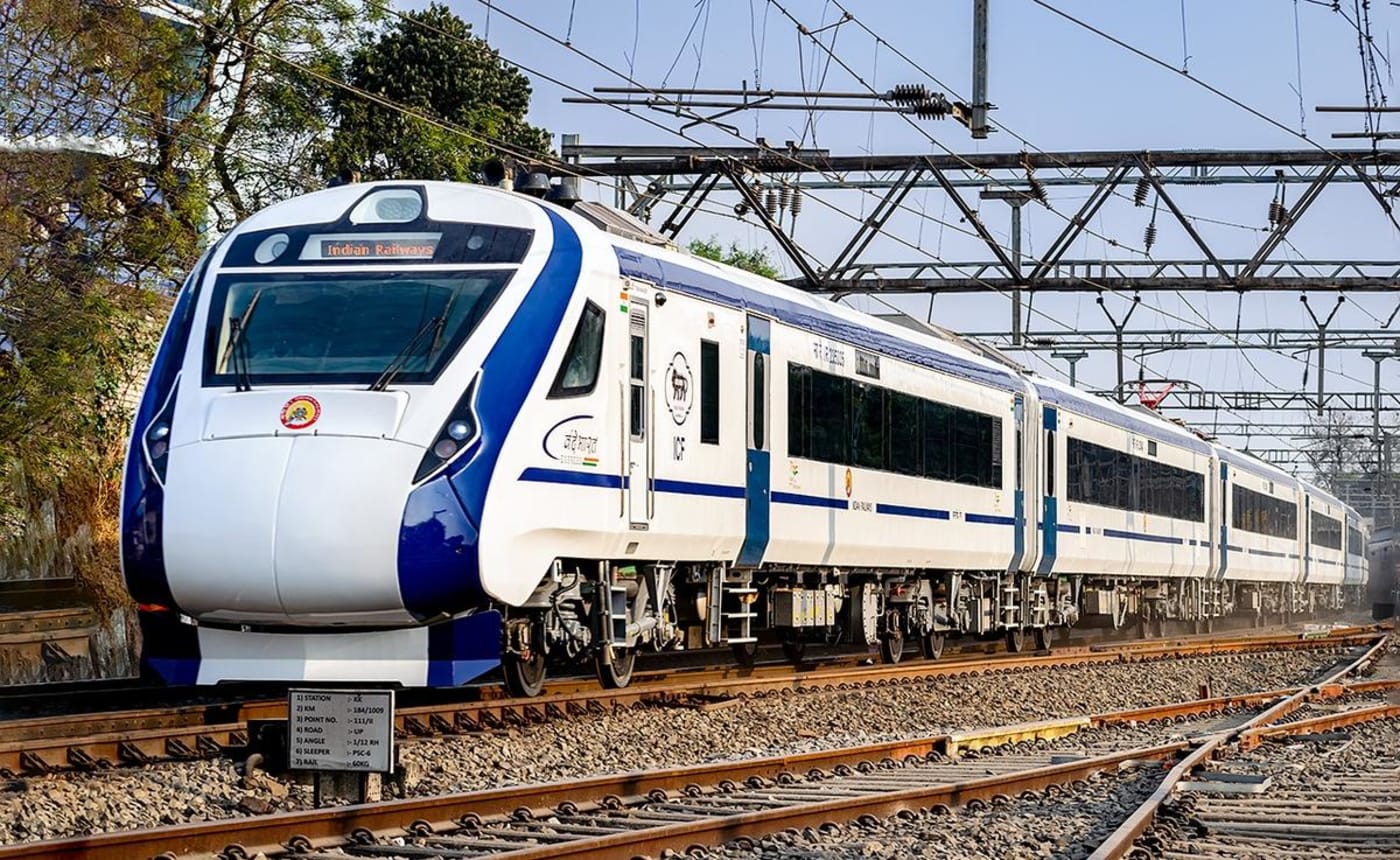
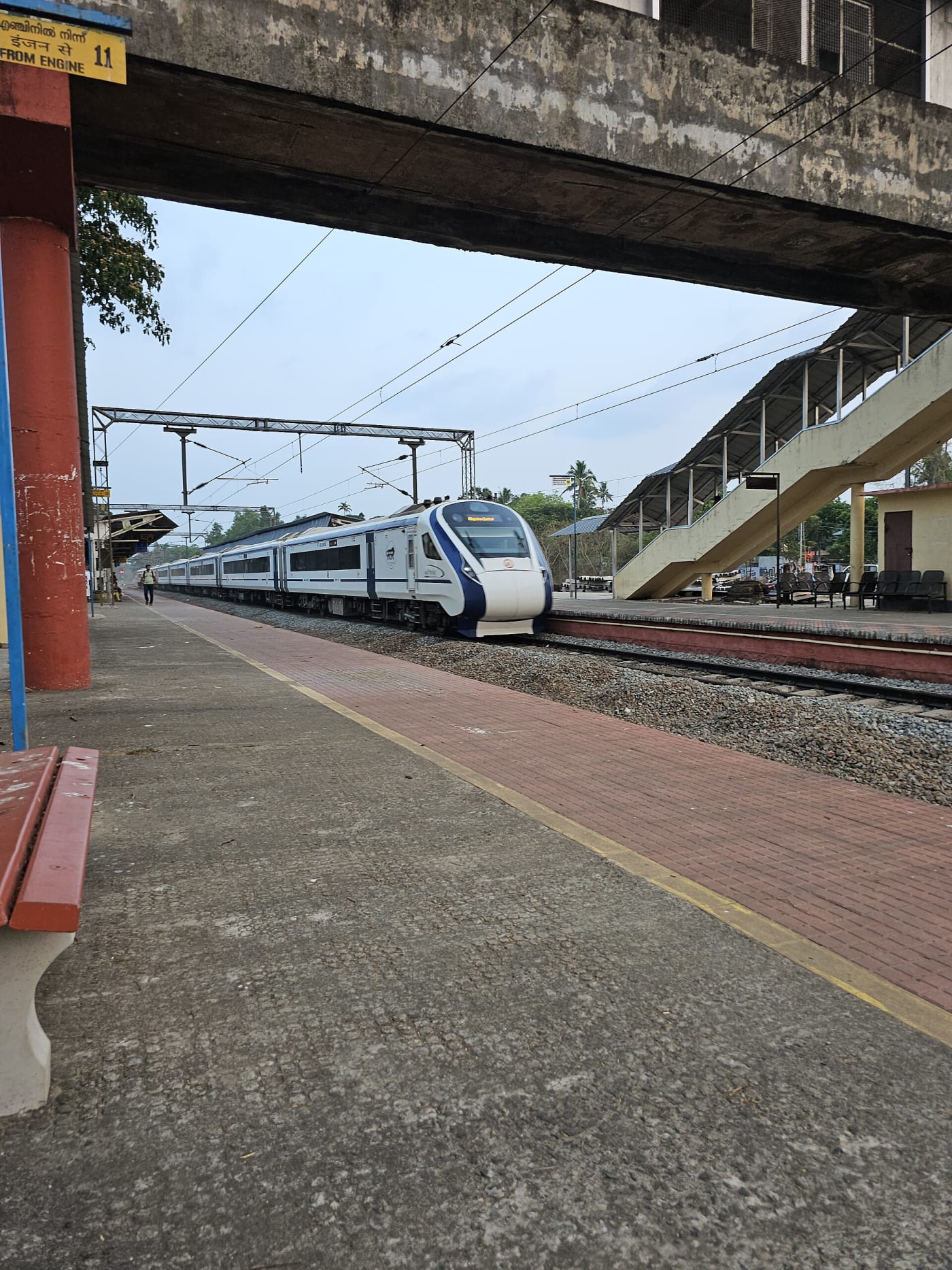
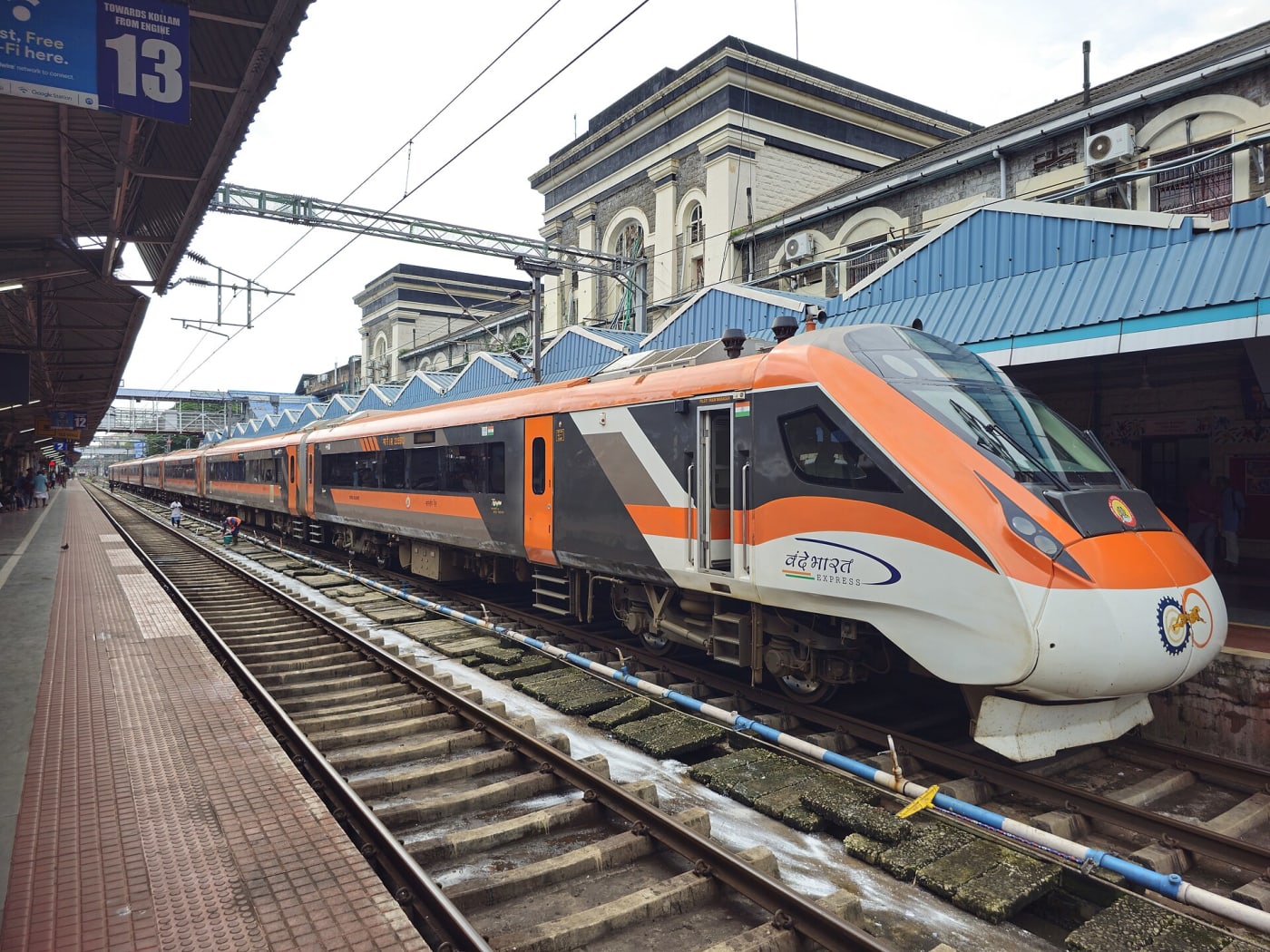
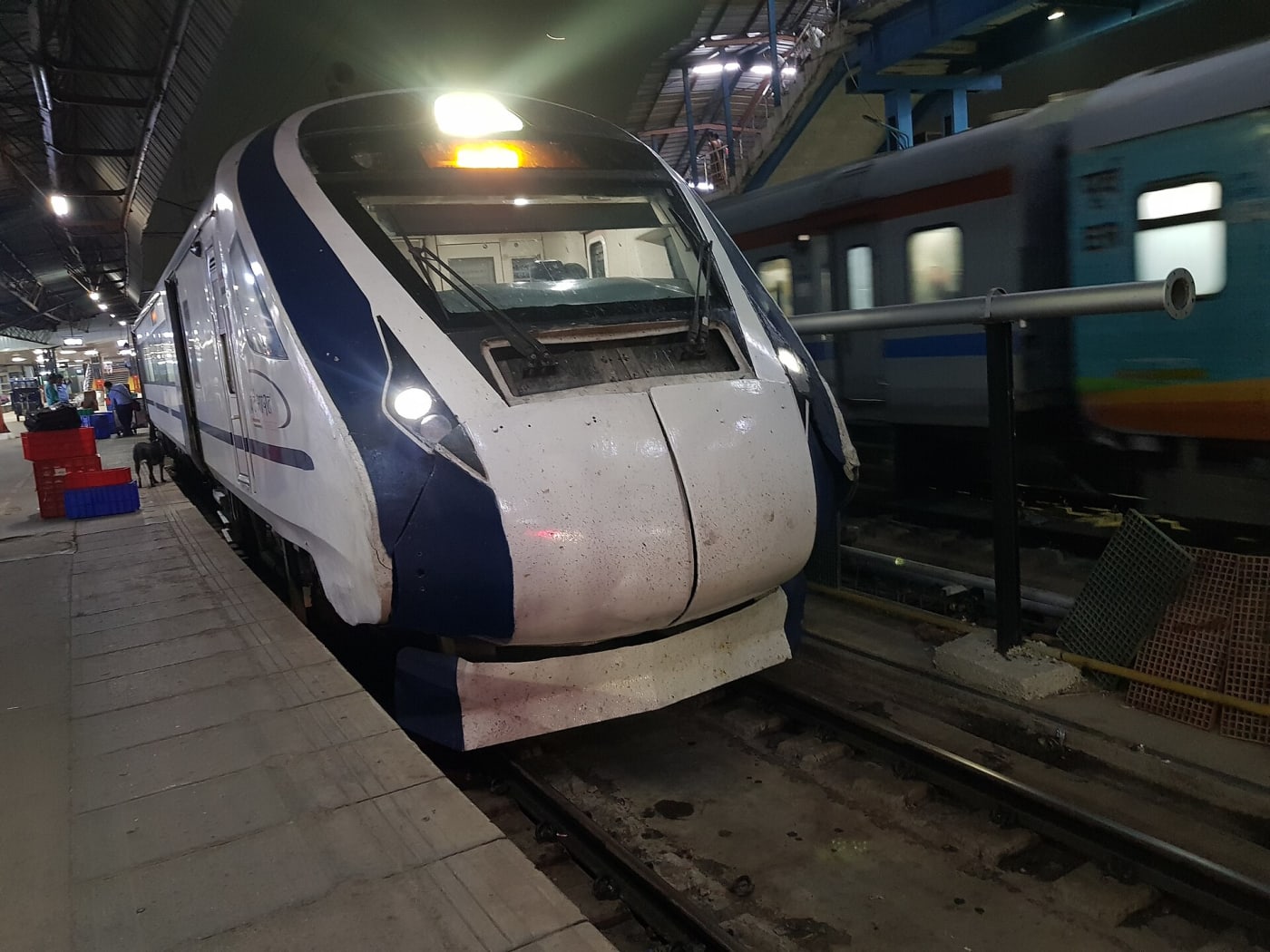
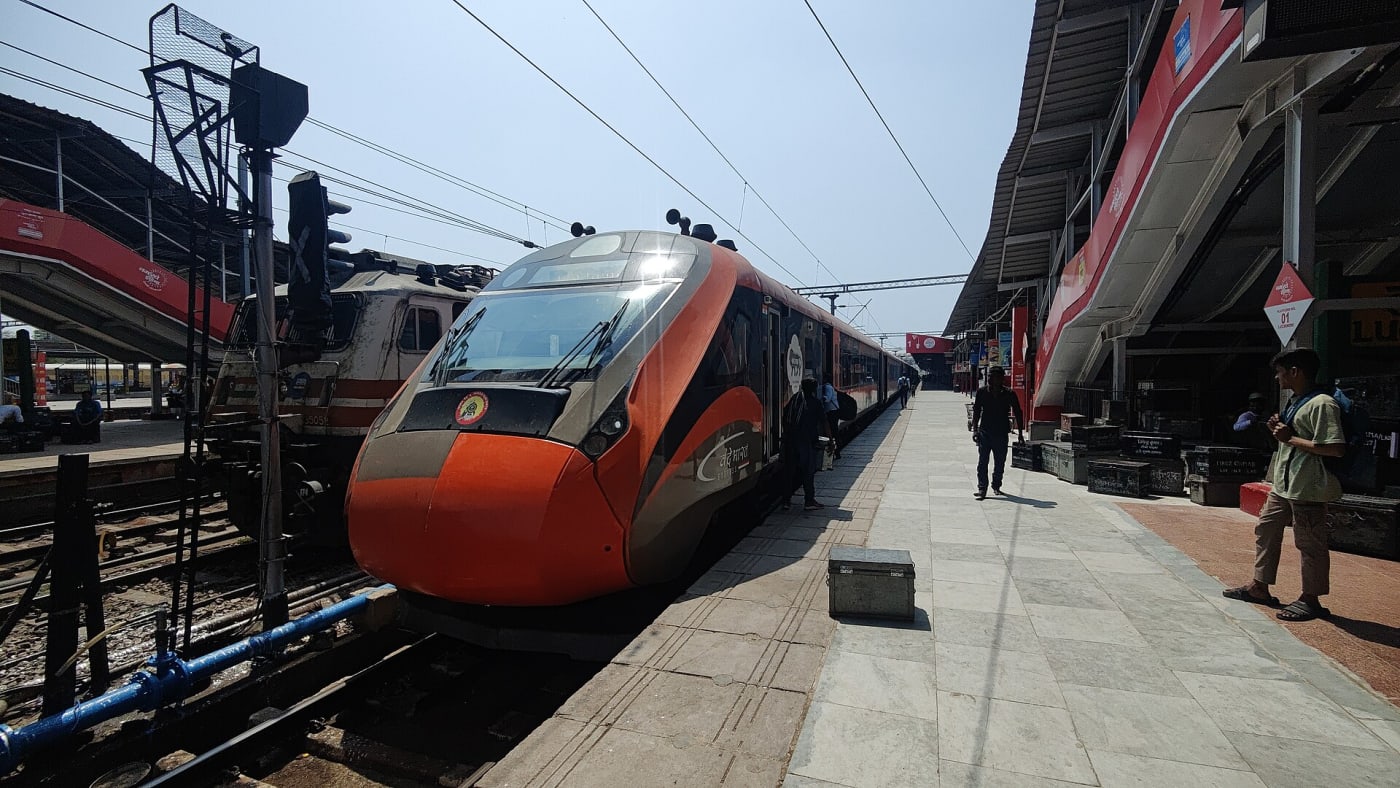
After 2014, Indian Railways shifted from incremental upkeep to visible modernisation. Capital spending rose to about ₹2.62 lakh crore in 2025-26 — more than nine times the FY14 level. The Vande Bharat Express, India's first modern semi-high-speed train, launched in 2019 and grew to 164 services by December 2025, while broad-gauge electrification reached 99.6%.
Railways
Railways
Vande Bharat network, growing year by year.
The Vande Bharat network began with a single Delhi–Varanasi service in 2019 and now spans dozens of routes across the country. Each line appears in the year its service was inaugurated.
82
Vande Bharat routes
99.6%
Broad gauge electrified
Vande Bharat network
2019
0routes
0 cities
20192026
—
Why it matters Semi-high-speed services shorten intercity travel and mark a shift toward faster, modern trains on existing tracks.
- First service: Delhi–Varanasi, 2019
- 74 routes mapped, with the most launches in 2023
- Source: Ministry of Railways / PIB (flag-off releases, Railway Board circulars, replies in Parliament)
History
Notable projects
The period produced landmark engineering. The Chenab Bridge in Jammu & Kashmir — the world's highest railway arch at 359 m above the river — and the cable-stayed Anji Khad Bridge completed the Kashmir rail link (USBRL). The rebuilt Pamban vertical-lift sea bridge reconnected Rameswaram, and the Bairabi–Sairang line put Aizawl on the rail map. Over 1,300 stations are being rebuilt under the Amrit Bharat Station Scheme.
How it works
Indian Railways is a single, government-run network — one of the world's largest — that both owns the tracks and runs the trains. A national timetable threads passenger and freight services over shared lines, which is why the two often compete for the same track. Modernisation runs on three tracks at once: electrifying routes to cut diesel, rolling out the indigenous Vande Bharat trains, and fitting the home-grown Kavach system that automatically brakes a train to prevent collisions.
Outlook
The plan for the coming decade is a shift to semi-high-speed and high-speed travel. India targets 400+ Vande Bharat services by 2030, with the Vande Bharat Sleeper entering service in 2026 and the first service of the Mumbai–Ahmedabad bullet train expected in August 2027. On freight, the Dedicated Freight Corridors and new terminals aim to lift loading toward 3,000 million tonnes a year by 2029-30.
Newest on the network
Two firsts arrived in 2026. On 17 January 2026 the Prime Minister flagged off India's first Vande Bharat Sleeper on the Howrah-Guwahati (Kamakhya) route — 16 coaches, 823 berths, cutting the run to about 14 hours against roughly 17 on the older Saraighat Express, with 12 sleeper rakes planned across long-distance routes in 2026-27. Then on 17 July 2026 he flagged off India's first hydrogen-powered train, the Namo Green Rail, on the 89 km Jind-Sonipat section in Haryana — 10 coaches, capacity around 2,600, emitting only water vapour. Designed and built by the Integral Coach Factory, Chennai, it puts India in the small group of countries running hydrogen passenger rail alongside Germany, Japan, China and the United States.
By the numbers
164 Vande Bharat services (Dec 2025). 99.6% broad-gauge electrified. 16 consequential accidents in 2025-26, down from 135 in 2014-15. World's 2nd-largest rail freight carrier, targeting 3,000 MT/year. ₹2.62 lakh crore capex (2025-26). Sources: Ministry of Railways, PIB.
Data current to: As stated in the Lok Sabha on 22 July 2026
Source: Ministry of Railways via PIB — 162 Vande Bharat (chair car) and 2 Vande Bharat (sleeper) train services, as stated in the Lok Sabha on 22 July 2026 (linked). · link