India began electrifying its railways in 1925, but for most of the next century progress was slow — only about 40% of the broad-gauge network was electrified by 2017. The last decade changed that decisively: since 2014, India has electrified 48,072 route km — more than twice the 21,801 km electrified in all the years before — reaching 99.6% of the broad-gauge network by 2026.
Rail Electrification
Rail Electrification
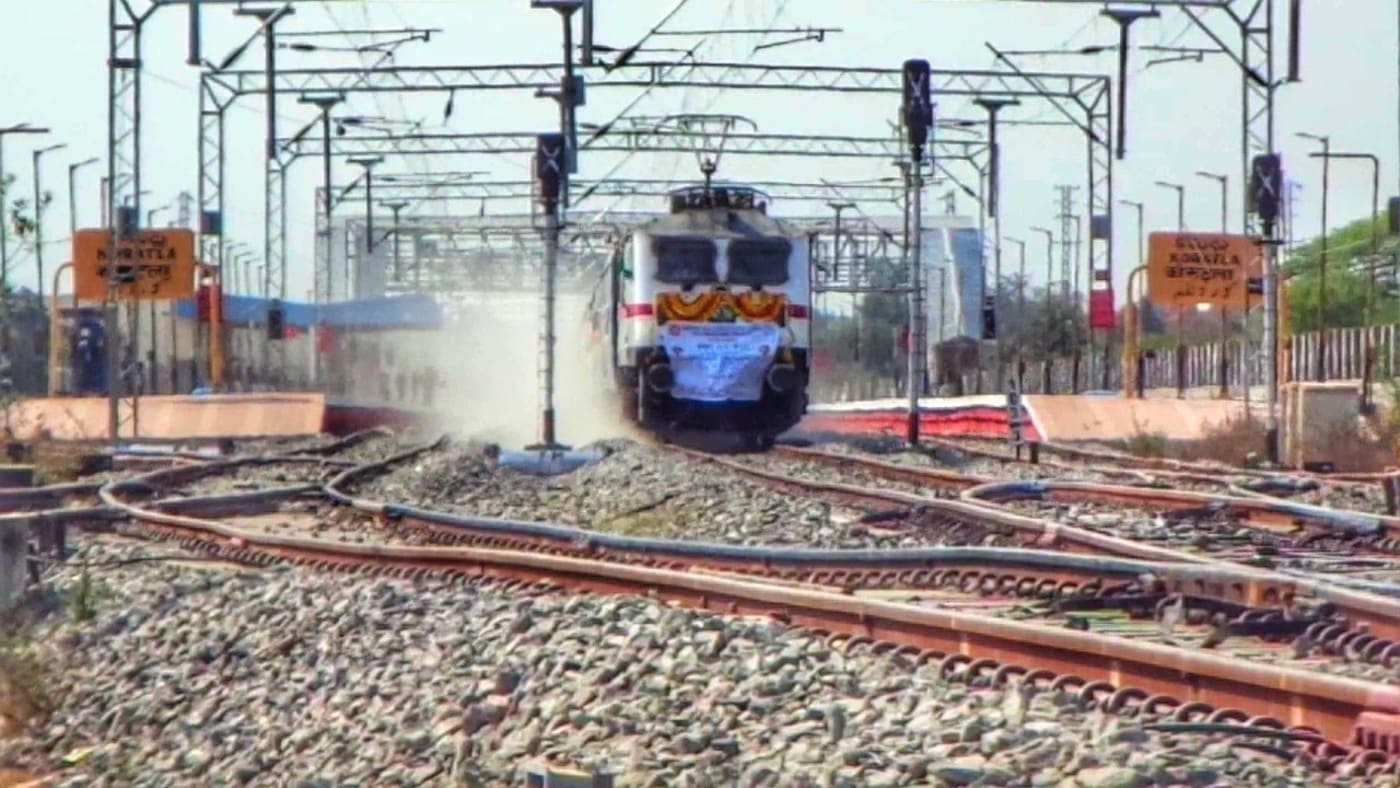
Rail electrification now covers 99.6% of the broad-gauge network: India electrified 48,072 route km between 2014 and 2026, more than twice the 21,801 km electrified before 2014. The counter shows route km electrified, year by year.
99.6%
Broad-gauge electrified (2026)
48,072 km
Electrified 2014–2026
2030
Net-zero railways target
Route km electrified
| Year | Route km electrified |
|---|---|
| 2014 | 21,801 km |
| 2015 | 23,176 km |
| 2016 | 24,906 km |
| 2017 | 26,552 km |
| 2018 | 30,639 km |
| 2019 | 35,915 km |
| 2020 | 40,293 km |
| 2021 | 46,308 km |
| 2022 | 52,674 km |
| 2023 | 59,239 km |
| 2024 | 66,427 km |
| 2026 | 69,873 km |
| Dashed bars are years the source does not publish; the shape between published years is drawn, not measured. | |
2014
0km
Route km electrified
20142026
Since 2014
Added
+48,072 km
2014
21,801 km
2026
69,873 km
Dashed bars are years the source does not publish; the shape between published years is drawn, not measured.
Why it matters Electric trains are cheaper to run and far cleaner than diesel, cutting fuel imports and carbon emissions.
- Route km electrified: 21,801 (before 2014) → 69,873; 99.6% of broad gauge (2026)
- ~46,900 route km added in 2014–2025
- Source: Ministry of Railways / CORE
History
Notable projects
The push runs under Mission 100% Electrification. The pace rose from about 1.42 km a day (2004–2014) to over 15 km a day (2019–2025), and 25 states and union territories are now fully electrified. Alongside the wires, Indian Railways expanded solar power from 3.68 MW in 2014 to 898 MW by 2025 across 2,626 stations — part of a target to become a net-zero-carbon railway by 2030.
How it works
Electrifying a railway means stringing overhead power lines above the tracks so trains run on electric locomotives instead of diesel. India pursued this as a giant, focused mission — sanctioning electrification with every new line and multi-tracking project, and racing to wire the last diesel routes. Electric traction is cheaper to run, hauls more, and cuts oil imports; the catch is that the electricity itself still comes largely from coal.
Outlook
India has electrified 99.6% of its broad-gauge network — 48,072 route km of it since 2014 — one of the largest electrified rail systems in the world, at a pace that hit nearly 20 km a day. The final stretch is the hardest — a few hundred kilometres in difficult terrain (Assam, hill sections) awaiting clearances. Beyond that, the goal is net-zero railways by 2030, which needs the grid itself to green, not just the trains.
By the numbers
21,801 → 69,873 route km electrified (2014 → 2026), 99.6% of the broad-gauge network. 48,072 km electrified since 2014. ~70% cheaper than diesel traction. 3.68 → 898 MW railway solar power. 574 km (0.8%) remaining. Sources: Ministry of Railways, PIB.
Data current to: FY 2025-26
Source: Ministry of Railways — broad-gauge route km electrified, cumulative at the end of each financial year, 2014–2026. · link