From upkeep to modernisation
For decades, Indian Railways was a story of incremental maintenance. After 2014 that shifted: capital spending rose to about ₹2.62 lakh crore in 2025-26, more than nine times the level a decade earlier.
The most striking change is electrification. India electrified 48,072 route km after 2014 — more than twice the 21,801 km electrified in all the years before — and 99.6% of the broad-gauge network now runs on electric traction.
New trains, new bridges
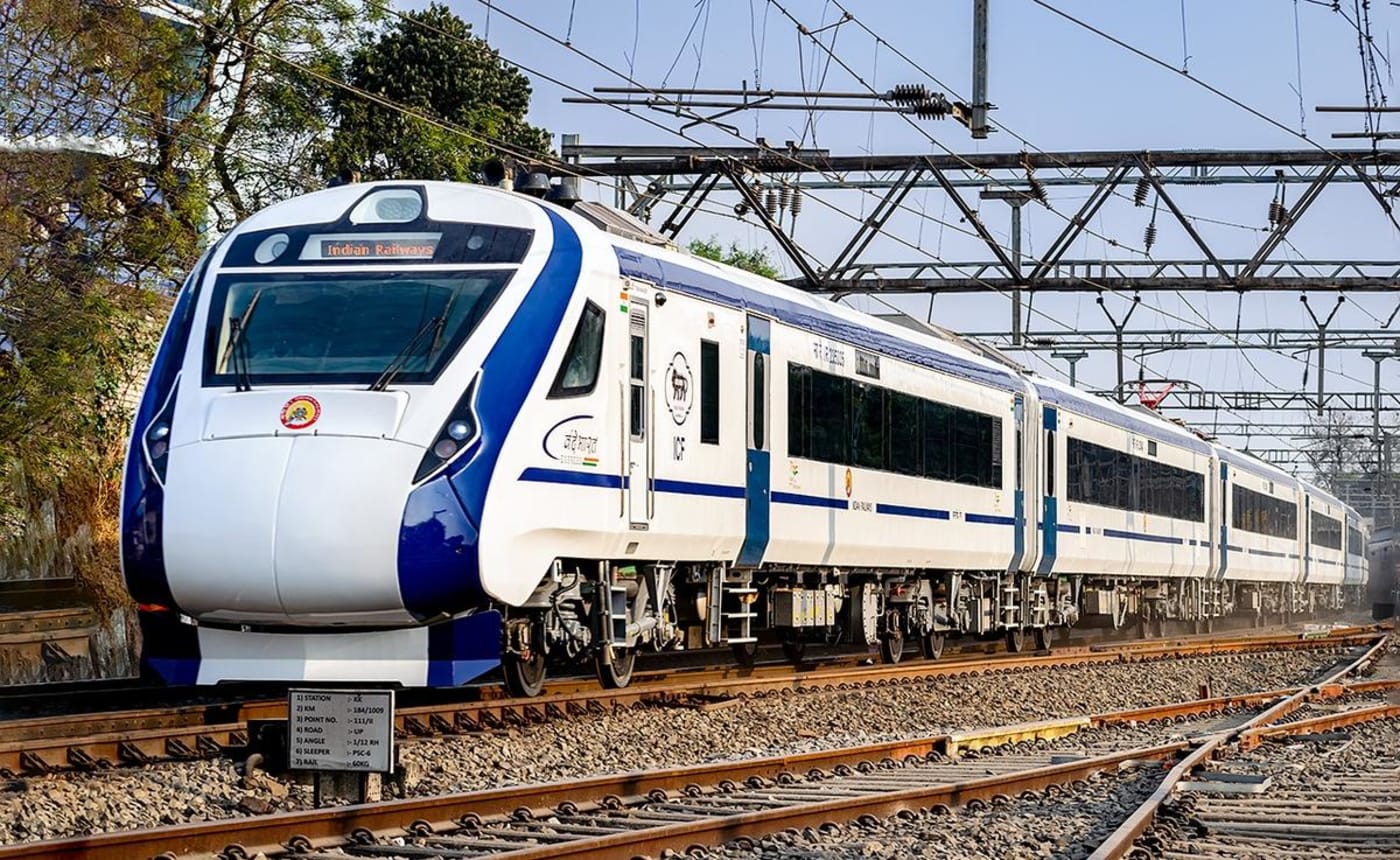
The Vande Bharat Express, India's first modern semi-high-speed train, launched in 2019 and grew to 164 services by the end of 2025. Landmark engineering came with it:
- The Chenab Bridge — the world's highest railway arch, 359 m above the river
- The cable-stayed Anji Khad Bridge, completing the Kashmir rail link
- The rebuilt Pamban vertical-lift sea bridge to Rameswaram
Over 1,300 stations are being rebuilt under the Amrit Bharat Station Scheme, and the indigenous Kavach anti-collision system is being rolled out across busy routes.
Freight and safety
India is now the world's second-largest rail freight carrier. Consequential accidents fell from 135 in 2014-15 to 16 in 2025-26.
What comes next
The next phase is winning back freight share through the Dedicated Freight Corridors and extending Kavach across the entire network.
Sources: Ministry of Railways, PIB.